Home remedy: Understanding housing as a medical intervention could transform the homelessness crisis
In this episode of the MaRS podcast Solve for X, host Manjula Selvarajah talks to primary care physician Andrew Boozary about a supportive housing model that could have a massive impact.

The housing crisis is fundamentally a health problem. Decades of research show that people experiencing homelessness spend twice as long in the hospital, cost the healthcare system double and have a life expectancy half that of the average Canadian. In this special episode of Solve for X: Innovations to Change the World, recorded live at a MaRS Morning event, host Manjula Selvarajah sits down with primary care physician Dr. Andrew Boozary to discuss a radical shift in Canadian medicine: treating housing not just as a social service, but as a critical medical intervention. As founding executive director of UHN’s Gattuso Centre for Social Medicine, Boozary shares data-driven insights from his initiatives there: prescribing nutritious food boxes, the launch of Ontario’s first hospital-based homelessness and eviction program and, most famously, the establishment of Dunn House, a permanent supportive housing model that’s proven to be both effective and scalable. Together, Selvarajah and Boozary explore what it takes to dismantle bureaucratic sludge, cut through systematic fragmentation and build a healthcare system rooted in human dignity.
Featured in this episode:
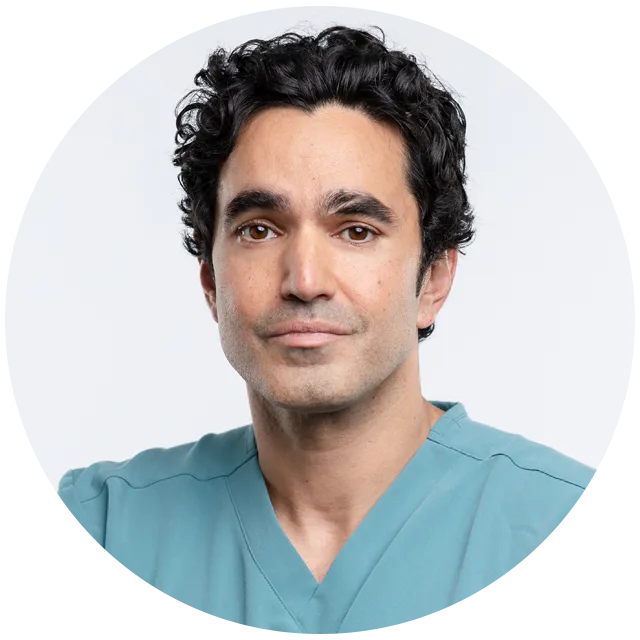
Dr. Andrew Boozary is a primary care physician and the founding executive director of the Gattuso Centre for Social Medicine at University of Health Network (UHN). At the forefront of health equity and public policy, his work focuses on integrating social determinants of health — such as housing, income and food security — directly into patient care. Boozary has spearheaded pioneering social medicine models including Toronto’s modular permanent supportive housing project, Dunn House, establishing crucial healthcare interventions that drastically improve health outcomes while reducing healthcare costs. In 2026, he received a Governor General’s Innovation Award for developing Dunn House.
Further reading:
- Dr. Andrew Boozary on expanding social medicine housing model Dunn House
- Pathologies of poverty: The need for housing
- Dunn House gave homeless ER patients a home and saved Toronto hospitals millions. Now they’re building another one
- How did social medicine evolve, and where is it heading?
Subscribe to Solve for X: Innovations to Change the World here. And below, find a transcript to “Home remedy.”
Andrew Boozary: It’s hard enough to remember to take the two or three medications you need to do every day on top of, going to work, going to care for folks, if it’s looming over your head that you do not know where you’re going to be able to sleep or are your belongings going to be safe, I don’t know how you’re expected to take your medications or be a “compliant patient”…
NARRATION: The housing crisis is a health problem. Decades of research show that people experiencing homelessness spend twice as long in hospital and they cost the healthcare system double that of people who have a roof over their head. And their life expectancy is half that of the average Canadian.
The solution to this problem, according to experts, is to treat housing as a healthcare intervention.
No one in Canada has made this argument more forcefully — and effectively — than Dr. Andrew Boozary. He’s a primary care physician and founding executive director of the Gattuso Centre for Social Medicine at University Health Network. For years, Dr. Andrew Boozary has spearheaded the building of permanent supportive housing that enables unhoused people to access primary care.
His first such project, Dunn House, opened in 2024 in Toronto’s Parkdale neighbourhood. The impact was immediate. Visits to the ER by Dunn House residents dropped by half, and they’ve spent 80 percent less time in hospital.
I’m Lara Torvi, a producer at Solve for X: Innovations to Change the World. In this special episode, Dr. Andrew Boozary joins our host, Manjula Selvarajah, for a conversation about his social medicine model. It was recorded live at a MaRS Mornings event in February of this year.
Manjula Selvarajah: Hi, everyone. Good to see everyone this morning. I’m really glad to be having this conversation today because I think that Toronto is in the midst of this really large problem where we have different pressures, growing pressures, in a lot of areas, most certainly homelessness, housing affordability, and also healthcare capacity. And what’s interesting about the work that Dr. Boozary does is it’s right in the intersection of those issues. He is at the forefront of this radical shift in Canadian medicine, and it’s a movement to treat housing not just as a social service, but as a medical necessity. At the University Health Network, he’s pioneering social medicine approaches, including Ontario’s first hospital-based eviction prevention and homelessness program.
Where I want us to start is, I want to go back and kind of find something that lit the spark for you, but a moment that made you realize that thinking about housing was important when it comes to delivering healthcare.
Andrew Boozary: Thank you, and good morning. This is a real privilege to be at MaRS. You know, I think, again talking about the innovation and new ideas, and I think you described it as a radical idea, but I think the reality is I know there’s folks who’ve long advocated for housing as a solution. And I think we, as a hospital system and a healthcare system, have been slow to catch up, but also having to fill gaps that we probably wouldn’t have anticipated.
You see people come through the emergency department, and the best you can offer is, at best, a Band-Aid solution. And this happens on repeat throughout the country and especially what’s happening in Toronto. And we’re trying to treat the symptom and not get at the root cause, which is really what I’ve described as the pathologies of poverty. And so the idea is that if people are without housing, without basic human rights, it’s impossible to treat amenable conditions.
I would say, sadly, there are countless stories. And I think the hardest ones are where you see people pass away prematurely, not because of a lack of the quality of care, which I argue, again, at UHN and across the system, is really world-class in the Canadian healthcare system, but because of the pathologies of poverty. And I think that stays and sits with every health worker in various domains and at various times.
Manjula Selvarajah: I would imagine that it feels like you’re applying a Band-Aid only to see this person back again in about a week.
Andrew Boozary: It’s back again, but it’s also, I think, the realities of outcomes that would be totally preventable. I mean, we also have to be clear about some of the data — that in Ontario, we have some of the highest limb amputation rates. And so for folks who might be familiar with diabetes, some of the sequelae is that you can see the need for amputations, but that should be more extreme or where there’s not treatments in a primary care setting. We have some of the highest rates because people are not getting access to housing. We have real systemic factors facing Indigenous, Black, and refugee newcomer populations. And I think, many times seeing people have to lose limbs that could have been totally preventable, and I’ve talked about patients who I’ve seen pass in tragic circumstances, I think really shape and drive the work. And I think this is something that’s not exclusive to us at UHN, it happens so much in community, and I should also acknowledge that we’re at a time where we also have a toxic drug overdose crisis that’s intersecting with the homelessness crisis, with the mental health crisis, and people having challenges to access care. And that comes with real human costs.
I think the weight that many people working in the front line, whether it’s in harm reduction or medicine or in social work, are feeling and facing, and so that’s why I think these conversations are hopefully helpful to try to galvanize some of this energy for the solutions like Dunn House, or we’ll talk to some of the social medicine housing. But I think really more broadly, and this has been a conversation that people have been fighting and pushing and willing, for 20, 30, 40 years, and I just don’t think we’ve seen it this bad.
Manjula Selvarajah: So for those in the audience who may not know — I know Dunn House has received quite a bit of press — but can you describe Dunn House?
Andrew Boozary: Some of the realities that we faced, when I arrived at UHN in 2019, we looked at the data, and it was clear that in the downtown core, we had about 230 patients that made up 15,000 emergency department visits. And initially, when this was the conversation which — and it wasn’t clear what our role was with homelessness, with addressing poverty. It’s again a world-class institution that’s doing many advances in transplant to cancer treatment to really fundamental outpatient care. But it wasn’t really in the zeitgeist around, is this a responsibility for us as an anchor institution in many ways being some of the largest employers, whether it’s Toronto Western or at long-term care or Toronto General. And I think the data started to really change the narrative.
The fact is that we couldn’t deny or look away from the fact that people were seeking care in the emergency department or the hospital ward as the last thread of the social safety net. It was to say, “Can we come up with a different solution?” And I have huge gratitude to our CEO and the UHN board that believed in this radical idea that we could donate, or essentially lease, a parking lot in Parkdale for a dollar to the City of Toronto for 49 years to unlock the kind of investments that we need to build housing for 51 patients of these 230 that I’ve described, who again, were living half as long as the general public, having far worse health outcomes, and having far higher healthcare costs because we weren’t treating the issue and the condition upstream.
And so that was really the impetus of Dunn House with partners to see this come to life as an upstream solution as opposed to trying to grapple with this in the emergency department.
Manjula Selvarjah: And these are people that, you know, they have units, they have access to services, and they also pay rent.
Andrew Boozary: Yeah. They pay rent. They hold a lease like you or me, and so that’s I think one of the things that was distinctive about this Dunn House model, the social medicine model, is that it was really fundamentally not to be a hospital discharge exercise. Because we know hospital bed capacity is a major issue. It’s one that has been a perennial issue in Ontario and the rest of the country, and so there’s this mantra of flow — can we get people out of the hospital? There are people who are languishing in hospital beds because they don’t have access to supportive housing. They don’t have access to social housing. And so some models looked at 30 or 60-day transitional models where they can move people out, you can stay in some housing for 60 days. But in Toronto, where do you go after 60 days? The shelter capacity almost mirrors the hospital bed capacity issue. It’s at over 100 percent.
There’s 200 calls a night that go unanswered in the shelter system. So you’re effectively deferring the problem, and I’ve really been moved by the commitment, again by UHN and partners, to say people hold a lease like a permanent supportive housing model, and it’s rent-geared-to-income. So people will pay rent based on their income, whether that’s through social assistance or other means. But it is really a model that is to ensure people have the human dignity of having their own lease, receiving supports as well from Fred Victor’s case work team to nurse practitioners and community health workers at UHN and various community and Indigenous partners that are there to try to provide the kind of wraparound support beyond housing that people need to stay housed.
Manjula Selvarajah: What is the kind of impact that you’re seeing on the people that are in these units and also on the hospital system? What is the data showing you?
Andrew Boozary: There was a brilliant story on Jason Miles, who was one of the tenants at Dunn House, by Victoria Gibson in the Toronto Star. And, you know, she spent weeks or months with Jason going through his life, his experience, and the change in trajectory at Dunn House. And I don’t want to speak too much as it’s his story. But if you really have a chance, I think, to read it, here’s someone who hadn’t finished high school, had many different interactions with the justice system, the healthcare system, has now since finished his high school diploma, and is now far too important for us at UHN. He’s on the mayor’s Lived Experience Advisory Council, so he tells, you know, Carrie and I and the UHN team what we should be doing around housing, and rightfully as a lived expert. But his ability now to lead recovery groups, be a real advocate and tenant and neighbour in Parkdale, I think has been one of the most moving trajectories I’ve got to witness in my career.
And then we look at the data from a system impact, for a year that people have been in Dunn House, we’ve seen a 52 percent reduction in emergency department visits. So that’s dropped in half for some of the folks who are the highest utilizers of the healthcare system. And we’ve also seen an 82 percent reduction in hospital bed days. So, how long have we just talked about the hospital bed crisis — that has been a serious reduction now in hundreds of bed days that have been returned to the hospital for people to have the preferential option of being in housing. So we’re starting to see that system-level impact. Obviously, this needs to be scaled; 51 housing units is not going to end the homelessness crisis. But the hope is with this data and these stories, I think this marriage is to make a compelling narrative for our government partners and public policy partners to see this reach more people.
Manjula Selvarajah: This is, you know, most definitely a story about human dignity, certainly about better health outcomes, but I want to talk for a minute about economic benefits. What do you think are the economic benefits of these interventions?
Andrew Boozary: I think the economic benefits are massive, and I think we’ve, you know, not looked at what this means in terms — there’s a lot of conversation now in the public discourse around, you know, building in Canada, investing in the economy — and I think the prime minister and the federal government and various governments are right that I think we need to see this commitment to housing and ensuring that, you started by talking about the affordability crisis, that we address it. And I think housing is a really powerful economic driver to do that, and I think those elements are obvious for this crowd, but I think what we have not knitted together enough is the fact that the housing crisis is really an economic, a social, and a health crisis. And if we don’t ensure that we are seeing all of that in tandem, I think we miss some of the momentum as to why this is so crucial. And so when you look at almost any facet of it, I think the benefits are clear, investments and their sustainability for people’s lives are really clear. I think we’ve just been myopic around either looking at it in isolation as one benefit or one cost, as opposed to the totality of what it brings to a neighbourhood, to people’s lives, to the economy, to the healthcare system, to the social system. And that’s where I hope we can start to articulate this more holistic picture of what housing brings. And it’s not obviously just healthcare, but I think it really spans across many domains.
Manjula Selvarajah: I do think there is something to be said for the holistic picture, right? It can be hard to sell people on the holistic picture, and for some people, the numbers matter. And I get the sense that there is a dollar figure to having someone in a bed or having someone go through the judicial system, spend a day in prison, whatever the case is. Do you have a sense for if there are economic benefits there?
Andrew Boozary: I unfortunately have said this and got in trouble before. I said, “You know, even if you’re a cold-blooded economist, you know, you can see the value.” And then my economist friends were like, “You know, we had dinner, like, we’re not cold-blooded. We’re nice people.” And I was like, “You’re right. I mischaracterized.” And, you know, economists are — do terrific work, and if there are any in the room, I have huge appreciation, and I have friends who are economists still, but when we look at this together, if it’s not human dignity, but it’s the economics, I think the case is really clear when it’s $50,000 a month in the hospital system.
Manjula Selvarajah: For a person to be in the hospital system —
Andrew Boozary: For a person to be in the hospital system.
Manjula Selvarajah: Interesting.
Andrew Boozary: And that’s probably a conservative number. And then it’s around $14 to 15,000 a month in the prison system. And I want to belabour the prison system a little bit because I think there’s also this element of who deserves housing that people have talked about.
When you look at the prison system, a dear friend, Lana, I think describes it really powerfully as the de facto mental health system. And we could have a whole session — I hope you will — about mental healthcare access challenges in our system.
When people can’t access the mental health system — I’ve had patients tell me, especially in the winter, that they will try to take a stone through a storefront so they can finally get into the supports that they need. And when we talk about the economic issues, that comes with major limitations for people’s own return into economy, return into normal life, and we pay for that both at the individual and the system. And then at the shelter level, it’s around $6,000 a month. And I don’t know if people have been to a shelter recently, but I don’t think that’s anywhere you’d want a loved one to live for more than a week.
I’ve also sometimes had donors or folks say, “Well, you know, I don’t know if we have a housing problem. I think it’s a mental health issue and a drug use issue.” And I always say, “Well, you know, if you spend a week in a shelter, I’d love to hear how your mental health is a week later or two weeks later.”
So I think we have to be really clear there’s an interplay, and people who may not have had mental health and drug use issues who go into shelter systems almost certainly leave with them. And it’s, again, an anachronistic model that I don’t think is in line with where I hope we are as a country about the investments that people need. And then finally, it’s at less than $4,000 a month for supportive housing. So I think that breakdown is really clear that people who are not getting access to basic housing end up costing the system a lot more. Our failure on this comes with a very expensive cost on the human dignity front and on the health economic front.
Manjula Selvarajah: I think you mentioned this idea of scalability before, and I know that you have a go-ahead for a second Dunn House now in Parkdale. I think 54 units if I’m right there. But I look at Toronto and I think we have more than 15,000 people that are homeless. Is this solution scalable?
Andrew Boozary: It is. And I’ll get to the point that I don’t think it’s Dunn House that is the only solution to be scaled or the social medicine piece. So I think if we unpack those numbers, and I think it’s for context, I think right to say, you know — I always feel at MaRS there’s a big like, financial piece, and maybe people just dress really well at MaRS, I don’t know, or the building’s a lot nicer than Toronto General…I don’t want to say that, but you know — it’s a beautiful atrium.
Manjula Selvarajah: We dressed up for you.
Andrew Boozary: Well, I doubt that. I think everyone has very important things to go to shortly after or before. But I do think that, you know, we’ve seen a doubling of homelessness in Toronto in four years. You know, if you got those returns on an investment, you’d be thrilled. I think the reality is we’re now getting adverse…If we allow this to continue, I worry that we will start to just completely wave our hands at it and say, “This is now an intractable problem,” and that we aren’t going to be able to solve it. So, I caution that, and I get the scale issue on many more Dunn Houses comes with cost and time.
But I think you touched on a little bit in the introduction, we need to look at a myriad of interventions, to address a problem that I still believe wholeheartedly is achievable to eradicate in a very serious way because we’ve seen other jurisdictions do it, and we can talk a little bit about that. But, we’re going to need to address the eviction issue, and I think there’s been some measures, and we need more, to keep people housed who are at the risk of losing housing. We need more social housing, not just supportive housing like Dunn House, and I think that’s where we’re going to start to see real inroads on that number, and those numbers across the country. But then, for a certain select population, we are going to need supportive housing. And people are going to need the kind of supports that are there, that are embedded where they live, but that’s not for all 15,000 or for all those folks. So I think it is important we bring a bit of focus to which areas we can start to see move quickly and where those partnerships are that we can start to see the scale.
Manjula Selvarajah: Well, it’s interesting that you talk about this as an approach as opposed to just this one solution, Dunn House, because Dunn House is part of this larger initiative at UHN, the, you know, hospital-based homelessness and eviction prevention program. Beyond Dunn House, what does that look like day-to-day in the system?
Andrew Boozary: In terms of the..?
Manjula Selvarajah: In terms of these…Do you have things that you do, interventions within the system?
Andrew Boozary: That we do at the Gattuso Centre?
Manjula Selvarajah: Yeah.
Andrew Boozary: Yeah, you know, it’s funny you ask. It’s great. No, I mean, it’s — the reality is, you know, Dunn House, I think, has gotten some attention. I think it’s because there’s been a real collective approach to this issue. You know, we’ve seen the federal, provincial, and municipal government invest in Dunn House. You need coordination across every level of government, and why I think we haven’t seen the inroads is, it’s been abdicated or shirked to one level of government. I mean, it wasn’t long ago we had a Prime Minister say, “Housing isn’t a federal responsibility.” And rightfully, there was so much backlash that changed to where within 48 hours, that position was reversed. So I think the coordination across levels of government is going to be crucial, and I think there’s a real collective effort, which we see again, the teams from UHN who are here from legal to real estate to primary care to help set this up are going to be fundamental — and with Fred Victor and other partners.
That to me is the most substantive or structural solution. But what we’ve been trying to do at Social Medicine, which I think maybe, I should have given a little bit of time in the beginning to talk about, which may not be as clear, is that we’ve known for 200 years. I believe Louis-René Villermé published the first statistical report on poverty and poor health in 1826 in Paris. So we’ve known that if you live in a low-income neighbourhood, you are going to live less and live less well and live with less opportunity than if you’re in a high-income neighbourhood.
So we’ve been publishing on that in the academic world for 200 years now. How I — what I hope we’re trying to do at the Gattuso Centre is to be at this intersection of hospital and community to try to integrate those social factors in the way we know there is a strong evidence base to improve health outcomes.
So some of that looks like we’ve now had over 500 people in food prescribing programs, so you can again tie this back to people who don’t have access to nutritious food. There’s a real rise in ultra-processed foods that, again, more and more work in The Lancet and other journals showing this connection to cancer and chronic disease. We’ve been prescribing good food boxes with FoodShare Toronto in terms of nutritious produce for the last three to four years.
We’ve established new roles of peer workers, these are people with lived experience with the neighbourhood group who are now embedded in our emergency departments. We know these are not safe places for people who use drugs or have various issues with stigma and shame. To have someone accompany them on the healthcare journey, we wanted to extend that beyond the walls of the hospital, so we now have the largest community health worker program in the country from a hospital-based perspective of people who can, again, advocate and accompany, make sure you’re getting to your appointment for a medical appointment, renewing your medications, or helping you stay housed through legal aid clinic interventions as well.
So it’s a myriad of things that I think we have to keep doing. I think the housing piece is unique in a way where hospitals just haven’t dove in in the way that UHN leadership has been able to. But we really try to keep pushing and fighting at the margins where we know where people get discharged, there aren’t those supports, or when they’re in the hospital, there aren’t those supports. And I think that, to me, is about quality of care. If we don’t integrate health equity into how we are delivering healthcare, I think we’ll always see serious limitations in what we can do.
Manjula Selvarajah: I want to talk to you about this big announcement by the federal government, this idea of this Build Canada Homes agency, and this is an effort to build affordable housing. They have this wonderful chart that kind of describes what they’re trying to do, and their focus is really, is on what they call the middle. So imagine this spectrum of housing, and you have emergency shelters and emergency housing on this side and market housing on this side, and what you have in the middle are things like transitional housing, supportive housing, community housing and affordable housing. That’s what the focus is on, and they’re spending billions of dollars on it.
I wanted to get your thoughts on the initiative, and I’ve also heard you talk about this idea of permanence, how important permanence is. If you could kind of reflect on the importance of permanence and why you think that’s important.
Andrew Boozary: Was this your water?
Manjula Selvarajah: It is. Would you like a water?
Andrew Boozary: Oh, no, I just, I was close to drinking it. So I’m glad, I just wanted to ask.
Manjula Selvarajah: First economists, then the water.
Andrew Boozary: No, no, no. I’m all in favour of all disciplines. This is a multidisciplinary talk. No, I think on the Build Canada Homes thing — and it’s a Crown agency now, so, you know, I’m going to, you know — there’s no partisan angle — so I’m gonna be able to speak to it as a Crown agency.
I think it’s long, again, overdue to try to see more investment and action from the federal government. I think, given the comments made earlier, I think this is a response to the public that they’re not going to be looking at the feds or the province or cities to keep shirking or abdicating, but what are the real solutions and investments that need to be in place? So I think that’s very welcome.
I think where there’s definitely a focus on the middle that you described, there’s $1.2 billion dedicated to supportive housing. So I think that’s a really important measure, when we talked about scale, that is there from a capital investment earmarking for this kind of work, and that’s where phase two of Dunn House was able to happen in partnership with Build Canada Homes. And obviously, we want no, you know, sort of proprietorship of the model. We want to see the scale of social medicine housing across the country. So we’re — that’s where we’re continuing to engage Build Canada Homes. We want to see this reach more people across the country.
The rate-limiting step might be the operating dollars, and I think there was a recent announcement in British Columbia that folks may have seen of 1,000 supportive housing units in an MOU with the BC government. And I think that’s what we need to see more happen, and I was really encouraged to hear Minister Flack at the Dunn House Two opening, who’s the Minister of Housing and of Municipal Affairs, really be clear about the need to scale more of these success stories. So I’m really hopeful. I think there’s lots of behind-the-scenes engagement to try to continue to keep the focus on that area as well, not just the big middle. Because we’ve seen efforts to try to increase access to housing supply, but we’ve failed people at not ensuring it’s affordable. And now it’s been so bad that we have a new term that’s called deeply affordable, because affordable ended up meaning nothing. So I think it’s really important that we don’t lose sight of the fact that there are still thousands of people who can’t access rent-geared-to-income to basic rent.
Manjula Selvarajah: And that’s the permanence aspect that you think —
Andrew Boozary: I think on the permanence piece, I just think, you know, and there’s so many great physiological studies and work on this. This is not just conjecture. The constant bearing of uncertainty in your life comes with very serious health consequences, and so I think if the people to picture, you know, it’s hard enough to remember to take the two or three medications you need to do every day on top of, you know, going to work, going to care for folks. If it’s looming over your head that you do not know where you’re going to be able to sleep or are your belongings going to be safe, I don’t know how you’re expected to take your medications or be a “compliant patient.” But this goes back to the conversation that I don’t think we’ve really embraced this holistic element in medicine, because I was trained, and many in this room are trained, that if you saw a patient, they were not taking your prescribed diabetes medications to avoid a limb amputation (to come full circle), then I would have to write, “Patient is non-adherent with medications. Patient is non-compliant with medications.” Is not trained to write, “Social forces, the fact is without housing, is driving higher premature mortality risk.” So to me, the permanence piece is that we need to flip the script on who has the onus, and can we give people some stability in their lives to be able to do the things, and not just take medications, that might be a primary care focus, but even primary care goes beyond that. To actually have some joy, dignity, contribution in their life in a way, and expecting them to do that when there are more people resorting to living in tents and encampments than I think we probably would have imagined five years ago.
Manjula Selvarajah: Some of the thoughts that you’re sharing, I feel like I also hear these kinds of arguments made when it comes to universal basic income. I’d love to hear your thoughts on universal basic income.
Andrew Boozary: I’m not the policy expert on basic income, but I think we’ve talked about, you know, I think part of our work really tries to scan the literature and the evidence base. So again, things around food insecurity to accompaniment and housing. Pretty clear when you continue to dive into the evidence base and the empirical studies, this is really an issue around income, even on food insecurity, and especially around issues around accessing. Rent and housing is a bit complex because there’s income and there’s still inaffordability, you can’t really get there. But poverty is really what we’re talking about in driving poor health. So I think we need to see real efforts in how we ensure income.
I mean, I think I’ve been quoted on this, or have been pushed on this, that, I mean, if I could prescribe income, I would, and I think many of my colleagues would, knowing the health benefits that we see here, from 20 to 26 percent increases in people’s own mental health and well-being, to longevity. So this is a real health issue, and hopefully the conversation’s been clear about the roots of us understanding poverty as a fundamental health issue as well.
I think for a long time, we sort of were told basic income’s impossible because you can’t coordinate across levels of government, it’s incredibly impossible from a bureaucratic element, from an administrative element. But I don’t think many of us need to go back that far. It was April, maybe March of 2020, when in a number of weeks the government said there’s going to be a CREB program, and they will ensure people get access to income. So I think politically we can do it. It’s the political will.
Manjula Selvarajah: It’s the political will. And CERB was at a time when, you know, the political will was pushed, too, because of the situation that we were facing. Thank you again, Dr. Boozary. I’d love to take questions.
Andrea Katz: Hi, my name is Andrea Katz, I’m an architect with BDP Quadrangle. And as an architect, I believe housing is a right. So, it’s just everything you said up here resonated. I was wondering, was there anything in particular about Dunn House, with respect to the built form, that was really important for ensuring dignity and quality of life?
Andrew Boozary: Yeah. I probably got a lot of pushback because I think there was a time where I thought I was an architect in this project — and Carrie had to remind me I don’t have an architect degree or background. So what we did was we actually really engaged people with lived experience around the architectural process on things that they wanted to see who’ve had a history of homelessness.
I think the colours, some of the layouts really came through in those engagement sessions that I think have been really powerful for the way Dunn House has been set up. The other piece I’d just say is maybe not as interesting for you as from an architectural piece, but from a policy perspective, one of the most resounding things that we heard was the need for Dunn House to be pet-friendly. It seems so obvious, but the realities are there are many shelters and still many apartment buildings that don’t allow people’s pets, and so I think it was really trying to marry, again, people’s direct needs around the supports that need to be there as well as the structure. And, it was a modular build. We’re really hopeful with some of the advances with Build Canada Homes that there’s newer technologies, from mass timber or other things that can be done and also from an environmental sustainability piece. We’ve got an amazing team at UHN, at FM Pro, and others who are engaged with the architectural piece, and so I’m hopeful that we’ll see even more of that kind of marriage between the architect piece, the healthcare providers and the operators.
Josh: Hi. Oh my God, that’s loud. So you — I just wanted to clarify, you said that there are 250 people who make up 15,000 of the visits? And 50 spots in these houses. So my question is, how do you determine who gets to go into these houses? And what kind of safeguards are in place to prevent free riding and abuse of this kind of service?
Manjula Selvarajah: Do you want to introduce yourself?
Josh: Oh, I’m Josh. Nice, nice to meet you.
Manjula Selvarajah: And from?
Josh: I work at BDC.
Manjula Selvarajah: OK, great. Thank you.
Andrew Boozary: Is that finance? With the quarters of —
Josh: VC.
Andrew Boozary: Oh, VC, OK. No, I wanted to…It’s great question, so, and maybe a little bit wonky, but I’ll just get into it. So, my first point of disclosure is that there’s no perfect algorithm in this sea of inequity of who you choose. So I think we just have to be really deliberate that, no matter what we could do around the selection process, when people are waiting eight to 10 years for social housing and there’s a wait list that’s thousands of people long, it’s not gonna be perfect both from an ethical and efficiency front.
And that was a reality, again, when we call homelessness a terminal condition, there are many people we see that pass away before their number is called for Dunn House or for the broader social housing piece.
The way we tried to best get at this ethical and, you know, again, best match to needs and health and social needs is we were able to leverage hospital data to figure out who had the highest healthcare needs, not only on emergency department utilization, but hospital bed stays, other chronic conditions that sort of allowed a composite score of who would most benefit from the enhanced healthcare supports at Dunn House.
Talking about partnerships, what had never been done before is we’ve never integrated hospital data with city data, and so we actually had to go to city council to pass the first data-sharing agreement. And this was huge work by Mark Toppings and Tammy and others in the legal team to make sure that we could have an agreement that would allow us to then also queue up who’s been waiting the longest. So that was the way to try to harmonize the waitlist with the needs, and our hope is as we get to 105 units that we’re addressing, you know, try to get to half of the patient needs.
Now, the 234, just to be clear, are not just UHN patients. That’s the broader, at Unity, Women’s — at various parts, not just the strict downtown core, but broader. But getting at 105, I hope we can get to around 70 or 80 percent of the high utilizers in our system, and that is sort of how we try to address that issue.
The challenges are getting people on a city by-name list. One part I think might be interesting for folks, I didn’t realize the amount of tax on people to just get into housing, what you need it in terms of administrative forms. You know, this, what we call sludge, right? This real behavioural sludge that even if you’re wanting and willing, the amount of forms and identification you need to show, I don’t think I could provide that. And so, you know, these are inherent biases in the system that I hope we also start to unearth in these processes so that it’s not penalizing people for being in poverty.
Manjula Selvarajah: I love the term bureaucratic sludge. I think we’re going to have to hold onto that one. I think we can all relate to that. I can’t even imagine someone in dire circumstances having to deal with that. Please go ahead with your question.
Cindy: Hi, I’m Cindy from Public Health Ontario, and I see that I have a lot of colleagues who work in this building who also came today. So, my question is really about, housing right now isn’t a public health program area, the same way as, like, infectious disease or chronic injury. What are your thoughts on the barriers that’s really keeping housing as an important public health topic, at the population health level? Is it, like, structural or funding, like data?
Andrew Boozary: That’s such a great question. I think you — and you answered, I think, some of it, in the topic outlines — I think there’s definitely an issue of fragmentation, which is not surprising for anyone in the healthcare field. I think that’s been a bane of our existence in healthcare delivery, is the fragmentation. And what I mean by that is I think there’s been a shirking of who owns housing, and especially the supportive housing and housing and health.
There’s not a lot of communication even at the provincial level, let alone talking about this at the federal, provincial, municipal level. So I think, again, and this, sorry to be frank, but I think when requests are in, the housing ministry might say, “Actually, this is a health issue,” and the health board say, “You should go for funding for supportive housing to housing.” And this kind of lack of crosstalk and engagement — and again, it’s not a partisan comment, it happens in whatever stripe of government — that connection hasn’t really happened.
I think that’s been a major limitation. And I think, to your point about infectious disease, other areas where there’s real benefits to people having their own housing, and we saw that, of course, through the pandemic. I mean, I think the part that maybe people won’t like to be reminded of— we don’t like to talk about the pandemic — but people who were unhoused had a 10 to 20 times higher mortality rate, right? So the importance of housing, even as an infectious disease inoculation, was very clear and still has, obviously, major health benefits.
So I think quickly to your point, I think we need to articulate more of that. I think there’s great opportunities for leadership from public health and housing. We’ve seen previous chief medical officers of health describe housing as a human right, the need for more housing. I think when it gets to the implementation piece, the fragmentation and who’s paying for it, how it’s coordinated, I think has been a real barrier.
Manjula Selvarajah: Thank you. I think we could, yes, we can take one more question. Go ahead.
Sarah: OK, great. Hi, I’m Sarah. Oops, I took that right off. I’m from TD, and my question is, what does the transition look like from Dunn House to more stable housing?
Andrew Boozary: Yeah, I think, and I’m just thinking about TD because, you know, I just was reminded that the bank sector has also come out and said “We need to double the amount of social housing.” I think it was Scotiabank, and TD has put out some great work, and I know RBC is in this area. So it’s great to, maybe not great, it’s sad how bad the housing situation has become even in social housing, that banks are having to also — which is great, you always want banks on your side, they’re not like a left-wing think tank, they’re going to be clear that, you know, we need to double this investment. In terms of the transitional piece, there’s real variation. We have about a number of patients who are palliative, so that’s a transition. And I don’t know, and I ask my economist friends, how do you capture the value of someone being able to pass away at home and not on the street or an encampment? So that’s a significant portion of some people who do move in who are palliative. And, then there’s another set that may have had some issues or conditions that can see some treatment, and they may want to go move in with a partner in the coming months. They’ve been able to see more stability in various areas of their life. And that’s where we’re hopeful in seeing some of these folks move if there are opportunities.
The challenge is, it’s not like we’re seeing, you know, people after twelve months be like, “This is great. My condition’s under control. Where’s there other rent-geared-to-income options?” That’s a major limitation, but I think there’s been real progress on that front. And then there’s another segment of the population that is really sick, that has, from a medical perspective, you know, they wouldn’t be able to be cared for in a long-term care home. They’ve got seven or eight mental health and physical health conditions, worsening conditions, and I think that measure is more about trying to find the mitigation and management strategy. So there’s a number of different arcs. I think even for those who would want to see the transition, where and how you navigate the housing sector still is one of those barriers.
Manjula Selvarajah: Thank you for that, for that question. I know that you have to rush off at some point to practice. You have work to do. But I’m really, really grateful that you took the time to speak with us about this, and good luck with Dunn House Two.
Andrew Boozary: Thank you. Thank you so much for having me. Thank you for this conversation. Thank you.
Solve for X is brought to you by MaRS, North America’s largest urban innovation hub. Jason McBride is our senior editor. Sana Maqbool and Sarah Liss are the associate producers. Mack Swain composed our theme song and all the music in this episode; Gab Harpelle is our mix engineer and audio editor. And Kathryn Hayward is the executive producer. I’m Lara Torvi filling in this week for our host Manjula Selvarajah. Watch your feed for new episodes coming soon.
We want to hear from you — drop us a line to share your ideas, questions and feedback. What innovations are you curious about? Email us at media@marsdd.com
llustration by Kelvin Li; Image source: iStock
-
 MaRS Staff