When the path to clinical trials veers off the beaten course
Providence Therapeutics had to find creative workarounds to test its novel protocol for creating personalized cancer treatments. Here, CEO Brad Sorensen walks through what led the company to launch precision vaccine trials in Australia.
The Building Biotech series explores how this country can become a global player in life sciences by streamlining the entrepreneurial path to commercialization.
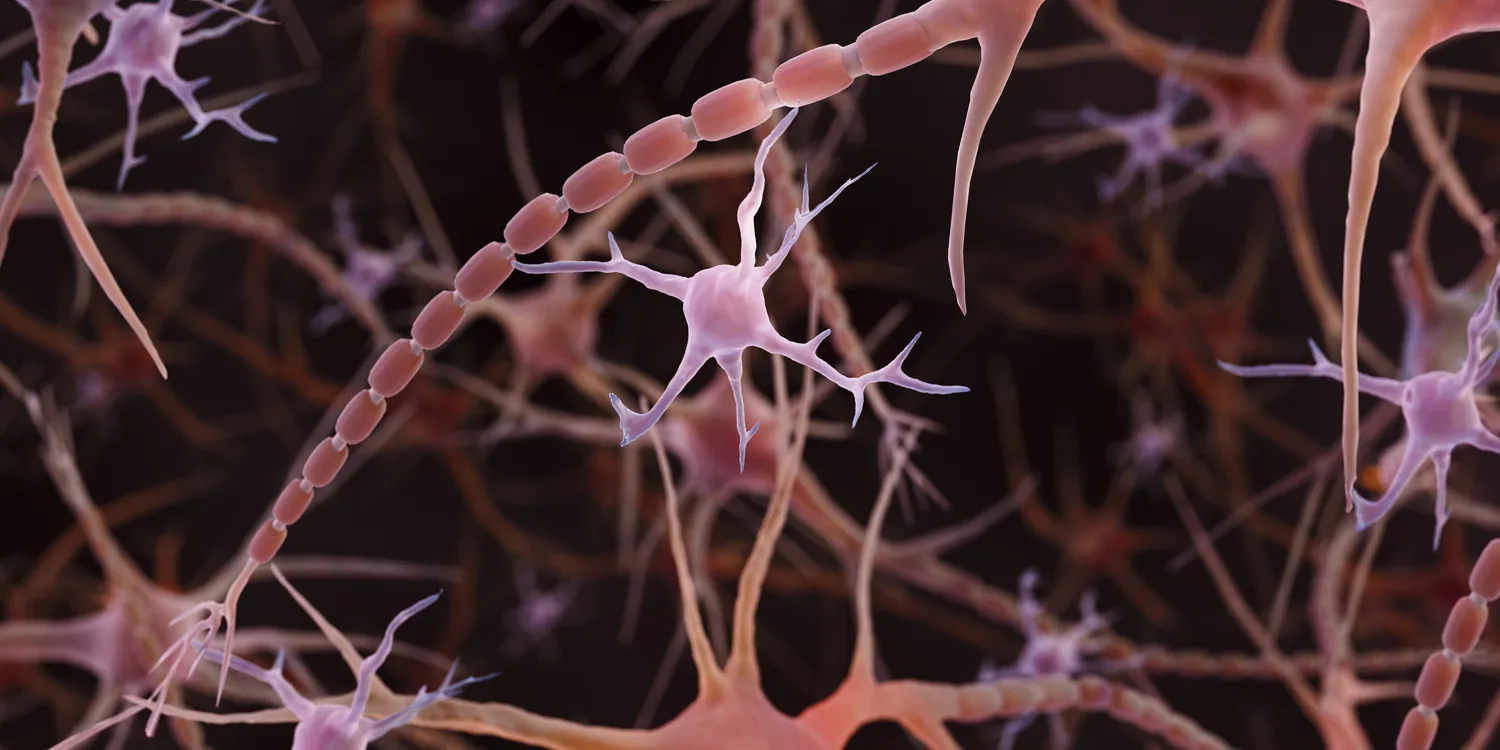
Glioblastoma multiforme (GBM) is a particularly nasty and aggressive form of cancer. It starts in the delicate, star-shaped astrocyte cells found in the brain and spinal cord, and as the cells mutate, their spindly points develop tentacles, quickly spreading the cancer to other parts of the brain. The median survival rate for patients with GBM is 14.6 months; after five years, life expectancy is just 10 percent.
It’s a cancer diagnosis with terrible odds. But what are the odds that a biotech founder would start exploring a potential treatment for GBM, only for his own son to be diagnosed with stage four glioblastoma a few days later? “I don’t believe in coincidence,” says Brad Sorenson. “I believe in providence.” He started a new company (aptly named Providence Therapeutics), and got to work.
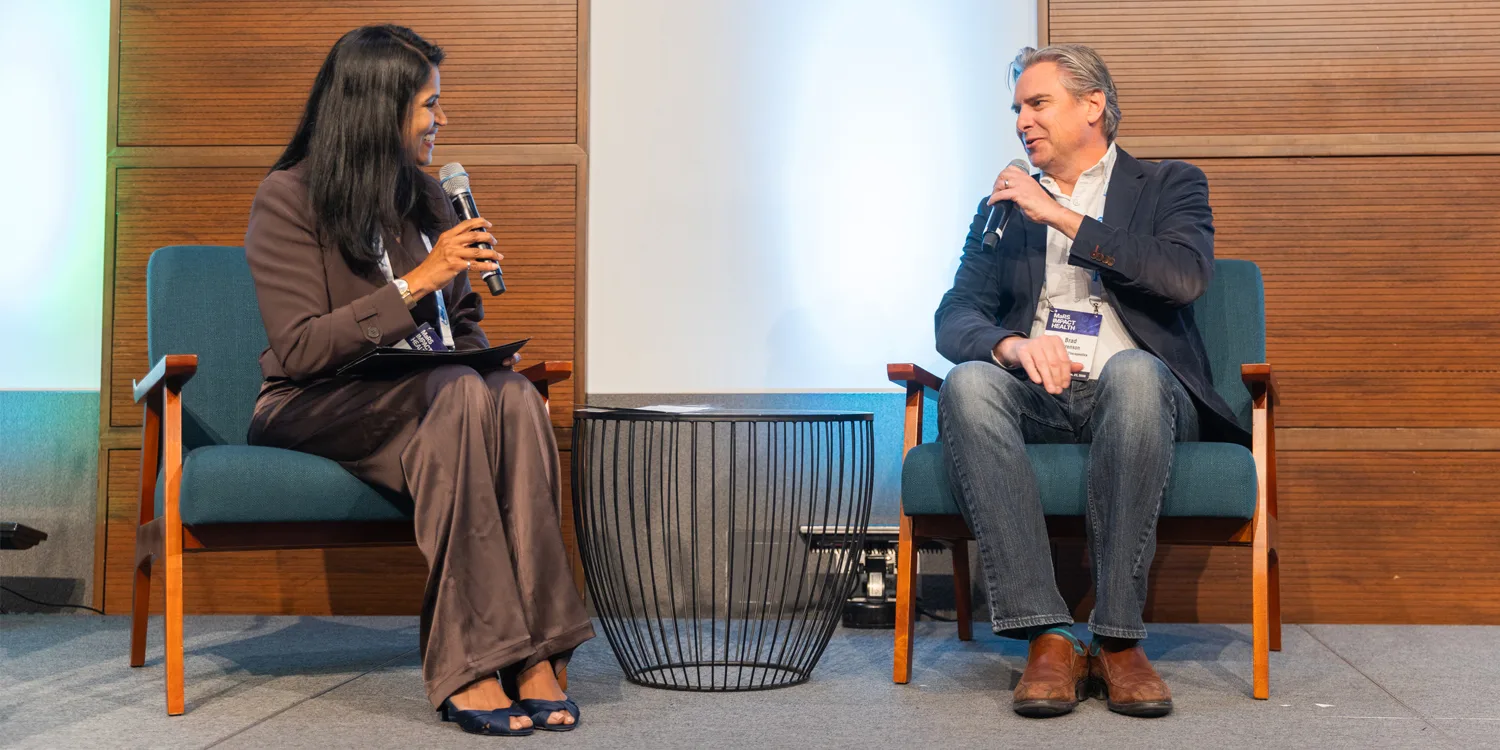
Over the past 13 years, Sorenson and his team have been working against the clock to develop a novel treatment protocol that creates personalized therapies for individuals living with rare types of cancer. In 2024, his son became the first person to receive the company’s mRNA vaccine, and now clinical trials for vaccines targeting GBM and two other pediatric brain cancers are getting underway in Australia. If everything goes to plan, this treatment could be fully commercialized in two to three years. At MaRS Impact Health, Manjula Selvarajah, the host of Solve for X, sat down with Sorenson to find out more about how this could change the standard of care.
Take me back to when Providence started and the personal connection you have with this therapy.
In February of 2013, I co-founded another pharmaceutical company called Arcturus Therapeutics in San Diego, California that was originally focused on rare liver disease. And shortly after we got started at JLabs in San Diego, we got a cold call from a researcher at MD Anderson, asking us if we would use our lipid nanoparticle to collaborate with a target that she was exploring in cancer: glioblastoma multiforme. I remember thinking This is kind of crazy. I co-founded this company that wasn’t supposed to be doing cancer; I didn’t know anything about GBM. So I did a little research and I realized how horrible it was.
We reviewed the data from that proof of concept experiment on a Wednesday in the last week of August 2013. On the following Tuesday, my son got diagnosed with GBM. At that point it was pretty advanced — it was a massive tumour. I don’t believe in coincidence; I believe in providence. And that started the ball rolling. I started up Providence Therapeutics with a very specific focus on oncology and to advance programs for it, because while my son had gone into remission, if anybody is familiar with GBM, it always comes back. So I wanted to be able to have something ready in case.
Now, he was the first person to receive the personalized vaccine. Is that right?
We were fortunate his tumour stayed in remission all the way through until 2023 — 10 years, which is rare in the case of GBM. It actually came back worse. The worst complication of any type of cancer is meningeal spread, where the cancer metastasizes to the brain stem, the cerebral fluid in your spine and the cerebral fluid around the brain, and that’s what happened with Adam. So he had one of the worst cancers, and probably the worst complication of cancer. We rushed to make him a vaccine — he was the very first patient we treated.
At the time he was given about two months to live. We did manage to control the tumour and reduce some of the burden with proton beam radiation in Salt Lake City. That bought us time to make a vaccine. He responded to the vaccine. I want to be clear, he still has cancer, but it’s a very rare case that more than two years out with meningeal spread, it’s stable. So he’s getting another dose of vaccine at 2 p.m. today. It was supposed to be at noon, but he called the hospital and said, “I want to see my dad.” So that’s where it’s at.
And he’s here today — Adam, wave your hand.
It’s so meaningful that you’re here, Adam.
And he’s living his life and doing well. He just finished his first semester in cabinetry and he’s now looking for a job. It’s a wonderful outcome.
What is the overall promise of a precision vaccine for cancer
Based on the success that we had with Adam in 2024, I think it’s going to change the standard of care.
We had the material that we had used for the precision vaccine — we had done all of our enabling toxicology and safety, and we were just preparing to make our application to Health Canada for our phase one trial, when other collaborators asked if we could help some of their patients. I would prefer to see a patient benefiting from something rather than waiting. So I said yes.
We did about three or four compassionate use cases in Australia. Every one of these patients is at a very late stage. They’ve exhausted all other avenues. There’s no standard of care remaining. Over the last two years, we’ve probably done just under 20 in Australia, Canada, U.S. and Europe — about six GBM cases, four pediatric brain cancer cases, a melanoma case, a triple negative breast cancer, two head and neck cases, ovarian cancer. And in all this no patient experienced anything beyond a grade-one adverse event — it resolved on its own without any medical intervention.
We definitely see a correlation between the strength of the patient’s immune system and the response that they have to the vaccine. In the cases where the patient did have an intact immune system we’re seeing about 40 percent tumour control. Again, these are all extraordinarily late-stage cases. So we’re very optimistic that as we go into earlier intervention we’re going to have a significant impact.
You’re running the world’s first clinical trial for rare children’s brain cancer in Australia right now. What is it that Australia offers that that Canada doesn’t have for that kind of pediatric research?
We had some collaborations in Australia when we treated Adam. But I’d like to give full disclosure here: There really isn’t a path to treat these N-of-1 cases in Canada. We have OLIP — the open label individual patient clinical trials — but technically that’s for an approved drug or a drug under study in another jurisdiction, which we didn’t have. So we were planning on treating Adam in Mexico. The week that we were going to have him go down and move the vaccine down there, our import permit was denied and so we didn’t really have a path. I treated Adam at home, and that’s obviously unconventional.
I’m the CEO of a pharmaceutical company. I don’t want to seem like we’re trying to not do something properly. So I made a voluntary disclosure to Health Canada at the end of 2024. They took a couple of months to review and get back to me. And they came back and they said, “OK, you didn’t follow the rules. Happy that Adam’s OK, don’t do it again.”
Adam is under an OLIP in Canada now. The process is very, very arduous — it’s effectively like a full phase one trial for one patient. And it’s not drug development, so it’s very frustrating. In Australia they have what they call the special access scheme, where if you have a willing patient, a willing physician and you clear ethics at the hospital, you just simply notify the Therapeutic Goods Administration. It’s an electronic notification and you can literally go from identifying a patient to treating a patient in, like, under two weeks.
I’m advocating very strongly at the federal and provincial levels for changes in Canada that we can take that approach — because it’s not drug development, it’s patient care. Patient care should not be governed by Health Canada; it should be governed by the hospitals and the systems that are treating these patients. And if we say that access to medical assistance in dying (MAID) is a Charter right, you can’t do that and then say that these people aren’t allowed to fight for their lives. The vast majority of the people who are selecting MAID are people with a terminal cancer diagnosis and they’re not scared of dying — that’s proven by MAID. They’re scared of living without hope. And that could be changed by the stroke of a pen.
What shift is needed for this right-to-try approach?
I don’t want the federal government to create a study. I don’t want them to hire a bunch of consultants. Australia is a Commonwealth country — copy what they’re doing, because it’s working amazingly well.
Why am I doing this study in Australia? Because I get $0.40 back on every dollar I spend in Australia. And for phase one trials, you simply notify the TGA and you do not have to use good manufacturing practices (GMP) material. You can use GMP-like materials that have certain release criteria. So the speed to be able to start that phase one trial, the cost of being able to start that phase one trial, and the tax incentives for running that trial in Australia are all completely superior to Canada in every way.
Have you ever worried about falling into the biotech valley of death or felt its ominous presence?
People ask, how did we do it? And can we copy that? Providence is a unicorn. We have no institutional investors. We have about 350 shareholders who are all accredited, high net-worth individuals and folks that I’ve met through my sphere of influence and word of mouth within our shareholder pool. That will likely change at the end of the second half of this year as we start adding institutional investors and other strategic investors, but it’s allowed us to be very mission focused. We’ve been able to take control of how we want to develop things. If we need to pivot, we can pivot. We don’t have to worry about what the shareholders or venture fund is going to say about it — but that’s not an easy road. You have to be very disciplined and you have to have a lot of confidence in your science to be able to do that.
So it’s not a recommended road, is what I’m hearing.
Well, if you can pull it off…. We’re at a point now where we’ve actually succeeded.
It kind of bugs me: people talk about commercialization, and in Canada that means you sell to the U.S. For me, commercialization is actually generating revenue and having a revenue stream from an asset that you’ve developed and you’ve gotten licensed. We are about two-and-a-half years away from being commercial with our products and we’re about six months away from being commercial with our technology.
There’s just a huge dearth of capital in Canada right now. And the capital that is in Canada is of the mind that they want to get something and transact it because they want their exit. And historically, the exit in Canada is not commercialization. The exit in Canada is to be sold.
What’s next for Providence?
We are initiating two trials this year. We’ve got our personalized trial in Australia, where we’re targeting diffuse midline medulloblastoma. And then we are hoping to launch TX 102 here in Toronto with the UHN. We’re very close.
About this series
The Building Biotech series explores various barriers biotech startups face in commercializing their solutions in Canada. We conducted in-depth interviews with 50 experts nationwide, issued a national survey to 320 biotech companies (receiving responses from 33 firms), and held a roundtable discussion with 25 sector leaders. Find other articles in the series here.
-
 MaRS Staff