Fan metrics are shaping the new world of women’s sports
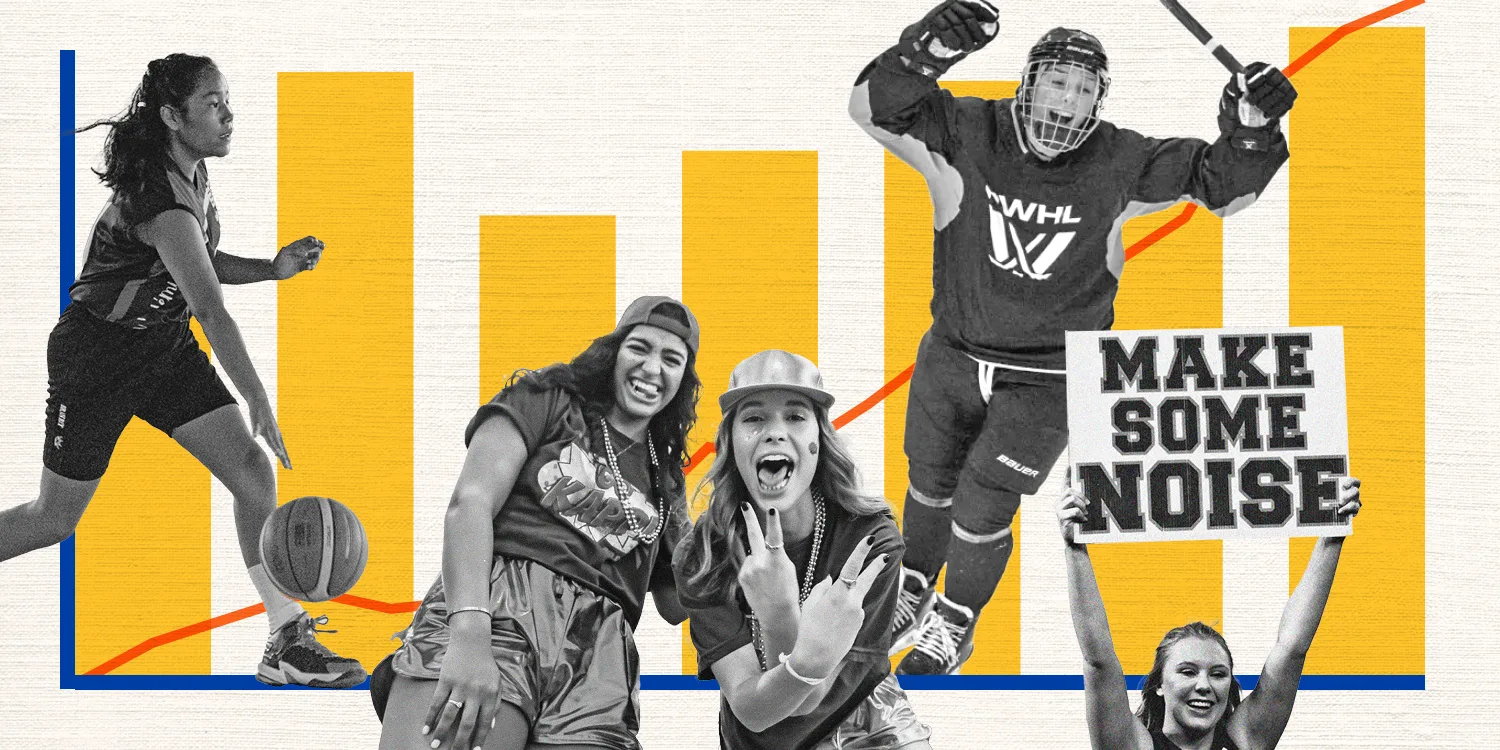
Professional women’s leagues are exploding. But to maintain that momentum, they need to understand who exactly their followers are.
Everyone watches women’s sports. In 2023, that slogan, dreamed up by the sports apparel and marketing company Togethxr, was a witty rebuke to dismissive sexist sports fans. In 2026, it’s an undeniable fact. In the last couple of years, pro women’s sports leagues have launched with startling frequency: the Professional Women’s Hockey League in 2024, followed by Unrivaled (an off-season basketball league), the Pro Volleyball Federation (now Major League Volleyball) and soccer’s Northern Super League. This past spring, the WNBA expanded to 15 teams, including its first in Canada, the Toronto Tempo. This fall in the PWHL, four more teams will join the existing eight.
Fans are flocking to these leagues, filling arenas, stadiums and coliseums across North America. Hockey devotees are coming for the fast, physical play and staying for the new rituals (like trading pucks for friendship bracelets). Soccer is pulling in new audiences, full stop; in Calgary, where the Wild FC is the province’s only professional women’s sports team, a quarter of the fans don’t follow any other sport. Meanwhile, the Tempo is being marketed as “Canada’s team.” Montreal and Vancouver are hosting regular-season games, while fans travel from Winnipeg and beyond to catch the action in person.
But ensuring a league’s long-term success goes well beyond the “if you build it, they will come” mentality (to borrow from a baseball classic). Brand loyalty doesn’t happen overnight; the better you understand your followers, the faster you can turn them from casual fan to lifelong supporter.
Increasingly, leagues are using fan data to get to know the people attending games, how they interact with the teams and what they are most interested in. Using that information to shape marketing campaigns and in-arena experiences ultimately improves the fan experience — and a league’s bottom line. “Data is an incredibly invaluable currency,” says Toronto Tempo president Teresa Resch. “In order to make great decisions, you need to make sure that you have good data.”

Vincent Ircandia has spent the last decade determining how sports teams make the most informed decisions. In 2016, Ircandia, a former analytics executive for the Portland Trailblazers, co-founded StellarAlgo, a customer data platform that’s transformed the sports world. Its AI-powered platform collects every bit of fan data it can, from ticket and merch sales to app visits. It then uses this data to give sports teams a comprehensive snapshot of each one of their followers, helping them to predict engagement opportunities and boost revenue. When a team logs onto StellarAlgo’s platform, it can look at demographic breakdowns, how fans are spending and where they’re at in their fan journey. Who is going to more games? Who has lapsed? Who might be open to paying premium prices for primo seats and better access to their favourite players? The Calgary-based firm currently works with more than 230 sports teams and 11 pro leagues, including the WNBA, across North America.
The recent explosion in women’s sports represents both a new opportunity and a different challenge. “Fans of women’s sports are incredibly passionate,” says Ircandia. “They want more content, to connect more with the athletes, to be at the live events. It’s an incredible growth story, and compared to men’s sports, the business model is still in early innings. The upside is huge.” Indeed, according to a report released last October by Canadian Women and Sport, the market for women’s professional sports in Canada has doubled since 2023, from roughly $200 million to $400 million. It’s on track to reach $570 million by 2030.
As Ircandia points out, though, most of these leagues are in their relative infancy. And, unlike men’s leagues, which can leverage generations of fandom, the women’s leagues are in the process of creating their history and building community. To that end, the PWHL hosts a Unity Games series that includes a Black History Celebration honouring Black leaders in hockey; the NSL holds “Pride is on the Pitch” events for the 2SLGBTQI+ community; and the Tempo throws regular theme nights, including Asian Heritage, Indigenous Heritage, Youth Jam and Carnival.
“I think the women’s sports teams and leagues are being aggressive about trying to understand their fans,” says Ircandia. “And then scaling those relationships with fans at a rate that’s a little unprecedented.” That’s where his company can help, he argues. New women’s sports teams are effectively in startup mode; StellarAlgo’s tech can act as a kind of force multiplier when it comes to follower engagement.
A rock-solid fan strategy also begets advertisers and sponsors, which means more money to attract coveted athletes. Franchises aren’t the only industry players keen to see what data can do for them: the sports-sponsorship market is predicted to be worth nearly $110 billion within the next five years, and those companies are looking for big returns.
Converting curiosity into loyalty means building something intentionally suited to today’s sport ecosystem, says Katie Lebel, an assistant professor at the University of Guelph’s Gordon S. Lang School of Business and Economics, who tracks fan development and gender equity in sports. According to Lebel, women’s leagues have been successful at relating to fans largely because they launched in the era of social media. “Many younger fans engage with sport through digital platforms that feature athlete storytelling and community-driven experiences rather than just traditional broadcast viewing,” she says. Instagram posts about the Tempo players’ tunnel fits garner as many likes as highlight reels from actual games. A video of PWHL superstar Marie-Philip Poulin and her wife and Montreal Victoire teammate Laura Stacey eating Italian poutine out of the Walter Cup in Poulin’s hometown of Beauceville, Quebec, is among the team’s top posts of the season.
In recent years, the WNBA has been smashing its fan engagement records: nearly two billion views across its social media platforms in 2024 (up from 378 million the previous year), plus a 252 per cent growth in monthly active users on the WNBA app. The number of girls under 18 watching the league more than tripled in 2024, the largest increase for a single age and gender bracket. Those girls are among the key reasons the league was the fastest growing brand in professional sports that year.
For one of the WNBA’s newest teams, the Tempo, the value of data can’t be overestimated. It’s been gathering information about its fans from day one, when the franchise ran a contest asking Torontonians to name the new team. Now, thanks to StellarAlgo’s league-wide deal with the W, it’s using that platform to begin segmenting that data, drilling down into the numbers to figure out how best to leverage them. And that information can emerge from almost anywhere, says Resch, the Tempo president: “When somebody comes up to you at a game and says, ‘I never watched sports before, but now I’m the hugest Tempo fan,’ that’s a data point.”
StellarAlgo is part of the Momentum portfolio at MaRS. Learn how the Momentum program helps companies scale to $100 million and beyond.
Photo illustration: Stephen Gregory; photos PWHL, Unsplash
-
 Stéphanie Verge