Hire Learning: Examining what it’s like to work at virtual healthcare provider Maple
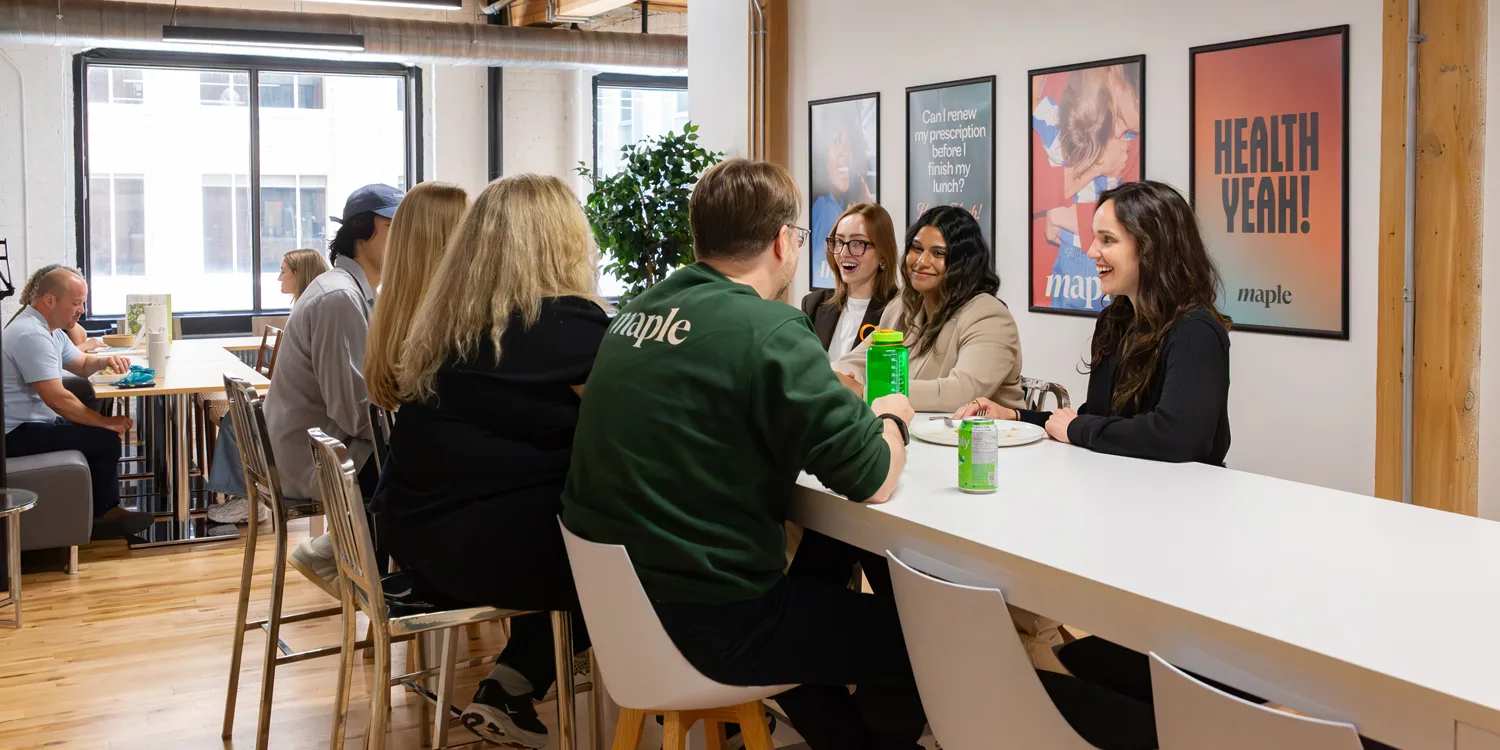
As the fast-growing Toronto-based company looks to improve access to care across the country, it’s scaling up its team.
Maple, a virtual healthcare provider, has an uncompromising vision. “Our purpose,” says Selina Miah, vice president of people and culture at the Toronto company, “is to meet the world’s healthcare needs.”
Offered through a direct membership, a provincial health system or employer coverage, the platform allows users to book virtual appointments with licensed doctors and nurse practitioners.
Since launching in 2015, Miah says the company has enjoyed 30 percent year-over-year growth, driven by steady increases in patients and consultations. Today, Maple has more than 2,000 healthcare providers across the country virtually caring for nearly 8 million users.
CEO Brett Belchetz was inspired to build the platform to help alleviate the strain on the healthcare system that he saw first hand as an ER doctor. It’s estimated that one of every seven emergency department visits in Canada could be managed by a primary care provider, and more than half of those could have been handled virtually. However, more than 6.5 million Canadians do not have a family doctor.
To meet this growing demand, Maple is ramping up its head count to meet its growth targets. “We hire for where we’re going, not just where we are today,” Miah says. Here, she shares how Maple’s offerings have evolved, how a health tech company keeps its employees healthy and the best places near its downtown offices to sneak in an after-work sweat (or sweet).

Selina Miah is the vice president of people and culture at Maple.
Has the challenge Maple set out to solve changed?
While Maple started because of a doctor shortage, we’ve moved beyond primary care to include a range of specialties, including dermatology, pediatrics and weight management, and we recently acquired a company called Beyond ADHD to expand our virtual mental healthcare.
Who are the healthcare providers on the Maple roster?
They are independent Canadian-licensed practitioners who have the flexibility and agency to connect with patients when they have the availability to do so. Sometimes they have their own practice during the day and are seeing Maple patients in the evening or the weekend. We have a very rigorous vetting process to verify licenses and insurance to ensure that they meet provincial regulatory standards.
How does a virtual platform address a medical issue that needs urgent or in-person care?
Patient safety is always the top priority, and Maple is not a replacement for emergency care. If a patient presents symptoms that require an in-person assessment, providers will advise them to seek in-person care through a walk-in clinic or emergency department, when appropriate. Providers can order lab work and write prescriptions that users can pick up at a pharmacy of their choosing or write referrals to specialists.

A practising physician, Brett Belchetz was inspired to launch Maple to alleviate the strain on ERs.
For a virtual healthcare platform, are all your employees virtual, too?
We’re hybrid. Our official policy is two days in-office, but many of our people are in the office five days a week. One thing we recently introduced is the ability to work from a destination of their choice. If they’re on vacation, they can also spend a few extra days working from there, too. We give them that flexibility.
How do you screen for the people part, not just the experience?
Values alignment is a core part of every hire we make. We spend a lot of time understanding how candidates think, how they work with others and whether they genuinely care about improving healthcare access. Curiosity, accountability and continuous improvement matter a great deal at Maple. Those qualities are incredibly important to our culture and long-term success.
How does a health tech company prioritize health for its employees?
We have lunch and learn sessions that are tied to wellness, whether that’s meditation or a spin class or a workshop on financial health. In February, we hosted something called the step up challenge to get people more active during a time of year when the weather’s quite dreary. I think someone reached 30,000 steps in one day.
Any other Maple traditions?
We have bi-weekly social gatherings we call “time together.” One employee hosted a paint and sip night. We hosted an evening of trivia about all the places that Maplers have travelled to, and we brought in food that represented different places across the world. Department leaders also have a budget to engage in team activities, whether that’s group cooking classes or escape rooms.
The Maple office is in the Entertainment District. Do you have a favourite spot you like to go to?
I love being downtown. I love going to The Well for shopping or Sweat and Tonic for yoga.
What’s the food scene like?
I drink tea, but you can find Maplers at Dark Horse Espresso Bar. They have the best carrot cake. And then I have some favourite restaurants. I love Akira Back, which is right next to the Bisha Hotel. And Pai, which is literally around the corner, is fantastic.
To find out about current opportunities at Canadian startups, check out the latest post about jobs in tech.
Photography: Kelvin Li
-
 Alex Kinsella