How defense spending could help Canada beyond the military
Scaling up dual-use technologies can help bolster domestic supply chains, monitor crops, support environmental initiatives and foster new innovations.
GPS, duct tape, the internet, microwave ovens. The list of technologies developed for military use that have crossed over into civilian life is a long one. Even Silly Putty originated as a Second World War engineering project. Now, the Canadian federal government is aiming to stimulate a new wave of these dual-use technologies.
Prime Minister Mark Carney has pledged that Canada will more than double defence spending to hit 5 percent of GDP by 2035. The government wants to use this enormous budget to support Canadian sovereignty in its broadest sense — building up industries and securing supply chains while making Canada’s armed forces fighting fit. Ottawa has earmarked $241 million to support small and mid-sized Canadian companies developing technologies that straddle defence and civilian use.
The funding has caught the attention of startups and venture capitalists operating beyond the traditional defence industry. Maura Campbell, CEO of OBIO, says the defence budget could be game-changing for healthcare companies: “The amount of spending they’re talking about is bigger than any defence-related investment we’ve seen in the life sciences federally or provincially, so it’s worth it for companies to figure this out.”
Here are four areas of the economy where dual-use technologies are set to make the biggest impact — and what else is needed to bring them to the market and to the military.
1. Emergency healthcare
The potential for dual-use technologies is probably greatest in healthcare. Anything that could help reset a bone or stem bleeding on a battlefield will also be useful for emergency medicine in remote communities or natural disaster response.
In the weeks since Prime Minister Carney unveiled his defence plans, Campbell has been compiling a list of startups working on products that could have dual use. “OBIO works with hundreds of life sciences companies, and with almost every company I look at, it isn’t hard to see a dual-use application.”
Campbell’s list includes Qidni Labs, which has developed a portable and nearly waterless kidney dialysis machine that won first place in a NATO innovation challenge last year. (Kidney failure is a common consequence of battlefield injuries.) Deep Breathe has developed a portable AI-powered ultrasound that can rapidly diagnose lung injuries, giving frontline medics vital information when lives are at risk.
Meanwhile, there are a host of companies whose technologies could be used to guard against even darker scenarios, such as a bioweapon attack or another pandemic. Vasomune Therapeutics, for instance, is developing medicines that support the body’s ability to defend against infectious diseases. Its candidate drug aims to stop a life-threatening breakdown of the lining of blood vessels that sometimes occurs after infection or injury.
But Campbell warns that some of the most promising healthcare technologies may already be spoken for by the Pentagon, which has been investing in Canadian health startups for decades. “The U.S. is already scouting a lot of Canadian technology. They have poured millions of dollars into Canadian companies and some of the most obscure technologies have been of interest to them,” she says. “We’re playing catch up right now.”
2. Monitoring threats of all kinds
In a country as vast as Canada, drones will play a major role in detecting and responding to threats. Canada already has such expertise, with companies like Flash Forest and FireSwarm developing rugged aerial vehicles capable of operating in areas hit by forest fires. In a crisis, these kinds of devices could be adapted to monitor or drop supplies into remote areas.
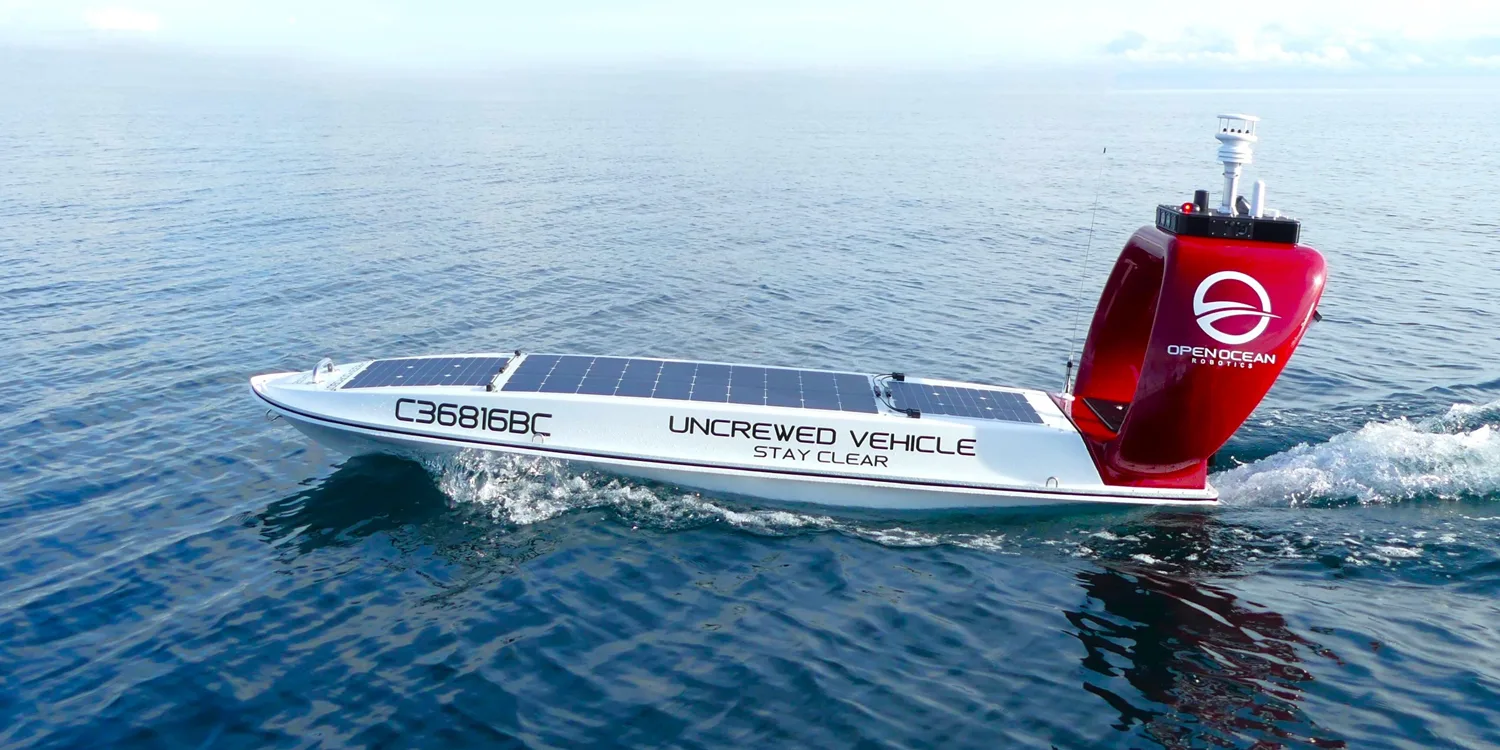
But Canada also has 5.75-million square kilometres of coastal waters to defend, and its navy and coast guard are stretched; Canada’s next generation of surface warships won’t be operational until 2035. But seagoing drones can be spun up far quicker. Victoria-based Open Ocean Robotics, one of Canada’s leading drone makers, says it can produce two of its base unmanned surface models a month.
One of its autonomous vessels has been deployed in the Port of Prince Rupert in northern British Columbia for security and environmental monitoring. Approximately 4 metres long and similar to a small speedboat, Open Ocean’s vehicles carry sensors, cameras and AI technology to detect other surface vessels, classify them and transmit that information back to a command centre. The drones can be outfitted with additional devices, such as hydrophones for acoustic monitoring or sonar systems for underwater detection. They can also track weather and wave conditions, and can remain at sea for weeks.
“Providing tools to help us better protect our coastline will also provide tools to better understand our coastline,” says Julie Angus, co-founder of Open Ocean. “It can have a meaningful impact for many northern communities in understanding how the ocean is changing as well as providing critical security.”
3. Creating better batteries
Armies used to march on their stomachs. Now, they roll with batteries. Today’s militaries are laden with communications equipment, laptops and vehicles, and there is an urgent need to have the best batteries. Mississauga-based e-Zinc is developing a zinc-based battery system at the U.S. military’s Miramar naval air base near San Diego that could be safer than fire-prone lithium-ion batteries, and could eventually be used in electric vehicles. Meanwhile, Canada’s Department of National Defence is looking to develop solid state hydrogen storage solutions that would be capable of powering ground vehicles on the battlefield.
But keeping batteries charged in the field is a major logistical problem — particularly in cold environments, which sap their usable charge as well as their long-term lifespan. Kostyantyn Khomutov, CEO of Ottawa-based GBatteries says some drone operators go to extreme lengths to keep batteries warm: “They hold them close to their bodies to heat them up before they can start flying.”
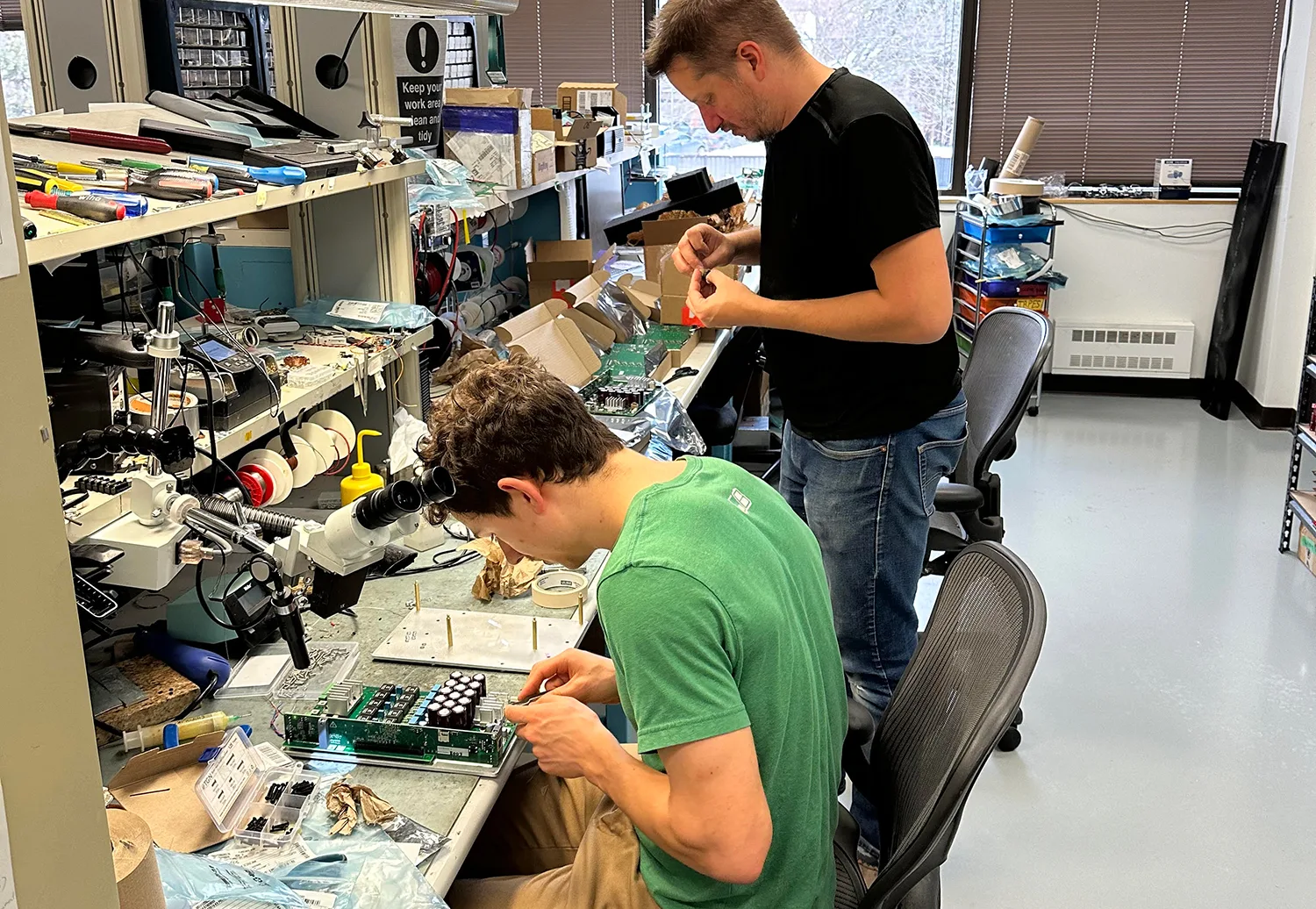
GBatteries has developed a sophisticated pulse charging system, which can power up batteries quickly and heat them without compromising their lifespan. The company has been accepted into NATO’s DIANA defence innovation accelerator, which works across the alliance to speed up the development of dual-use technologies and build connections between defence industry suppliers and startups.
Khomutov says GBatteries’ technology could also strengthen Canada’s sovereignty by helping ensure its food security: “We believe our technology has applications not only in defence and border patrol but also to help monitor crops and animal feedstock in remote locations. Being able to use drones is a huge advantage for farmers.”
4. Advancing manufacturing
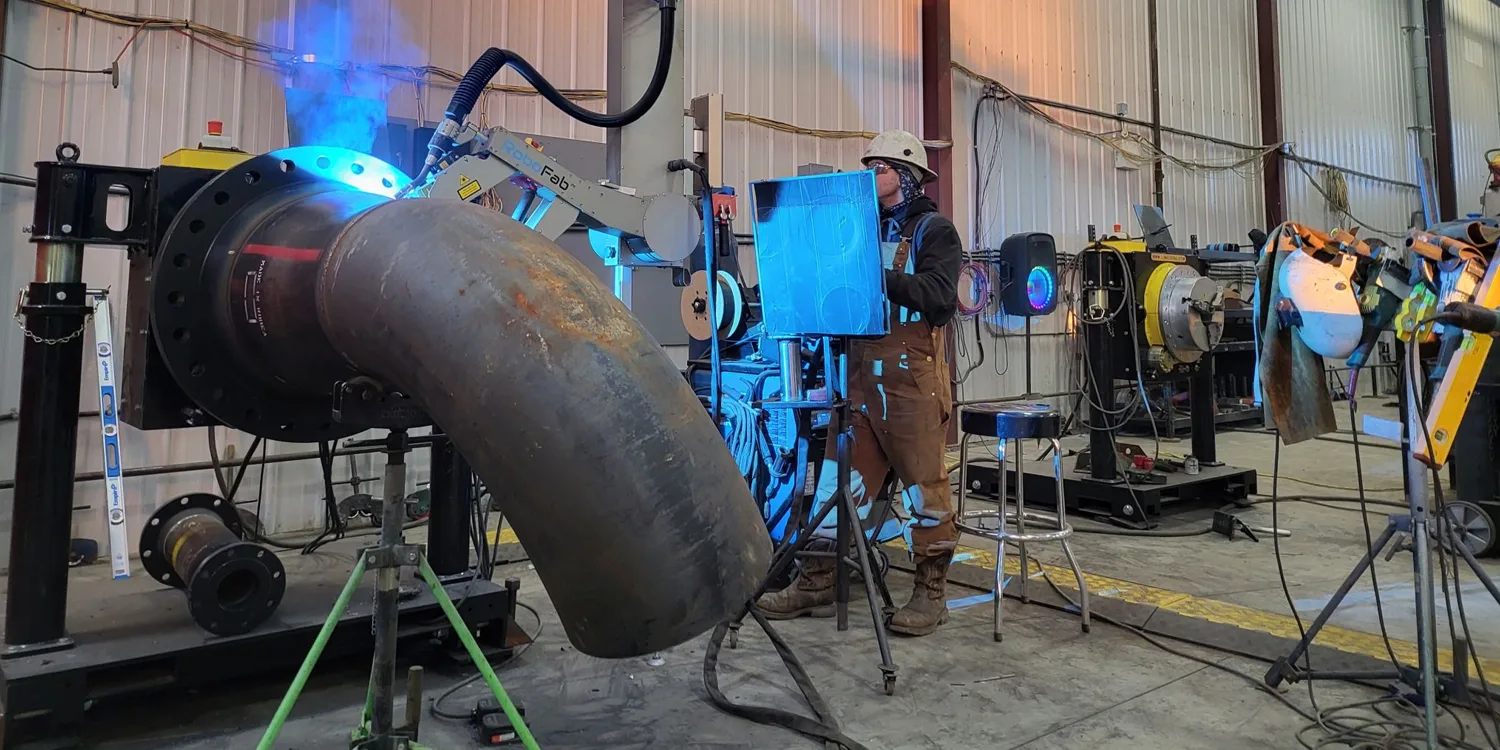
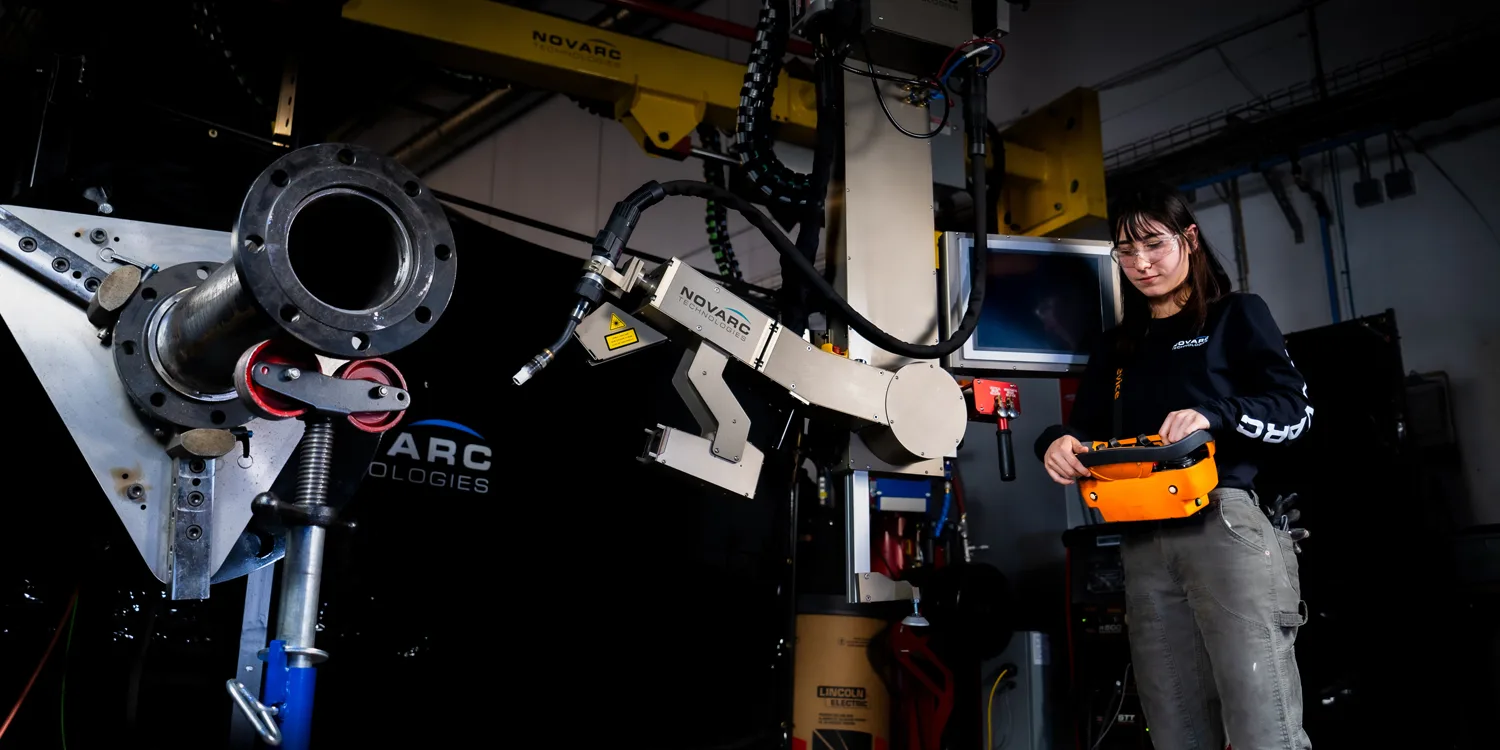
Soroush Karimzadeh, CEO and co-founder of Vancouver-based Novarc, understands the potency of smart public procurement. Today, close to 200 of Novarc’s automated welding machines are in service across four continents, and they have welded enough pipe to circle Manhattan seven times, Karimzadeh says. But a decade ago, the fledgling company was struggling to land buyers for its cutting-edge technology. After the Canadian government became its first customer through an innovation program, orders started rolling in. “If it wasn’t for that, I don’t know if Novarc would be here today,” he says.
Ottawa will be hoping to repeat that feat as it seeks to develop Canada’s domestic defence industry. A key capability will be our ship-building sector, which has fallen behind such countries as China and South Korea. Karimzadeh says the sector needs to embrace automation to catch up. Novarc’s technology demonstrates the level of efficiency gains possible. One of its robotic welding machines has been installed at Seaspan’s dry dock in Vancouver where it joins pipes used in treating water from ballast tanks. It cuts the time to make a pipe joint from more than four hours to 40 minutes.
“Having an automated and advanced manufacturing sector is one of the competitive edges of any nation now,” says Karimzadeh. “As we control four key elements simultaneously — AI, welding, vision and robotics, we are in a unique position to address skilled labour shortages by making people more productive and efficient. We want to help make sure that Canada is safe and prosperous for many decades to come.”
Needed: More than money
Massive new defence funding will be a boon for many companies. But some experts warn that parachuting money from Ottawa won’t be enough to create sustainable industries and a capable military on its own.
Trevor Grosse is a former soldier turned defence technology consultant at Archean Strategies and a volunteer advisor at MaRS. He has concerns that Canada’s approach to defence procurement could leave good ideas on the table: “Although the existing procurement system is theoretically accessible to all Canadian companies, the reality is that it is so complex and opaque that only a small community of Canadian innovators can effectively navigate it.”
Campbell from OBIO also sees knowledge gaps to be filled. For a start, the range of possible military-civilian mashups is so great that some companies might not even realize their technology could fit: “The flip side of the coin is National Defence does not know how to look for healthcare solutions. They don’t know which companies are out there.”
Encouragingly, the government is taking steps to address this. It has announced plans to set up secure innovation hubs where the military and industry can collaborate. But Grosse says there’s a long way to go. “Building dual-use technologies for the military is not easy and not for everyone,” he says. “At the same time, if the sailors, soldiers and aviators of the Canadian Armed Forces are going to deter military aggression and defend Canada, we need a dual-use ecosystem that is competitive, nationwide and focused on people in uniform.”
Discover other ground-breaking solutions on MaRS Connect, a curated digital platform designed to accelerate real connections between Canada’s top startups and serious adopters, investors, and ecosystems leaders.
Photos courtesy of Norvarc Technologies, Open Open Robotics, Courtesy GBatteries
-
 MaRS Staff