How one B.C. venture is trying to stop water pollution at the source
Manufacturing and dyeing clothing has long been a driver of environmental devastation. But new technologies could catalyze a necessary sea change.
The world’s been in a worsening water crisis for decades, but this past January, a UN report declared that we had entered a new, far more ominous, phase: global water bankruptcy. Humans now consume so much fresh water, amid so many climate disruptions, that historically renewable sources — aquifers, basins, reservoirs — are running dry and not filling back up.
According to the report, this state of “living beyond our hydrological means” is the result of a number of factors. Climate change, of course, which has led to less precipitation, more thirsty agricultural crops and faster glacial melt. There’s greater demand for this resource because of the expansion of cities and industry (and now, data centres). But also, crucially, we’re seeing a decline in water quality due to soil salinization and pollution. “Drought and water shortages are increasingly driven by human activities,” wrote the report’s author, Kaveh Mandani, “rather than natural variability alone.”
Clothing manufacturing is among the most destructive of these human activities. The textile industry consumes 215 trillion litres of water every year and uses 15,000 different chemicals in its manufacturing processes. Almost 8 trillion litres of that water is used to dye clothes, then left to flow, untreated, back into rivers, streams and lakes — now filled with harmful chemicals. Those pollutants can turn rivers black, harm marine life and cause cancer. “The textile industry is one of the worst polluters in the world,” says Kelly Drennan, founding executive director of Fashion Takes Action. “We used to have fast fashion that put out like 100 new styles every week. Now we’ve got ultra-fast fashion, which puts out 6,000 new styles every day. It’s taken things to a whole new level.”
It doesn’t look like we’re planning to give up our barrel jeans anytime soon. Despite recent tariff turmoil and increased scrutiny of fast fashion’s carbon footprint, retail sales of clothing are booming. To mitigate the textile industry’s environmental impact, then, we urgently need technologies that retool the whole manufacturing process.
Such tech has emerged in the last couple of years, and it’s tackling the problem from a few different angles. The Vancouver biotech startup, Lite-1, for example, creates environmentally friendly alternatives to synthetic dyes by harnessing the biological responses of common microorganisms (bacteria, algae, etc.) that naturally express pigments under certain conditions. Lite-1’s dyes can be used in a variety of textiles and materials and the company’s already completed pilots with clothing manufacturers in Hong Kong and sustainable packaging firms in the U.K.
A growing number of clothing manufacturers are also replacing water in the dyeing process with supercritical carbon dioxide. Simply put, supercritical CO2 is carbon dioxide that’s compressed until it’s neither gas nor liquid, whereby it can be used as a solvent to dissolve and spread dye into fabric fibres. Unlike the wastewater generated in the conventional dyeing process, this solvent is non-toxic and environmentally friendly. While the Dutch company DyeCoo pioneered this solution in 2012 (and convinced global brands like Nike and Ikea to try it); companies such as Mumbai’s Deven Supercriticals continue to refine and deploy it.
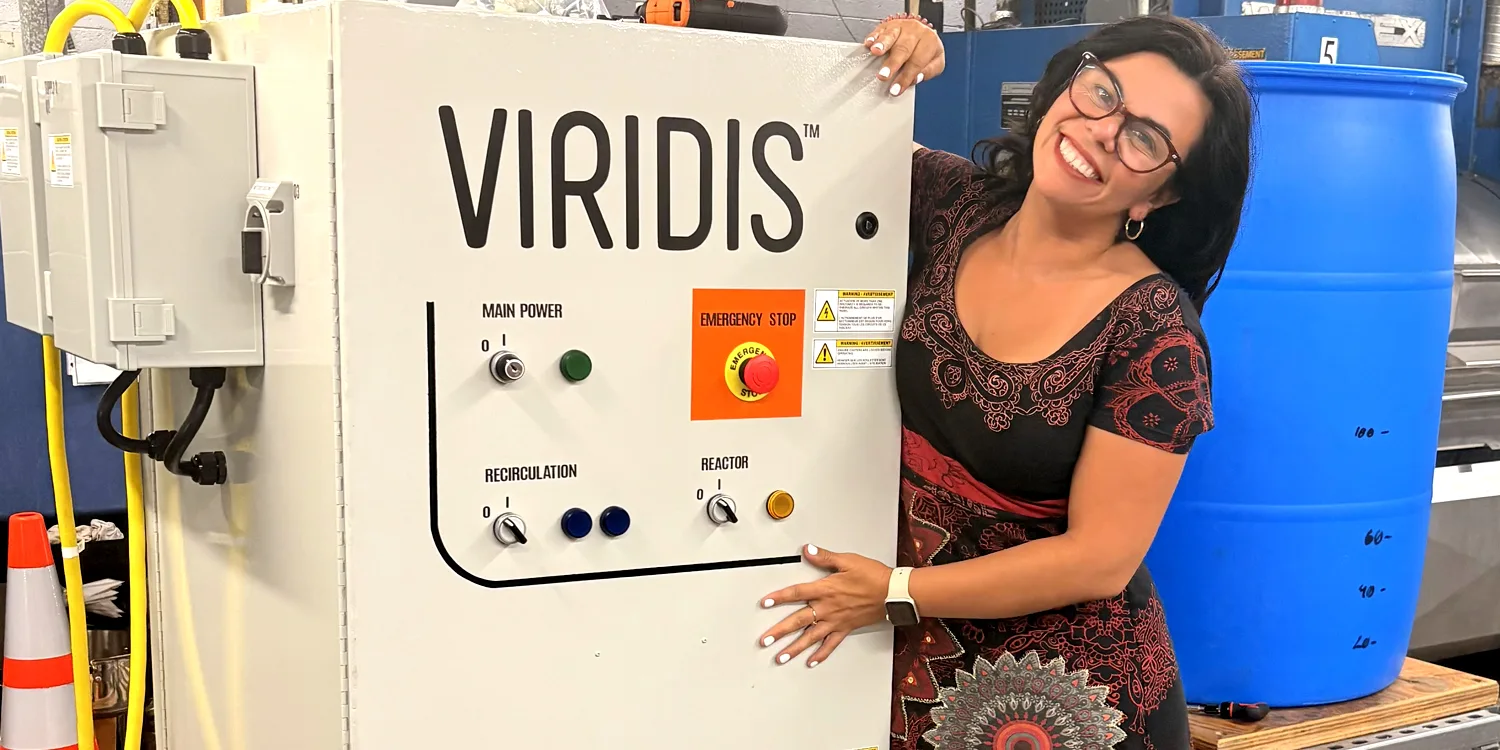
But the most promising new technology in the space might be from Vancouver-based Viridis Research, which was co-founded in 2019 by Macarena Cataldo, a chemical engineer, and Ahmed Erfan, a former Lululemon executive. Cataldo grew up in Chile, fascinated by water and keenly aware of its preciousness. After teaching science in a low-income neighbourhood that had no sanitation or access to clean water, she decided to pursue a doctorate in water treatment technology. “I love water,” she says. “When I think about inequality, I think about water. When I think about how to build a better society, I think about water.”
For Cataldo, this obsession led to the development of a novel electrochemical water treatment process. Essentially, it “cleans” the water by creating a combustion reaction that fully mineralizes any organic contaminant, transforming the toxic substance into reusable nitrogen, water and carbon dioxide. By integrating the technology directly into textile dyeing operations, the system acts an alchemical closed-loop cycle: dirty water goes in, toxins are expunged, clean water comes out and can be used again. Dyes, surfactants and other harmful chemicals are eliminated before they even reach waterways. “It looks like magic,” Cataldo says.
Cataldo first performed this magic publicly in a pilot project at the factory of Montreal hosiery company Sheertex. That successful pilot led to an even bigger partnership with H&M. The Swedish retail giant was intrigued by the environmental impact of Viridis’s system — improved water stewardship is one of the company’s strategic priorities — but equally as important was the economic benefit: Cataldo says that her solution can reduce water costs by 25 to 30 percent.
This past January, Cataldo travelled to Dhaka, Bangladesh to test the Viridis system at three different textile mills that produce clothes for H&M. After China, Bangladesh is the second largest producer of apparel in the world, home to 5,000 textile factories that supply many of the biggest brands in the world. But all that manufacturing has a notoriously dark side — Bangladesh’s factories are unsafe, exploitative and alarmingly polluting. A 2024 study produced by the International Pollutants Elimination Network and the Environment and Social Development Organization found dangerously high levels of toxic “forever chemicals” (i.e., extremely persistent human-made substances found in food packaging, cosmetic, clothing and other everyday objects) in surface and tap water samples collected near textile plants throughout Dhaka.
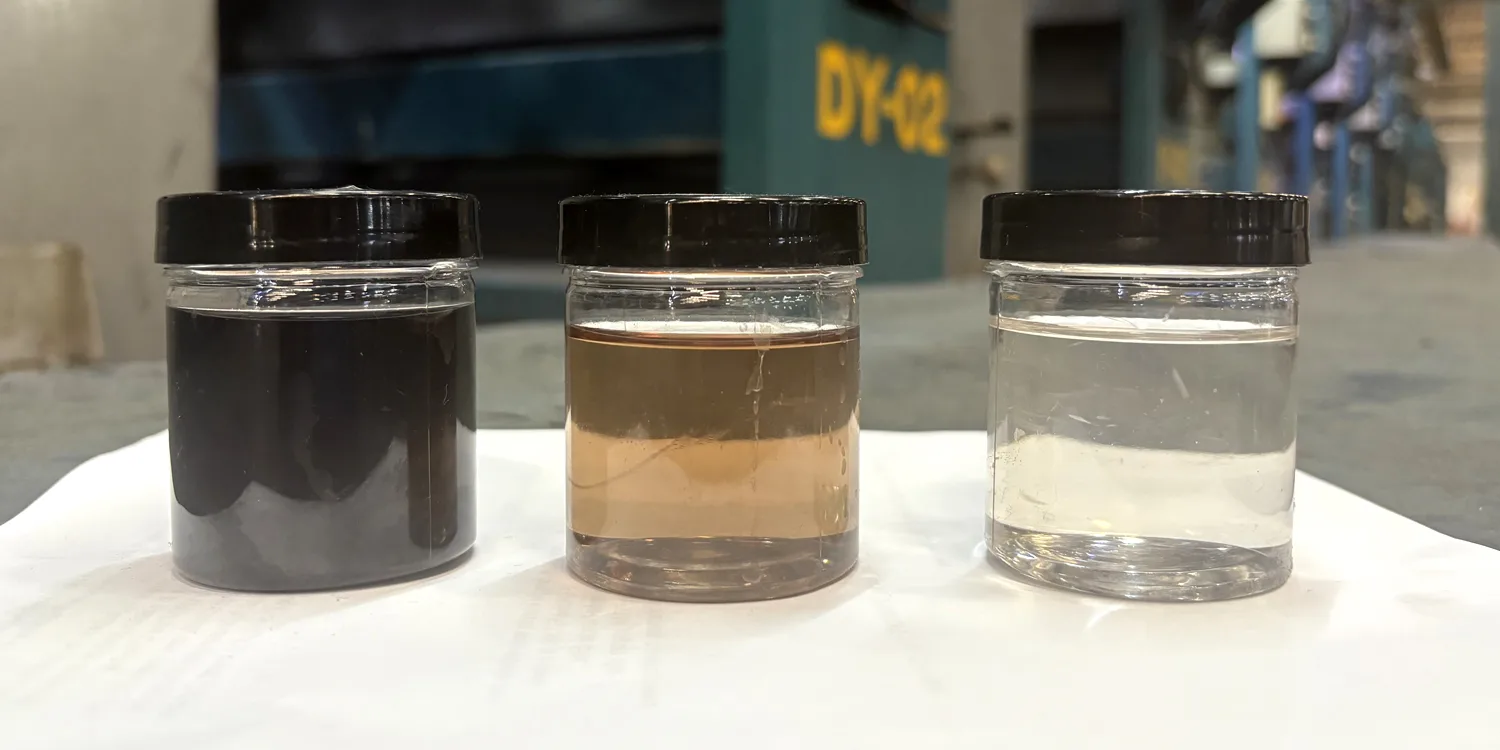
In Dhaka, aside from working with multiple factories, Cataldo also wanted to target different points in the dyeing process. “We wanted to show we could do it in any factory,” Cataldo says. They would clean the water, of course, but Viridis also wanted to determine the exact volume of pollution they were dealing with, the cost-effectiveness of the systems and, ultimately, how much the mills would pay for this new ability to reuse their wastewater. The Viridis system, according to Cataldo, can process up to 100 cubic metres an hour of wastewater, though the flow rate at factories tends to be much lower, about five cubic metres in that timeframe. It takes about 500 litres of water to make a single pair of jeans, Cataldo says, if we count the water used to grow the cotton, to manufacture the pants and then to dye them.
The pilot concluded in February and is currently going through an internal review and technical validation at the mills. Once that’s complete, and if everything continues as Viridis expects, they plan to install commercial units in those same factories. Just to be closer to the problem, Viridis may even build its own equipment facilities in Bangladesh. Though Cataldo can’t yet reveal specifics, the company is in talks with other potential clients in Asia, Central America and North America (including, she says, “one of Canada’s favourite sports and performance apparel brands”).
Viridis is also exploring using its systems in the pharmaceutical industry and to treat municipal wastewater. The company recently carried out a feasibility study with Metro Vancouver, testing its technology on wastewater coming from the hydrothermal liquefaction process, which converts solid waste into fuel. In the coming weeks, Viridis will be running another pilot with a B.C. producer of biofuel.
For Cataldo stopping pollution before it can even start is ultimately the best way to preserve and protect our water. “If we’re not polluting the rivers and lakes in the first place,” she says, “we don’t have to clean it later.”
To learn more about how Viridis’s technology is helping tackle water pollution, listen to the MaRS podcast Solve for X: Innovations to Change the World.
Photos courtesy of Viridis
-
 Jason McBride