Improving the odds for patients with heart and lung diseases
Toronto has long been at the forefront of treating cardiac and pulmonary conditions — and this month, experts gather in the city to discuss the latest breakthroughs in the field.
In a highly specialized room at Toronto General Hospital, a pair of human lungs sits inside a glass dome. They’re warm, nourished and alive — even though there is no body to sustain them. It sounds like science fiction. But the ex vivo lung perfusion system, developed here in Toronto, has been doing exactly this since 2008, keeping donor lungs viable outside the body for up to 12 hours, long enough for surgeons to assess, repair, and optimize the organs before transplant. This technology has doubled the number of usable donated lungs available to patients in Toronto, and the EVLP system is now used at leading transplant centres across five continents.
Toronto has been at the forefront of lung transplantation for more than 40 years, pioneering the first successful transplant in 1983, followed by a series of world firsts, including double-lung transplants (1986), blood-type mismatch procedures in infants (2012) and drone-delivered organs (2021). Today, researchers are even working to change the blood type of donor lungs to create universal organs, which would allow any organ to be transplanted into any patient, regardless of the recipient’s blood type.
That same spirit of innovation extends to the heart. At Toronto General Hospital’s Peter Munk Cardiac Centre, doctors are using machine learning to monitor heart failure patients at home to reduce hospitalizations, and researchers are using AI to better predict transplant outcomes. Last year, the team at the University Health Network (UHN) performed Canada’s first transplant using a heart that had stopped beating, expanding the donor pool and setting a new standard.
In both advanced lung and advanced heart disease, the challenge is that the damage rarely stays contained. By the time intervention becomes necessary, multiple systems — heart, lungs, kidney, liver — have been affected, and when you treat one, another can become unstable. Toronto has become a hub for expertise in tackling that complexity, bringing together clinicians and researchers working at the cutting edge of transplant medicine and critical care. This spring, the city hosts the annual meeting of the International Society for Heart and Lung Transplantation (ISHLT), where experts from around the world come together to share new approaches and best practices in treating advanced heart and lung disease. Here are a few of the breakthroughs already reshaping care.
Mapping the cells that trigger lung-transplant rejection
Transplant procedures offer a second chance at life — but lung recipients face uncertain odds. Lungs have the poorest long-term outcomes of any transplanted organ. Median survival is around 6.5 years, compared to 11 years for liver, 12 years for kidney transplants and nearly 13 for heart transplants. More than half of patients experience chronic rejection — a gradual process in which the immune system attacks the new lung — within five years.
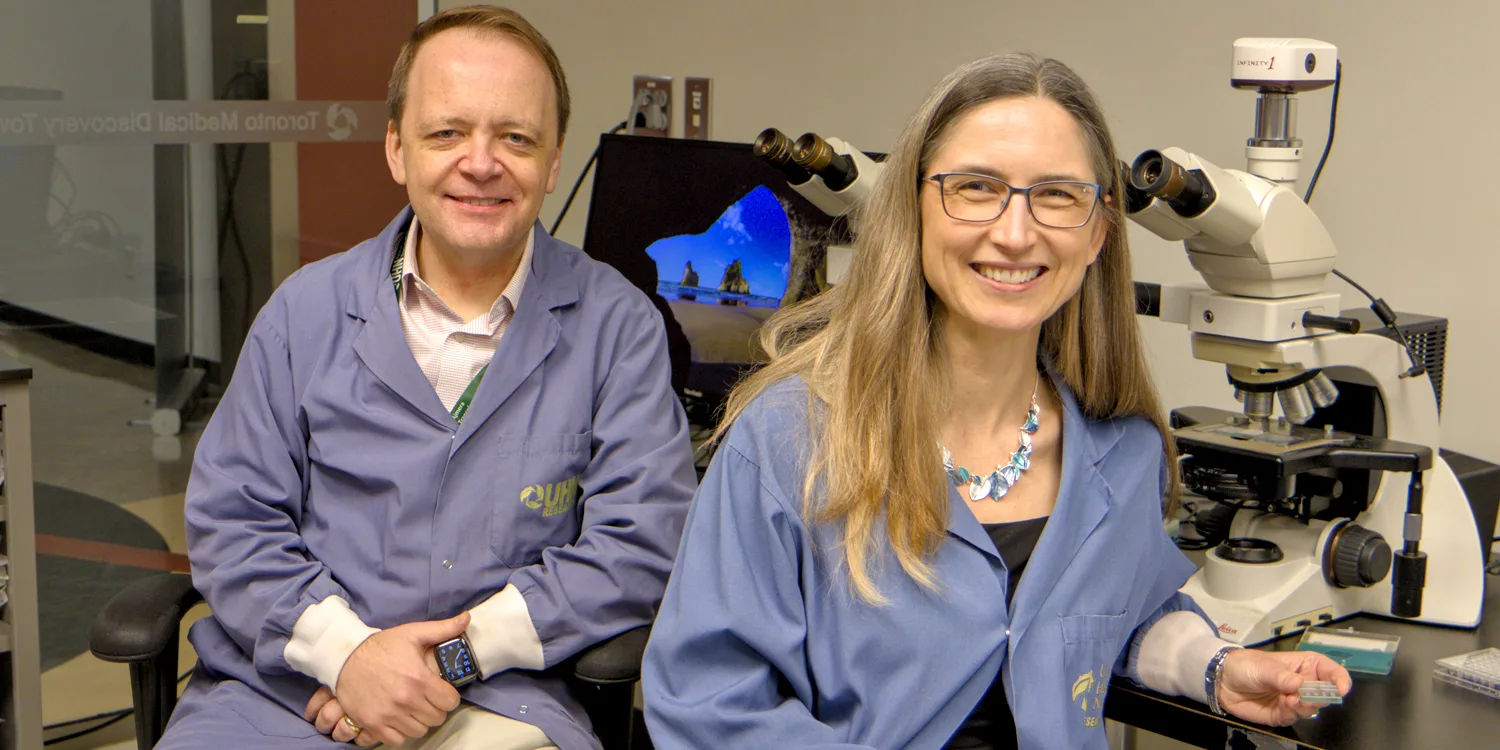
All transplant recipients face the risk of rejection, but for those who receive donor lungs, that risk is compounded: every breath brings a stream of environmental triggers that keep the immune system activated. Standard anti-rejection drugs broadly suppress that response, but not completely. “Rejection still happens,” says Dr. Stephen Juvet, an immunologist and respirologist with the Toronto Lung Transplant Program. “The question is why, and how.”
Chronic lung allograft dysfunction, or CLAD, is what happens when a transplanted lung begins to fail. Dr. Tereza Martinu, a respirologist and researcher also with the Toronto Lung Transplant Program, describes it as a gradual, disorienting loss of airflow. Patients become increasingly short of breath, often without other warning signs — even blood oxygen levels can remain normal. Many patients are left wondering if it’s all in their head, she says. “But it’s a real airflow limitation.”
For years, scientists didn’t understand what drove rejection at a cellular level. The tools available, such as bulk RNA sequencing and flow cytometry, captured the average behaviour of millions of cells, obscuring what individual cells were doing. A technique called single-cell RNA sequencing allowed researchers to read gene activity cell by cell. But it required something that was rarely available to them: fresh lung tissue from a CLAD patient, collected and processed immediately. The only source of this tissue was from patients undergoing a second lung transplant — surgeries that happen without much, if any, notice and are difficult to coordinate with research teams.
A breakthrough came in 2019, when a patient with end-stage CLAD who was preparing for a medically assisted death approached the team at UHN. She’d heard about the research and wanted to help. With advance notice, the researchers were able to collect and analyze her lung tissue in real time, which gave them an invaluable opportunity to map CLAD cell by cell.
That tissue sample unlocked the field. Today, UHN has a database of more than 15 CLAD lung samples, creating one of the most detailed cellular maps of the disease in the world. The findings have already reshaped our understanding of how lung failure occurs: macrophages, long overlooked innate immune cells, actively drive inflammation and scarring; B cells, not typically linked with rejection, help fuel the immune response; and a population of abnormal “zombie” T cells adapt to survive in the transplanted lung’s toxic environment, multiplying and causing damage despite the onslaught of drugs.
Now, researchers are focusing on validating their findings. If these cells appear consistently across patient populations, for instance, they can become targets, opening the door to therapies that home in on the specific drivers of CLAD rather than suppressing the entire immune system. For Martinu, that shift can’t come soon enough. Today, her conversations with CLAD patients are defined by uncertainty and constrained by limited treatment options.. “Right now, there’s nothing more we can do,” she says, “which is a really difficult conversation to have.” If a therapeutic breakthrough were to shift that conversation, she says, that would change everything.
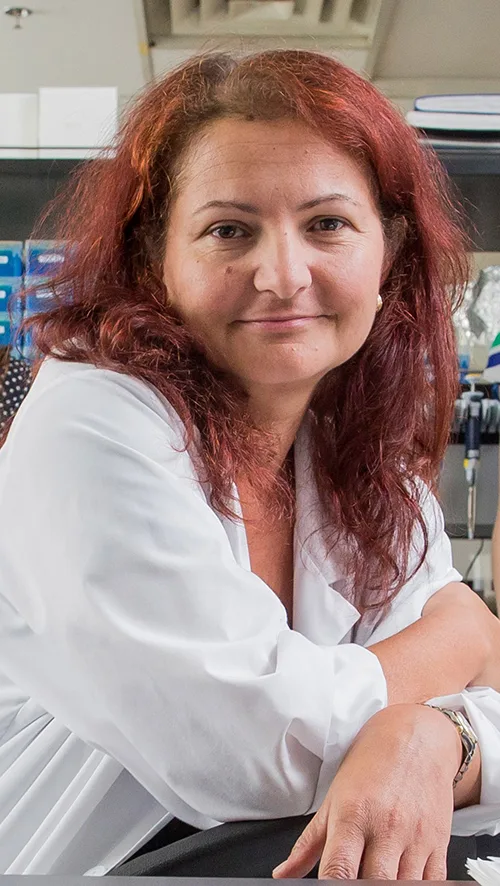
Dr. Phyllis Billia
Buying time in advanced heart failure
In advanced heart failure — the stage at which the heart can no longer respond to standard treatment — decline is gradual, until it’s not. At first, the heart tries to compensate, beating faster to keep blood (and the oxygen and nutrients it carries) moving. Eventually, the organ begins to ration blood to the rest of the body. Muscles fatigue, fluid can back up into the lungs and breathing becomes laboured. Patients find themselves struggling to climb stairs or walk across a room, explains Dr. Phyllis Billia, medical director of the Mechanical Circulatory Support Program at UHN’s Peter Munk Cardiac Centre. Some individuals become so short of breath that they can’t brush their teeth.
“The heart’s not necessarily the problem,” she says. “It’s everything else that’s happened as a result of the heart failing.” Kidneys, highly sensitive to blood flow, start to retain fluid and sodium, further straining the body. The liver becomes congested, unable to drain. The whole body starts to struggle, making surgery far riskier.
That’s where temporary mechanical circulatory support comes in. Billia, who is also the director of UHN’s Peter Munk Cardiovascular Biobank, explains that these pump-based devices take over some of the heart’s work in the short term, enabling clinicians to stabilize the patient. The goal is to restore blood flow to vital organs, clear excess fluid and give the kidney and liver time to recover.
In some cases, that stabilization period can last days or weeks — long enough to prepare a patient for longer-term treatment such as a left ventricular assist device (LVAD) or a transplant. Sometimes it even allows time for patients to regain consciousness after a cardiac event so they can participate in decisions about their care.
What comes next is precision. Billia says researchers are figuring out how to match the right device to the right patient at the right time, while new technologies in development aim to reduce complications. “There’s still work to be done to better define how to care for these critically ill patients,” she adds.
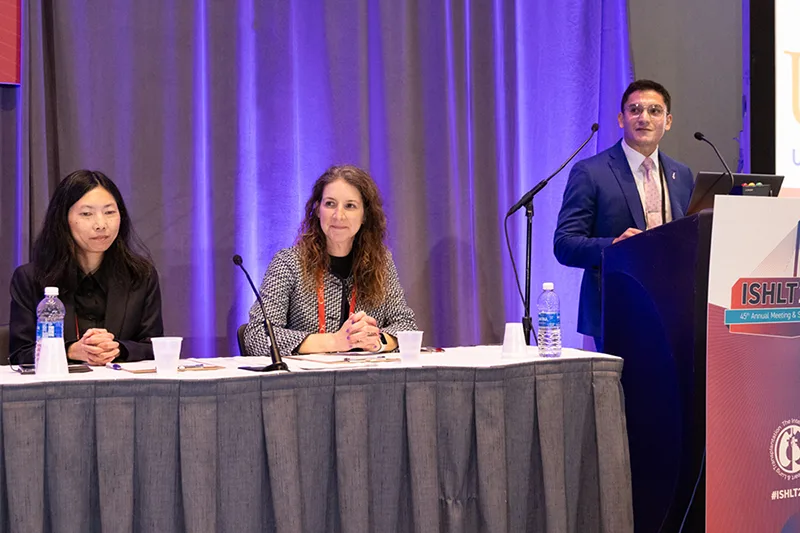
Global experts share their discoveries at the 45th ISHLT Annual Meeting & Scientific Sessions in Boston.
Innovation in heart and lung care on the global stage
The 46th Annual Meeting and Scientific Sessions of the International Society for Heart and Lung Transplantation (ISHLT) will be held at the Metro Toronto Convention Centre from April 22–25. “As the city in which the first successful single and double lung transplants were performed, there is no more appropriate place to hold this meeting,” says Juvet.
The meeting program reflects how quickly the field is moving: dedicated sessions feature expert talks on deciphering the cellular origins of CLAD and the future of mechanical circulatory support, as well as animal organ use, artificial hearts and what lung transplantation might look like a decade from now.
Billia has been attending ISHLT for the past 15 years. For her, the conference is an opportunity to review abstracts, network and hear updates from around the world; bringing the conference to Toronto means everyone involved in care — not just researchers, but nurses, coordinators and allied health professionals — can have access to that learning. “It’s a team sport,” she says.
ISHLT’s 46th Annual Meeting and Scientific Sessions takes place April 22–25 at the Metro Toronto Convention Centre. To find out more, visit the organization’s website.
Photos courtesy of Dr. Stephen Juvet and Dr. Tereza Martinu, Dr. Phyllis Billia and ISHLT
-
 Caitlin Walsh Miller