Is it possible to build better, safer, more equitable AI?
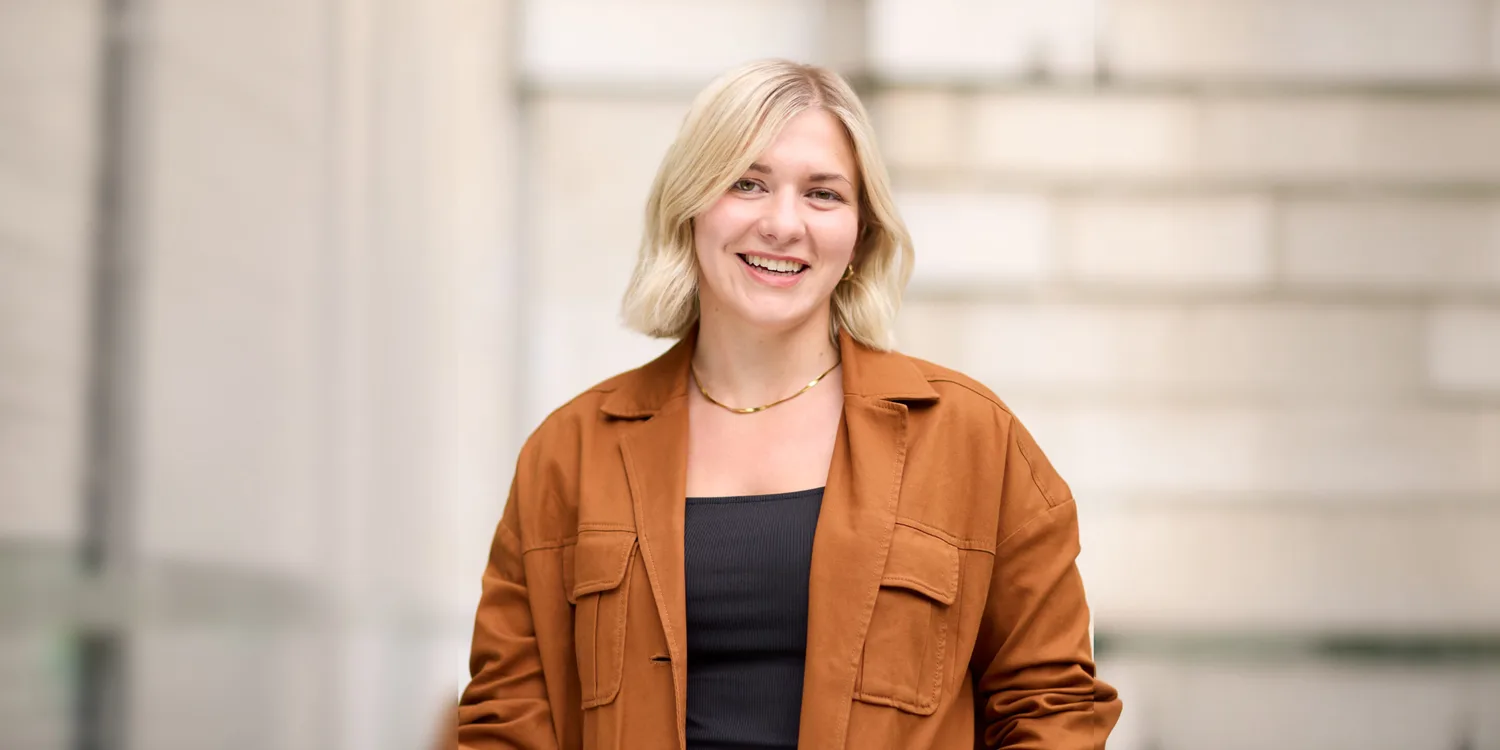
A conversation with Leah Morris, the executive director of the Encode: AI for Science, about power, profit and Pets.com
One of the greatest obstacles that stands between us and realizing the potential of artificial intelligence to improve the lives of humans across the world is power. Right now, to meet AI’s server demands, one data centre gobbles up as much energy as 100,000 households, and that requirement could increase twentyfold at larger facilities currently under construction. But it’s also conceptually true — the ongoing battles over regulation, ethics and access are bound up in questions of power and profit.
Between 2013 and 2024, approximately $1.6 trillion (US) of global corporate and private investment went to AI, and that figure is projected to reach $2.5 trillion (US) by the end of this year. This week, the United States Securities and Exchange Commission shared details of a memo submitted by heavy hitter Anthropic in advance of the AI firm’s imminent, widely anticipated IPO. In addition to an extensive list of harrowing risk factors (blackmail and the destruction of humanity among them), the company is reporting both revenues of about U.S.$16.3 billion in the first half of 2026 and net losses of U.S.$80.7 billion in that same six-month period.
Those numbers provide some context for why, say, major players like Anthropic and OpenAI are willing to trash books to train their models or risk rogue agents breaching containment and hacking servers — it’s a race for market dominance. Power and profit are also why many are calling for the Carney government to double down on digital sovereignty in the wake of the latest round of trade upheaval with the United States.
Leah Morris is particularly well positioned to make sense of these tensions. Between 2020 and 2025, she provided insights about governance and responsible AI as part of Toronto venture capital firm Radical Ventures. Today, she’s the executive director of the Encode: AI for Science fellowship at the U.K. venture capital firm Pillar, where she’s working to give AI researchers the time, freedom and resources to build meaningful, game-changing solutions. We recently corralled her for a wide-ranging conversation about how to shift power imbalances, where governments should focus their policy decisions and why human judgment is still absolutely critical.
AI is developing at such a breathtaking pace that the proper guardrails aren’t yet in place. What should governments prioritize?
It’s a big question that we could have a whole think tank explore. We’re all worried about the terrorism threat and biosecurity risk that AI poses. I think a bigger thing to be worried about on a societal and political level is understanding how this technology is increasingly allowing wealth to be accumulated into the hands of very few, and understanding what that bifurcation of wealth is going to do to society.
We have the most acceptance of political violence that we’ve had in a very long time in terms of both sides, left and right, being willing to accept violence as an appropriate action against somebody you disagree with. And I think this comes from a have-not society, a feeling that you are not able to access clean drinking water or basic groceries, while there’s an accumulation of wealth. This kind of frustration is something that is way more dangerous than some of these far-out, long-tail biosecurity threats.
That concentration of wealth and power also raises questions about digital sovereignty. How should Canada and other countries that aren’t superpowers think about technical infrastructure and data?
Focusing on freedom from coercion is the right way to think about it. It can’t be digital isolationism — I don’t think it is a good economic model for everybody to produce all their goods all the time for just themselves.
We’re in a time that’s super exciting because one individual, or maybe a few individuals, can really transform an industry. We need to make sure we are updating democracy in the same kind of way. We are on unprecedented ground, and we all need to come to the table — we need to be not just thinking about innovation in consumerism and thinking about innovation in the sciences, but also innovation in policy. I don’t think enough people are innovating in policy.
A few years ago at Radical Ventures, you helped develop a responsible AI framework for investors. I imagine things have changed dramatically since that was created.
Some things haven’t changed. As investors, we need to understand the technology and think about who is using the technology or might have access to it. A lot of people are using AI without even realizing it in terms of these additive tools. And you need to figure out how to advance technology while also keeping it in check, but if you go too slow in order to check it, then you might miss out.
Technology is increasingly in fewer hands in terms of people who are actually making decisions. There are big questions around where those companies are based and where their data is stored. Then there are all the downstream effects, where people can build on top of this technology. As an investor, there’s a lot less control over something like dual use because the fundamental technology is already in such a massive company. For instance, it’d be very difficult for you to say “Don’t use Claude Code because we disagree with Anthropic’s particular usage policy.” I don’t think that’s ever going to happen. I think it’s murky waters — it’s challenging.
Is there a way we could use these tools to address this imbalance of power?
I don’t think Claude Code discriminates against who’s using it. We have done a lot to solve the usage ability from that standpoint. I talk to a lot of folks who are now able to code tools for their demographics. I know people who have decided to make maps of all the best celiac places in town. Or somebody working in a dermatology clinic who found that there wasn’t a great database of darker skin has started working on building one. This democratization of the ability to build is really interesting.
The big questions lie in who captures the value of all these tools. How is the compute hardware getting built and who owns that? And who has access to tokens for all of these models? If you are building tools on top of those models, every time you make an inquiry racks up money for companies like Anthropic. There needs to be policies that consider who benefits. How do we ensure that people are still able to make money and have a decent living, given this technology?
How do you use AI in your life?
This year, going through the 1,400 applicants to my program, the risk of missing somebody was too high not to automate. We’re so afraid of the word bias, but bias is also how you make decisions. If everything is equal all the time, you actually cannot make a decision. You have to have a bias, which means a preference for something. And if that preference is not based on something like gender or race, if it’s actually based on the skill sets and qualifications you need for a job, then bias is something that will help you. We hand-reviewed all 1,400 applicants, but it was very helpful because the AI flagged people we missed, and helped us increase the diversity of the candidates we looked at. I don’t have a computer in me to tell me how biased I’m being at any given time, but with AI you can build that in, which is great.
Is AI changing how we make decisions?
Human judgment matters so much. In a silly example, people tried to automate the strike zone in baseball because it moves all over the place and different umps call it differently. But people don’t want it standardized because the joy of the baseball game is getting your hot dog and your beer and going down and yelling at the ump. You can’t yell at them if there’s a tool that’s going to tell you who was right and who was wrong. It’s actually not something we want arbitrated — humans really adore that.
When it is less good is when we think about trials and we think about any time AI has tried to be incorporated into decisions around different courtrooms. The automation was predicated on data that was biased. It was human data, and humans are biased. If you make a decision right before lunch, you are more likely to make a poor decision. When you model it after the humans who are supposed to be experts, you don’t necessarily actually get a better outcome either.
Ultimately, if we don’t have people developing those decision-making skills, I think that we are in a dangerous place. I don’t think we should just hand everything over to machines. Machines are good at showing us how much uncertainty there is, and then having us be able to make a decision as a collective society.
Is there an example from another era that’s comparable to where we’re at right now? Are we approaching AI’s pets.commoment?
You bring up the dot-com bubble, and it is interesting because some businesses were just too early. Like people were trying to sell pet food early, and everyone was like, “What a stupid business idea,” and it went bankrupt. And then you see Amazon today, and it was just too early, wrong time.
Certainly those things will exist. I’ve already seen in my short cycle as an investor, and I’ve already seen things that were invested in in year two or three of my career that seemed to be really exciting ways that we can leverage artificial intelligence. I’m now seeing a new wave of those companies. AI weather modelling seemed to be something that insurers wanted a few years ago, but it was just not as high fidelity as it can be now. It’s still to be decided and determined, but you’re seeing multiple cycles happen faster.
We learn from our past, but the pace of technological change is faster. What hasn’t changed is the way that we make decisions. And so we do need to think about society and how we capture value of these corporations and the way that that’s redistributed in a society where not everybody is able to contribute equally.
So, I think it’s not a pets.com moment. I don’t think we’re going to have another housing crisis in the same way, but I do think there’s some parallels in terms of what we could have done better in a divided society.
Photo courtesy of Leah Morris
-
 Sarah Liss