Purpose driven: MaRS’s new board chair steers an ambitious course
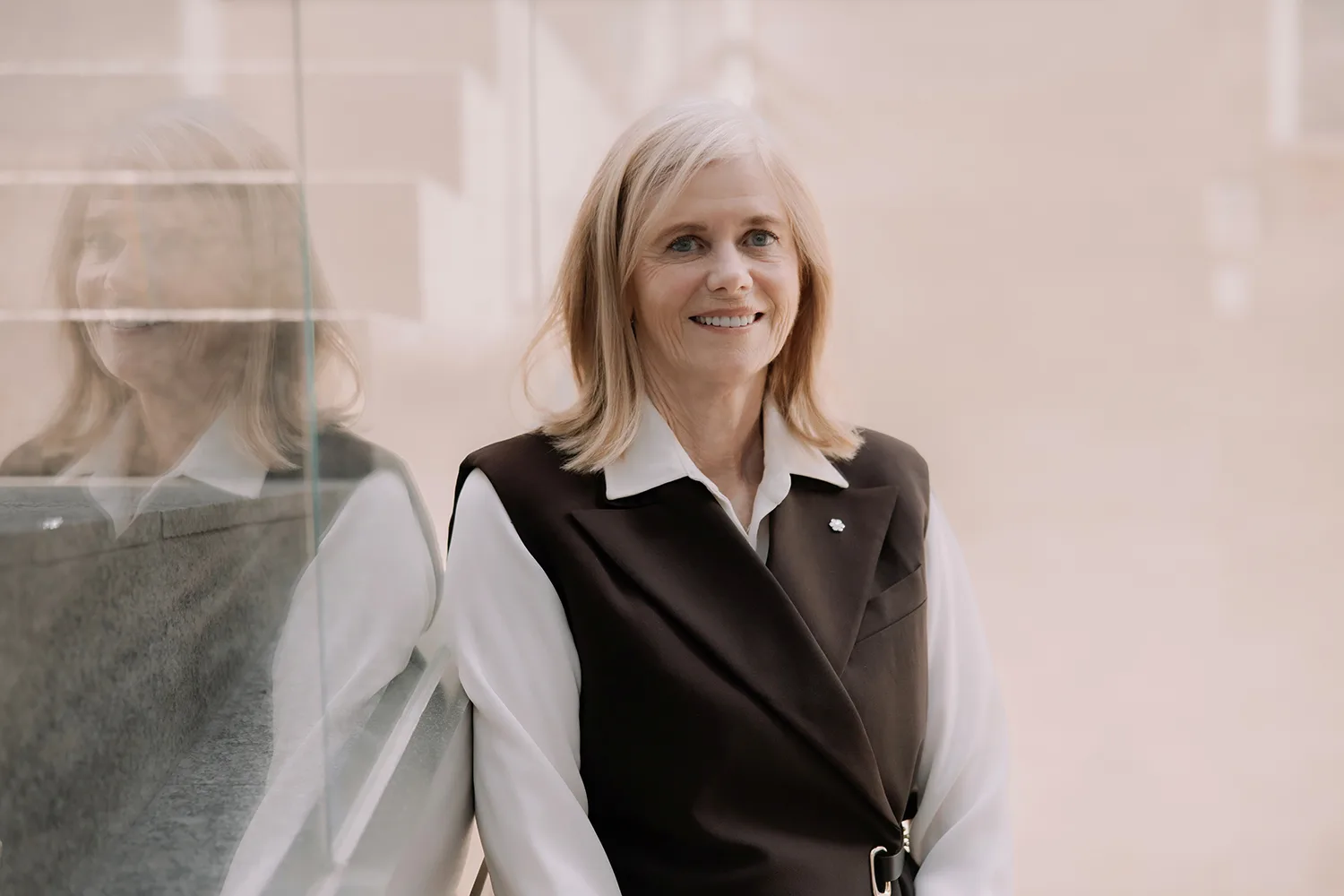
Barbara Stymiest, one of Canada’s most accomplished business leaders, shares her thoughts on the hard work of innovation and why good governance is essential to Canadian success.
Barbara Stymiest has been building better boardrooms for more than 25 years. After a long and distinguished career in the financial world — she held senior executive roles at BMO Capital Markets and RBC, and in 1999 became CEO of the TSX, the first woman to head a North American stock exchange — Stymiest has since devoted herself to corporate service. She’s been board chair of both Research in Motion and CIFAR, a corporate director at George Weston Limited, and served on the boards of many healthcare organizations, including University Health Network, AGE-WELL, AgeTech Capital and Health Data Research Network Canada.
All that work has made her one of the country’s foremost minds on governance. In 2022, she was the lead author of “Charting the Future of Canadian Corporate Governance,” a landmark report, which argued that in an era of growing uncertainty and increased expectations, boards need to be more holistic, adaptable and forward-thinking. “Better boards make better decisions, make better companies and make a better Canada,” she wrote. She’s currently finishing a book on governance that will be published by University of Toronto Press in 2027.
On October 19, she assumed the role of board chair of MaRS, succeeding Annette Verschuren, who has served as chair since 2018. Here, Stymiest talks about her deep connection to MaRS’s mission of helping innovators build a better world, what corporate governance means in a moment of geopolitical uncertainty and how this role is a bit of a homecoming.
Discovery District’s gravitational pull
“My career started 300 yards from here. When I was practising accounting at EY, my first client was Toronto Rehab in 1977. I was a board member when it became part of UHN, and I then joined the board at UHN for 15 years. I also served on the board of CIFAR for 20 years — I just finished that in June — which is in the West Tower at the MaRS Centre. I’ve been here forever — before meetings, I’m always at the Tim Horton’s.
“One of my favourite jobs was running the Toronto Stock Exchange. In many ways, we were doing what MaRS is doing — bringing together providers of capital with users of capital. In my tenure, we brought all the venture exchanges together with the senior market, because it was a continuum. Fund the small companies — they graduate to big companies, get added to the main board, get interlisted and then go global. So, capital formation and innovation have always been part of my world. MaRS is innovation, it’s science, it’s Toronto, it’s the neighbourhood I grew up in.”
Areas of impact
“I’ve always had this connection to and passion for healthcare. In addition to the corporate work that I do, I’m on two other networks: AgeTech Capital — which is kind of a like a mini MaRS but for solutions to help seniors — and the Health Data Research Network. I’m also interested in healthcare from a personal perspective — my father passed away from Alzheimer’s and my husband has Huntington’s and is in long-term care. We all have our personal stories.
“I’m not an expert in climate; I do understand I’ll have a lot to learn. It’s one of the most challenging uncertainties of our generation, and we’ve got to solve it. And MaRS can play an important role there.”
Every company is a tech company
“When we used to think about tech companies, they were a separate sector. But now every company’s a tech company. The focus on technology is more diffuse than central. I think the choices that have been made at MaRS are brilliant. We’re not just teaching people how to be entrepreneurs, we’re providing the place for them to actually co-locate in the ecosystem and collaborate easily with the entrepreneur in the suite next door. ”
The ripple effects of good governance
“Governance isn’t hard — running successful businesses is hard. Whatever the board does, it must do well to steer companies to be successful to drive prosperity. According to the OECD, 72 percent of prosperity is driven by corporations. It’s about how you create jobs and deliver services and products to Canadians so that people can buy houses and put food on their tables.
“What MaRS is delivering is not just helping companies find access to the dollars, but enabling them to tap into the expertise they get from great advisors, committees, the formality of a board. And as an organization we have to have great governance to ensure that we’re looking at all the levers and continually adapting.
“When we first suggested taking the TSX public, the concern was, if you’re going to be a public company you’re only going to be accountable to your shareholders and making money. We said, ‘No, no, no, we only make money if the ecosystem balances its interests. We had to balance the interests of the public companies, the investors and the intermediaries — the brokers/dealers that were running the exchange and obviously the providers and users of capital. If the scales tipped in any direction, it wouldn’t work. It wasn’t because the regulators told us we had to, it’s because we believed that the ecosystem would only function well if all the parties were served well.”
Navigating geopolitical uncertainty
“As the U.S changes — and our relationship to the U.S. changes — we have to figure out what that means for Canada’s future. The U.S. can shift for its own reasons, but I think it can shift within the context of a rules-based order. There are lots of champions of maintaining a rules-based order because that world is a better place. That’s why you see Mark Carney spending so much time in Europe and other like-minded countries. There’s a huge amount of momentum to strengthen that rules-based order that really has had such an important impact on the world.”
The need to think bigger
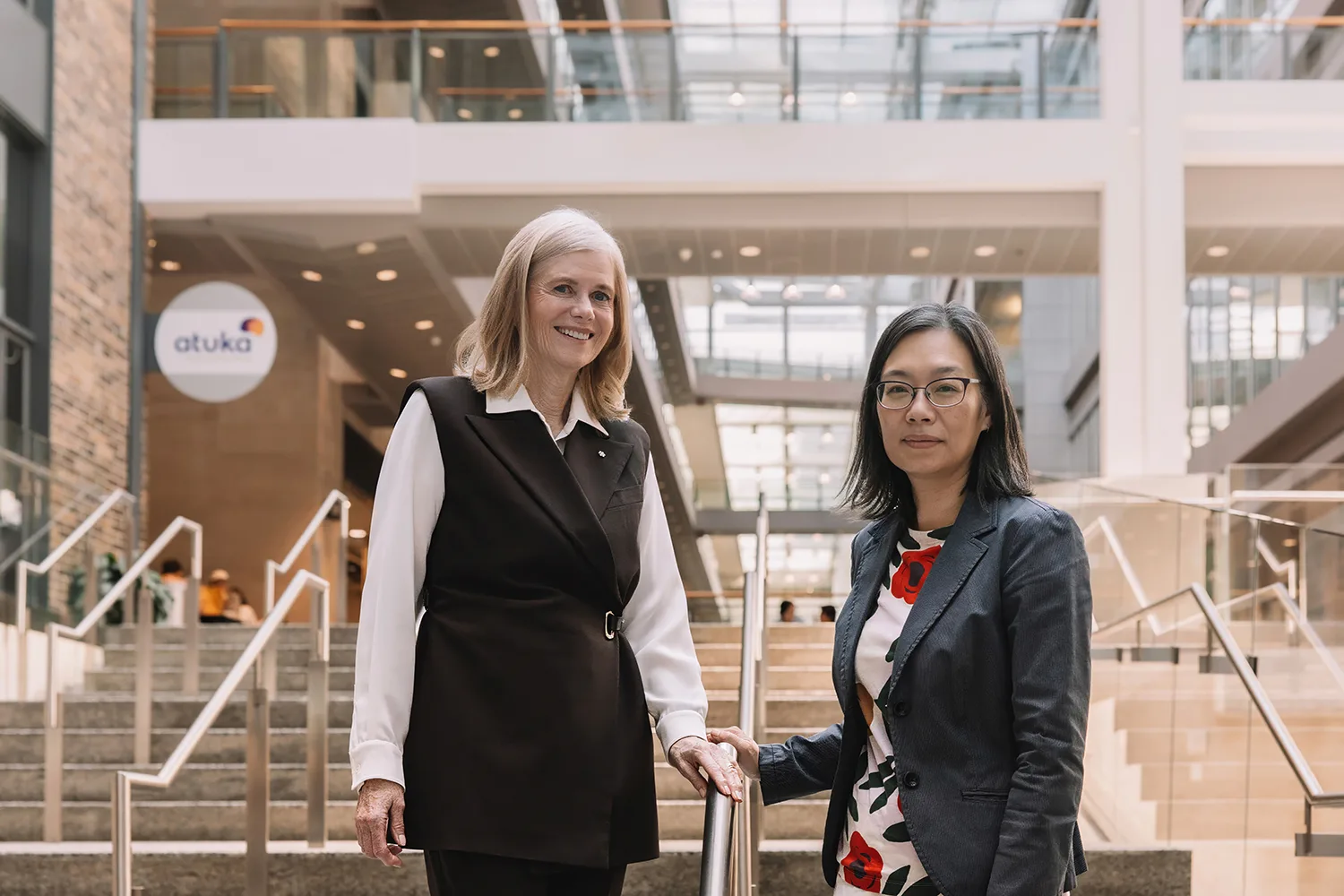
“Grace [Grace Lee Reynolds, CEO of MaRS] and I are both really excited about telling the MaRS story in the most compelling way — because it’s a complicated story. In governance, purpose and strategy are really the most important things to get right. I think MaRS has a clear purpose. It’s how we do it that’s complex and probably not as well understood as it could be.
“We’re in the biggest city in Canada. We have six hospitals within shooting distance. We’re right next to U of T, Canada’s largest university. But there are innovation centres all across the country. There’s this ecosystem beyond MaRS. We influence ecosystems and they influence us. So, there is an opportunity to be on the national and international stage, shaping the ecosystems that are necessary to deliver our purpose. It’s a different way of telling our story. The nuts and bolts of getting from A to B — that’s the journey of an individual entrepreneur or scientist to reach capital to deliver their mission. The ecosystem around them is way, way bigger.
“The governance view is that boards think about the legal entity that they’re assuming. Which is fine, you need to do that. But legal entities, corporations, MaRS, need to think of themselves as complex adaptive systems that are continually changing, and which operate within this bigger complex ecosystem that is constantly adapting. If you don’t think like this, and you stay in the cocoon of your legal entity, I think you miss the opportunity to drive your strategy in a way that has a more profound contribution to the broader mission.”
MaRS, North America’s largest urban innovation hub, accelerates the adoption of high-impact solutions to some of the world’s most pressing issues. Find out how to partner with us.
Photo credit: Jenna Mare Wakani
-
 Jason McBride