The mind-blowing potential of brain-computer interfaces
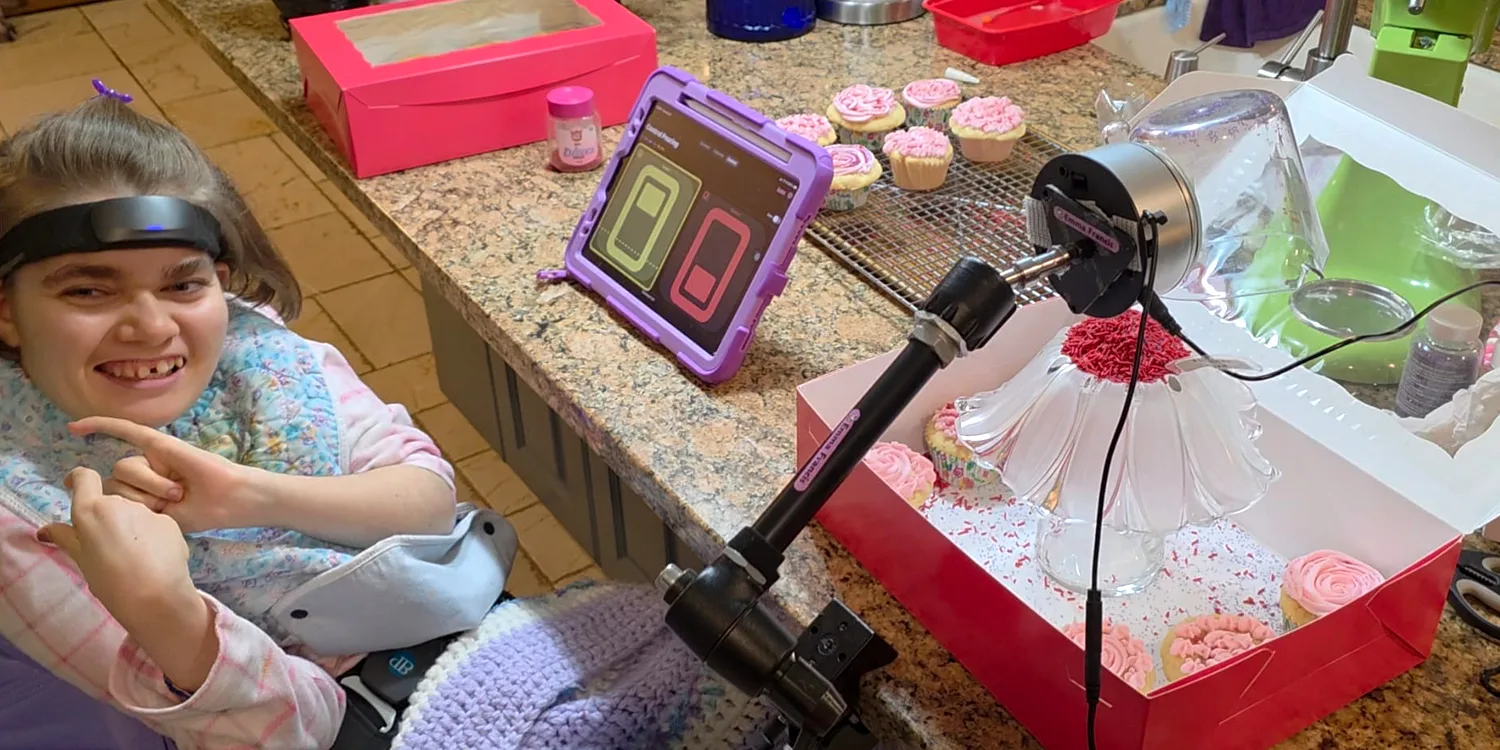
BCIs are changing the lives of people with severe disabilities, brain injuries and treatment-resistant depression. But how exactly do they work?
The phrase “brain-computer interface,” as prosaic as it may be, contains a compelling promise: What if our brains and our computers could be directly linked, effectively forming a single, all-powerful operating system? What miracles would that human-machine fusion be capable of?
A computer scientist named Jacques Vidal, working out of UCLA’s Brain Research Institute, began exploring these ideas as far back as 1973. That year, he published a paper titled “Toward Direct Brain-Computer Communication,” in which he asked, “Can these observable electrical brain signals be put to work as carriers of information in man-computer communication or for the purpose of controlling such external apparatus as prosthetic devices or spaceships?”
More than 50 years later, we’re still waiting on the spaceships, but the prosthetic devices are an undeniable reality. And BCIs have been deployed in other medical settings: helping to rehabilitate stroke patients, restoring speech to people with ALS, enabling kids with cerebral palsy to operate wheelchairs and play video games.
“For people who suffer from conditions where they’re no longer able to communicate, these devices are really important to enable them to be heard,” says Anne Vanhoestenberghe, a professor of active implantable medical devices at King’s College London. “I mean this not just literally, but also to participate in the conversation, to be able to advocate for themselves.”
Several companies, including many in Canada, are now racing to develop BCI devices and applications. None are better known than Elon Musk’s Neuralink, whose small, wireless implant is considered, for the moment anyway, one of the most advanced in the field. Last fall, the company made Canadian headlines after UHN doctors successfully implanted Neuralink BCIs in two patients living with cervical spinal cord injuries — the first time the surgery had been performed outside the U.S.
But any medical procedure that involves the brain makes people nervous. (Depending on your political leanings, a medical procedure involving Elon Musk might make you doubly so.) Here, then, a brief, and reassuring, guide to how BCIs work, what the technology can do and what the future holds.
The ABCs of BCIs
A BCI essentially consists of three parts: sensors that can record brain activity, a computer that can translate that activity into instructions and an external electronic device that can carry out those instructions.
Every time you use your brain — to think a thought, move your hand, have a conversation — it crackles with electricity. That electrical activity is produced by the billions of neurons in the brain, each firing and communicating with one another in complex patterns. To capture these electrical “signatures,” BCIs often (though not always) use electrodes, affixed to a patient’s scalp, in a process called electroencephalography (EEG). In 1977, Vidal demonstrated that the brain’s electrical activity, recorded by EEG, could be used to move a computer cursor through a maze.
Once EEG data is collected and its signals “cleaned” to filter out other electrical activity produced by eye blinks or heartbeats, a computer then processes it, using algorithms to classify patterns in it. The goal, as researchers at the Cumming School of Medicine’s Calgary BCI4Kids program put it, is to determine functional intent, that is “the desire to change, move, control, or interact with something in your environment — directly from your brain activity.” Advances in machine learning and computational power have improved the speed and accuracy of BCIs, allowing us to better decode intent.
Feedback is crucial to this process. Contrary to popular belief, a BCI isn’t reading a person’s thoughts. Rather, it’s trained to associate certain electrical signatures with particular intentions. When a participant uses a BCI to perform an action or movement and is successful, that information is relayed back to the system, improving its ability to perform that action.
Wearable versus implantable
There are, generally speaking, two types of BCIs: those you wear on your head and those that are surgically inserted in your head.
Wearables have existed for half a century. They’ve been used as medical devices, but also consumer devices used for gaming or meditation aids. They’re safe, painless and don’t require surgery. But they have limitations: there’s the signal noise from other brain activity, which can reduce accuracy. They can also be uncomfortable and obtrusive, particularly if worn for long periods. And they can obviously only obtain data when they’re being worn.
Implanted medical devices — pacemakers, cochlear implants — have been around since the 1950s. But surgically placing an electronic device in the human brain has only been possible since 1998. That year, an Irish-born American neurologist named Philip Kennedy, dubbed “the Indiana Jones of neuroscience,” invented a “neurotrophic electrode” — basically, a glass-enclosed electrode, equipped with chemicals that stimulated neural growth, to anchor the device, more or less permanently, in the cerebral cortex. Kennedy first inserted his invention in a patient with “locked-in syndrome,” and like with Vidal’s experiment, it enabled him to control a computer cursor with only his mind. (Profoundly committed to the possibilities of the technology, decades later, Kennedy travelled to Belize to have a BCI surgically inserted into his own brain.)
Implantable BCIs are marvels of engineering. They must be extremely small and powerful, able to survive in a moist and inhospitable environment. They must be made of materials that are soft and flexible. Unlike your iPhone, they need to last a lifetime. It needs “a very different level of product development,” says Vanhoestenberghe. “We have to make sure that everything is made with extreme quality control.”
A universe of possibilities
Implantable BCIs are seizing all of the attention at the moment, in part because the best-known players in the space are well-capitalized companies owned by the biggest figures in tech. Aside from Neuralink, there’s Synchron (backed by Bill Gates and Jeff Bezos), Blackrock Neurotech (Peter Thiel) and Merge Labs, an offshoot of Sam Altman’s Open AI. While all these companies are exploring medical applications, they’re also explicitly interested in how BCI can maximize the abilities of healthy human beings. But so far less than a hundred people have received the devices, and almost all are part of clinical trials.
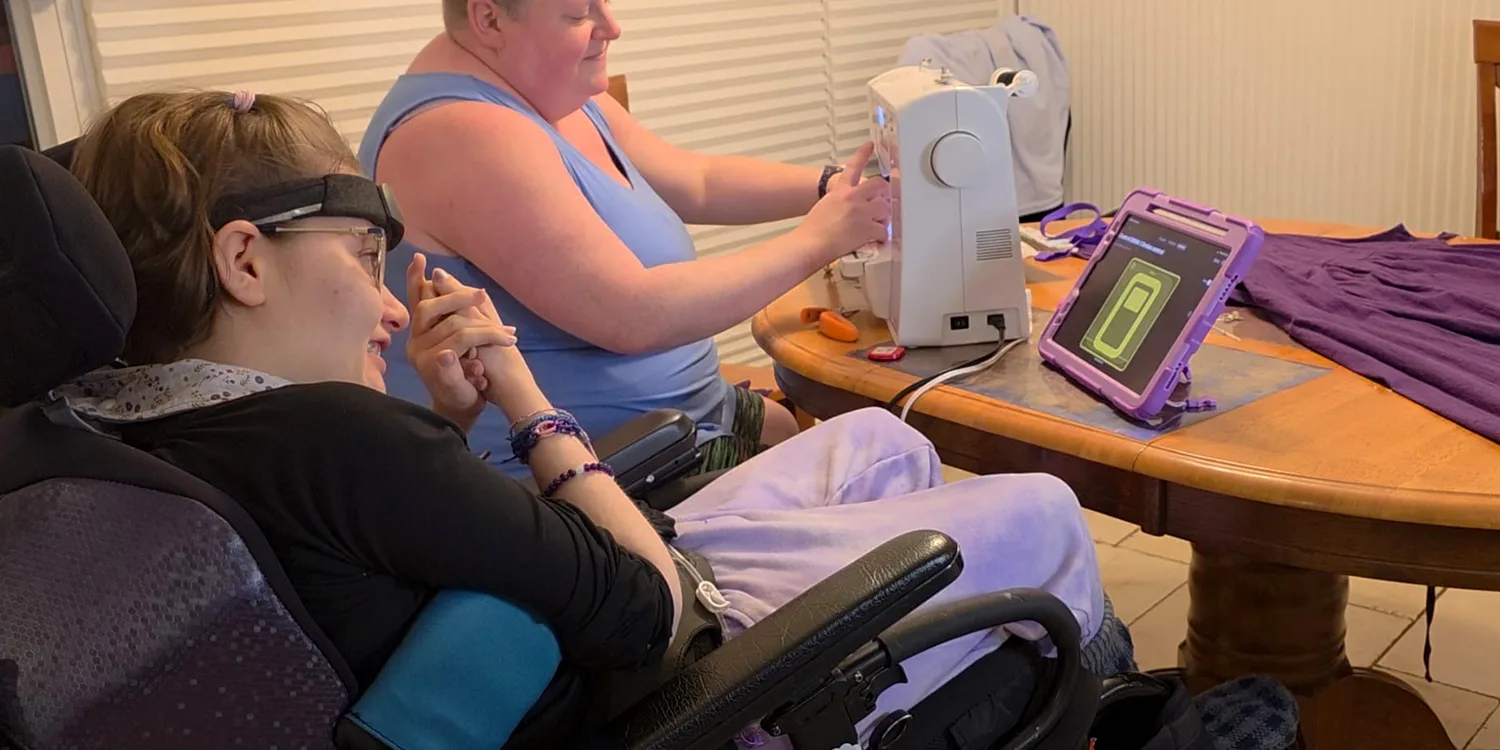
Nobody’s tracking the number of people using wearable BCIs, however; there are simply too many of them, being used in myriad therapeutic ways. In Canada, one of the first companies to pioneer a wearable device was Toronto’s InteraXon, whose Muse EEG headband has evolved into both a commercial product (which helps people track and improve their sleep and overall brain health) and a research tool. Using data obtained from Muse consumers and research studies, researchers have been able to identify biomarkers for a variety of disorders and diseases, including migraines and long COVID.
Calgary startup Possibility Neurotechnologies incorporates the Muse headband into a BCI they call Think2Switch. The headband records brain activity, beams it to an app on a tablet or phone, where the patterns are analyzed. After some training (for both the user and the device), the user can then employ specific thought commands to control any device equipped with a smart plug. Think2Switch users, typically people with cerebral palsy, locked-in syndrome or severe brain injuries, are able to use the device for a wide range of tasks: activating a blender, turning on Christmas lights, operating a music system.
Unlike other wearable BCIs, the Think2Switch doesn’t explicitly diagnose or treat any disorder or disease. “This technology enables a new form of interaction,” says Dion Kelly, the company’s co-founder and CEO. “It enables participation.”
And participation is not just for people with severe disabilities, Kelly says. When she’s demonstrated Think2Switch, parents have marvelled at how it encourages their able-bodied kids to concentrate better. “They say, ‘We’ve never seen them doing this,’” Kelly says. “How do I buy this?” People with ADHD, she adds, are an obvious and eventual market.
In Ontario, companies have built wearable tools designed to alleviate anxiety and assist people with cognitive disabilities, but only a couple are developing true BCIs. There’s Panaxium, which is creating an AI-enabled iontronic system which helps rewrite and heal the brains of stroke survivors. Grey Matter Neuroscience, a two-year-old startup is developing a transcranial-focused ultrasound system that can precisely stimulate any area of the brain to treat complex neurological diseases. As with Possibility, Grey Matter’s device is designed to be used outside of hospital settings.
Many of these companies are still in the early stages of development, but for experts like Anne Vanhoestenberghe, all manner of BCI breakthroughs are just around the corner. “Everything’s coming together to turn research devices into actual medical devices,” she says. “People already are benefitting from this technology, but the numbers will grow. We’re serving a community that has for a long time been underserved and that’s really exciting to me.”
Find out how BCIs are transforming the lives of children with severe disabilities on the MaRS podcast Solve for X: Innovations to Change the World.
Photos courtesy Possibility Neurotechnologies
-
 Jason McBride