These five cleantech startups are literally breaking new ground
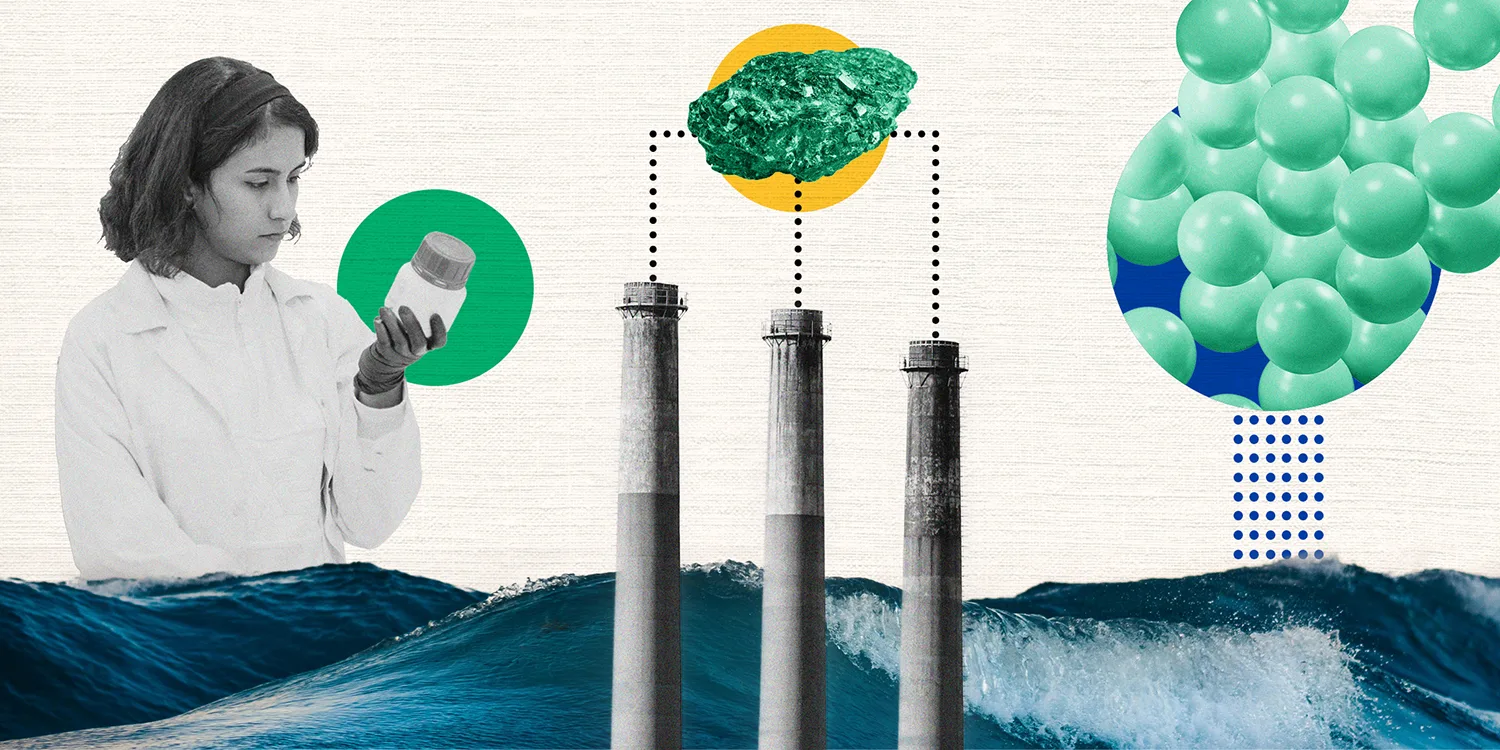
The startups in the inaugural cohort of the MaRS First-of-a-Kind Lab are gearing up for commercial-scale deployment of their climate solutions.
Olivier Dufresne is a man with a dream. On the site of a former asbestos mine near Val-des-Sources in southern Quebec, the CEO and co-founder of Exterra Technologies wants to build a refinery that will turn legacy asbestos tailings into critical minerals for batteries. In one swoop, it will eliminate hazardous waste and create resources that Canada desperately needs.
Exterra’s plant, known as Hub 1, will be a global first. And therein lies a problem. It’s notoriously difficult for climate tech companies to get a large-scale first-of-a-kind (FOAK) facility off the ground.
“These projects sit in a financing no-man’s-land,” says Dufresne. Typically costing between $50 million and $200 million, they are too expensive for venture capitalists and government programs aimed at startups. But they are too unproven for deep-pocketed infrastructure funds, which shy away from developments that still have engineering kinks to work out. Capital is scarcest precisely when it’s most needed.
MaRS estimates that dozens of Canadian climate tech ventures will reach this precarious stage over the next three years. To help create a path through the wilderness, it has founded the MaRS FOAK Lab. This intensive program connects five ventures with experts and a global network of funders to provide bespoke support such as financial modelling, risk analysis and project road mapping.
“MaRS FOAK Lab gives us access to exactly the kind of expertise that’s rare in Canada: project-finance advisors, infrastructure dealmakers and operators who’ve actually taken climate technologies from pilot to commercial scale,” says Dufresne. “For a venture at our stage, that’s the difference between building in 2028 and building in 2030.”
Here are the five trailblazing companies chosen for the inaugural cohort, and the challenges they’re determined to solve.

Mina Zarabian is the CEO of Carbonova.
Carbonova transforms greenhouse gases into high-performance materials
Carbon nanofibres are small but mighty. Stronger than steel but lighter than aluminum, they add toughness to materials used in industries from aerospace to sporting goods. But producing them is expensive and energy intensive. Carbonova has developed a catalytic process that converts carbon dioxide and methane into carbon nanofibres while producing most of the energy needed itself.
The project: Founded in 2018, Carbonova has validated its core technology. It is now evaluating locations in Calgary for a commercial demonstration facility capable of producing 5,000 tonnes of nanofibres a year. The company is looking for a site that could provide reliable access to supplies of the greenhouse gases it uses as feedstocks.
CEO Mina Zarabian says that FOAK projects like hers face a “chicken-and-egg challenge” when it comes to financing. Potential investors and customers both want the other to sign on first. MaRS FOAK Lab is helping the company refine its business model and assess its risks and opportunities. “This ensures we are building a commercially viable project that is attractive to investors,” she says.
Carbonova is making progress assembling the $13.6 million it needs to fund the project. In December, it announced a $5.1-million financing round, adding to the $4.3-million grant it received from Emissions Reduction Alberta.
The impact: Carbonova’s demonstration plant is on track to open in 2027. It has already secured several Fortune 500 companies as customers. Carbonova is eyeing foreign markets, and a successful deployment could open a new export opportunity for Canada as a supplier of advanced materials.
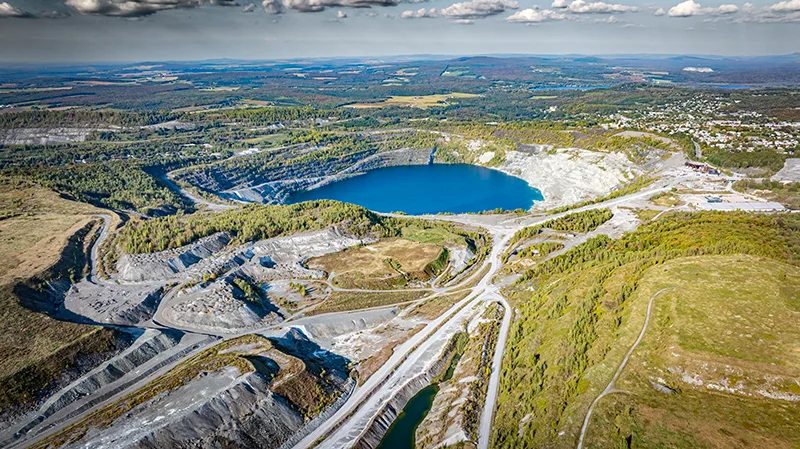
Exterra Technologies turns mine waste into critical minerals
Extracting critical minerals, such as nickel, magnesium and copper, from ores is difficult and expensive. It requires costly chemicals that are derived from fossil fuels and discarded after one use. Exterra Technologies has developed a solution it calls ARC. This closed-loop system captures the spent chemicals, regenerates them on-site and returns them to the processing plant, cutting costs and waste.
The project: Exterra is planning to build a facility on the site of the Jeffrey Mine, which generated about 400 million tonnes of asbestos tailings over its 120 years of operation. Once built, Hub 1 will be the world’s largest plant for recycling asbestos mine tailings, processing up to 1,000 tonnes of asbestos tailings a day into nickel concentrate for EV batteries, silica for low-carbon building products and magnesium oxide, which has uses ranging from lining steel furnaces to cosmetics. Exterra will start construction this summer and begin operations in 2027, ramping up to full capacity by the early 2030s.
Dufresne says it is dealing with “classic FOAK hurdles.” The company needs to amass nine figures of capital through equity, project debt and government support. It’s also working on developing detailed engineering plans and securing permits without losing momentum. “None of these are technical problems,” he says. “We’ve de-risked the chemistry through years of engineering and piloting. They’re commercial, financial and institutional problems, and they must be solved in the right sequence.”
The impact: Hub 1 is a triple threat. It will reduce mining emissions, eliminate asbestos waste and it could unlock critical minerals stranded in deposits that can’t be extracted by conventional mineral processing. The company says that Hub 1 will create the shortest supply chain for nickel in North America, an important advantage at a time when globalization is in retreat.
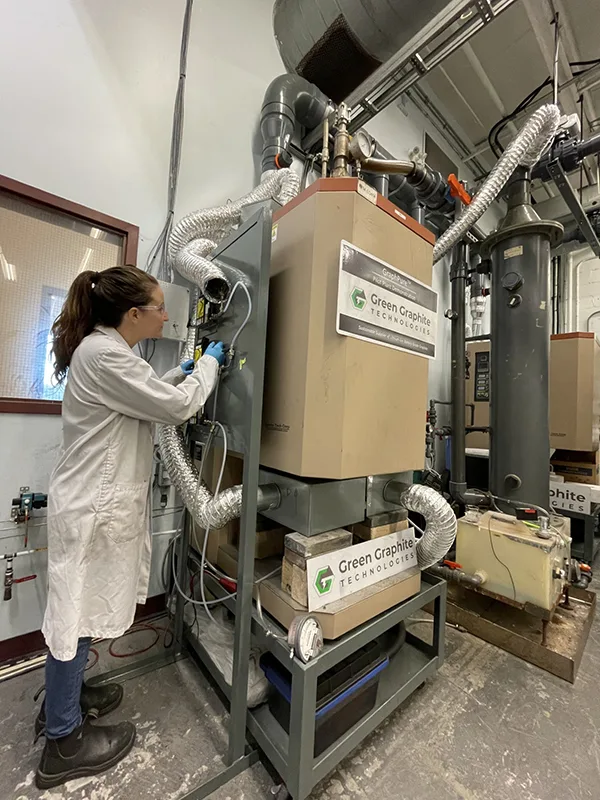
Green Graphite produces battery-grade graphite from mined and recycled sources.
Green Graphite Technologies builds North America’s battery supply chain
Ultra-high-purity graphite is an essential component of lithium-ion batteries. China currently dominates production with a process that uses toxic hydrofluoric acid. Green Graphite has developed an alternate method that purifies mined and recycled graphite while generating far fewer carbon emissions compared to Chinese competitors.
The project: Founded in 2021, Green Graphite received $14 million in funding from Ottawa and the Ontario and Quebec governments last fall to develop its technology. It already operates a pilot facility in Kingston. In May, it will open a demonstration plant in Mississauga that will show the company can create battery-grade graphite economically. If successful, that will pave the way for a pre-commercial manufacturing plant in the second half of 2027, followed by breaking ground on a full commercial facility the next year.
“Our biggest challenge, as is the case with most hard-tech, deep-tech companies, is the capital needed to bring our technology to market,” says CEO Gillian Holcroft. The company needs to raise $10 million and is aiming to close its current financing round later this year. “Government grants have been instrumental in derisking our FOAK. We now need to demonstrate a financial model where venture capital investors can see a clear path to significant return on their equity investment within five to seven years. The learnings and mentorship that MaRS FOAK Lab will provide are invaluable.”
The impact: Demand for lithium-ion batteries will soar in Canada in the coming decades. The federal government expects there will be 21 million zero-emission vehicles on the roads in 2040, nearly 50 times more than today. If Green Graphite can scale commercially, it will help onshore the supply chain for a critical battery component while cutting the carbon emissions from its production.
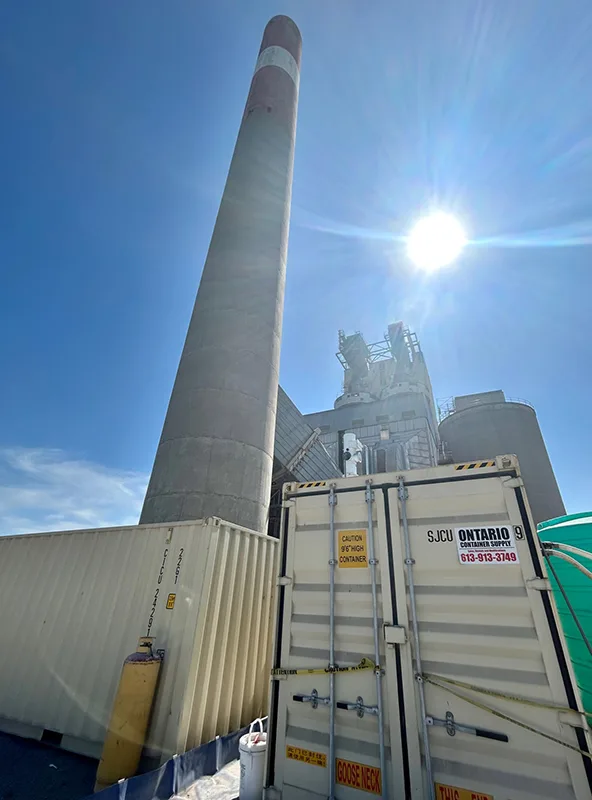
Hyperion’s pilot unit has the capacity to process up to 1,000 tonnes of carbon dioxide per year.
Hyperion Global Energy converts carbon emissions into valuable minerals
Few industries produce more carbon dioxide than concrete and cement manufacturing, which accounts for more than a quarter of global industrial emissions. Hyperion’s technology is working to tackle that issue — right at the source. The company has developed a patented system that captures industrial carbon dioxide emissions. Its Tandem Carbon Recycling system, a modular, drop-in unit, integrates into existing operations with no plant downtime or complex construction, transforming carbon emissions into high-value mineral commodities. Each tonne of Hyperion’s engineered mineral products permanently stores and offsets carbon dioxide, while replacing carbon-intensive mined inputs used in such industries as concrete, construction and agriculture.
The project: Over the last two years, Hyperion has successfully validated and run a pilot project with the world’s largest building materials company at the Amrize cement plant in Bath, Ontario (formerly Lafarge Canada/Holcim). The pilot unit has the capacity to process up to 1,000 tonnes of carbon dioxide per year and has validated Hyperion’s high-purity mineral offtake for use in concrete, where it acts as an additive to improve performance and reduce cost.
Over the next 12 to 18 months, the company plans to build a first-of-kind commercial demonstration system to process up to 10 tonnes of carbon dioxide per day and produce more than 5,000 tonnes of mineral offtake for purchase with Amrize. Hyperion’s next stage of development is supported with non-dilutive funding, along with new investment from Thistledown Capital, the family fund of Shopify’s founder Tobi Lütke. “We are now focused on scaling from technical validation to commercial readiness,” says CEO and co-founder Heather Ward. “This will include optimizing the system’s performance, waste inputs, and offtake at larger volumes while validating the economic model at scale.”
The impact: At scale, Hyperion is targeting for each system to mitigate up to 30,000 tonnes of carbon dioxide per year. The company is currently targeting early adopters in the carbon-intensive cement and concrete industry. The minerals its system generates replace carbon-intensive mined versions.
Planetary Technologies harnesses the ocean to pull carbon dioxide from the air
Oceans naturally absorb about a quarter of humanity’s annual carbon emissions. While good for us, that’s bad for the seas, which are gradually becoming acidified. Planetary is restoring the balance by adding alkaline minerals to the water through existing outflow pipes, essentially giving the ocean an antacid. This helps keep the oceans healthy while increasing the amount of carbon dioxide they can take out of the air.
The project: Planetary has been successfully testing its technology, called ocean alkalinity enhancement, at Tufts Cove power station near Halifax since 2023. Its compact facility, about the size of two shipping containers, automatically mixes alkaline minerals and adds them to the station’s outflow pipe. Sensors in the bay monitor the water’s pH levels to calculate how much additional carbon it is absorbing from the atmosphere, which the company sells as carbon credits. Planetary is aiming to quadruple the system’s capacity over the next two years.
“Because there is a limited track record, it can be challenging to build confidence with investors, regulators and partners,” says Kelsey Cuddihy, a vice president at Planetary. The MaRS FOAK Lab is helping the team “develop a clear plan to scale our projects from pilot to commercial development and replicate them in new locations.”
The impact: To date, the Tufts Cove project has removed more than 4,800 tonnes of carbon from the air and has delivered the world’s first carbon credits from ocean alkalinity enhancement. Planetary’s profile is rocketing after it won $1 million in the buzzy XPRIZE awards. It has also signed an agreement to sell $31 million of carbon credits to Frontier, a consortium of buyers that includes Google, Meta and Shopify. That represents removal of 115,000 tons of carbon dioxide from the air between 2026 and 2030. “The technology offers a highly durable and scalable solution for carbon removal, with the potential to be replicated globally,” says Cuddihy.
Want to learn more about what startups need to bridge the commercialization gap? Visit the MaRS FOAK Lab.
Photo illustration by Stephen Gregory; Images: Unsplash
-
 MaRS Staff