This startup has a solution for the housing shortage in Canada’s North
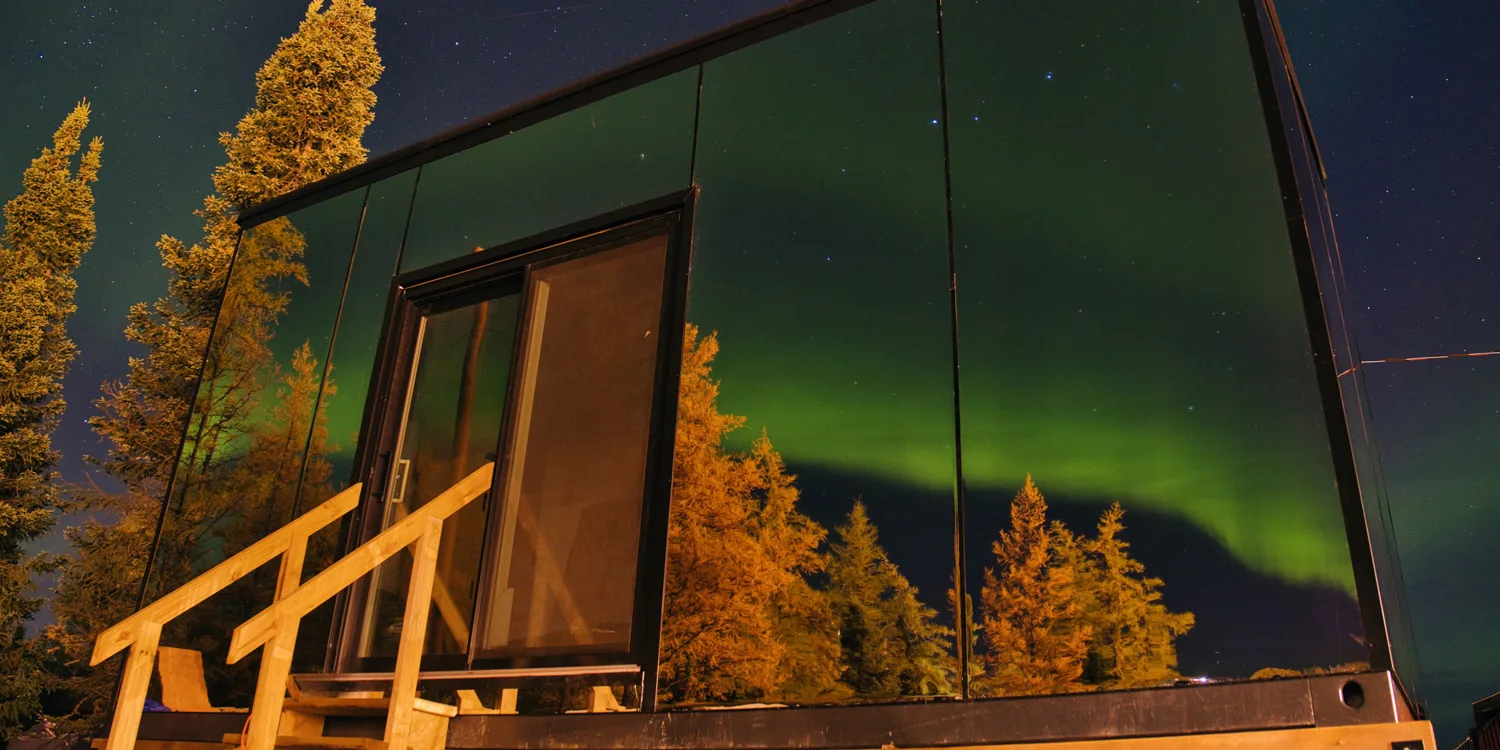
Building in the Arctic is complicated, expensive and slow. Tinybox Systems is taking a modular approach.
Anyone who builds a house in the Arctic must contend with challenges that architects and contractors in the south rarely need to consider: temperatures that can dip to -50 degrees Celsius, a layer of permafrost that causes the ground to shift and buckle, expensive labour, and, perhaps worst of all, a narrow window — four months, usually — within which to bring in supplies and materials. Forget a particular screwdriver or run out of plywood? Well, there’s always next year.
Tinybox Systems had to navigate all these obstacles last fall when it built its first home in Kuujjuaq, the largest community in the Nunavik region of Quebec. But the Toronto modular housing startup came armed with an innovative construction method uniquely suited to the North’s extreme conditions. Tinybox eschews traditional stick-frame techniques, which can be time- and labour-intensive, in favour of a prefabricated, modular kit that ships flat and snaps together with Lego-like ease. In Kuujjuaq, after some training by Tinybox’s founders, two local carpenters assembled a 160-square-foot, net-zero bunkie in just 10 days. Shipping and materials cost $90,000, whereas a comparable, conventionally built structure in the region can cost almost twice that much. “We build where others can’t,” says co-founder Pooya Saberi.
Modular housing is having a moment. In the race to build 3.5 million homes by 2030, the federal government is looking to such modern, cost-efficient methods to quickly fill the gap. While affordable, factory-made home kits have been around for more than a century — thousands of Sears Roebuck Modern Homes were built in the 1920s and ’30s — innovative technologies (automation, mass timber, 3D printing) have made the model more versatile and efficient. According to some estimates, modular construction takes, on average, about half the time and costs 20 percent less. Build Canada Homes, the new agency designed to accelerate housing construction on federal lands, made its first priority a set of 4,000 factory-built homes that will be erected across the country in the coming months.
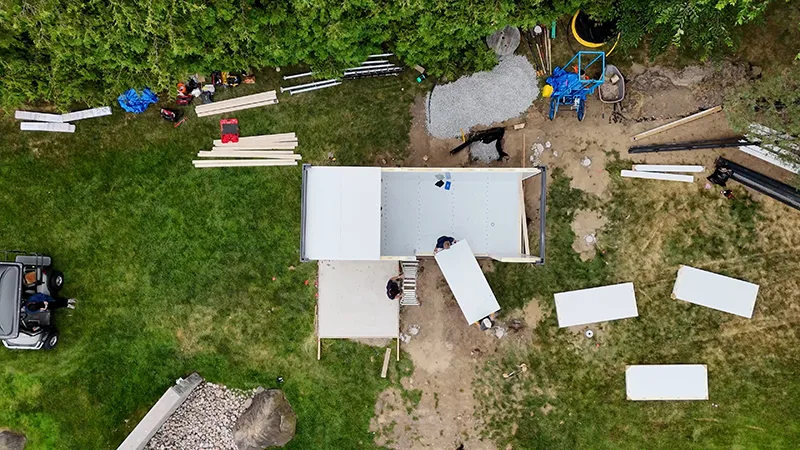
All the components of the modular house are designed to be light enough that assembling a home requires only two people.
For some, the move is overdue. Carolyn Whitzman, a housing and social policy researcher at the University of Toronto, has long said that modular construction, when scaled up and paired with changes to land policy and taxation, could help solve Canada’s housing crisis. “We wouldn’t, say, construct a toothbrush one by one, construct a car one by one, construct anything one by one,” she says. “But we still have that approach toward housing. And that’s just not fitting its purpose anymore.”
Saberi knows this all too well. After years studying and working in Montreal, he was shocked when he relocated to Toronto, where he paid twice the rent for a smaller apartment. He wanted to buy something, but the overheated market made a home perpetually out of reach.
Many of his friends were in a similar boat, but a couple of them — Oliver Zhang, a data analyst who had founded a logistics startup, and Charlie Frise, an architectural engineer — decided to do something about it. Both Zhang and Frise thought that tiny houses could be a solution, but the ones that existed in the market, they felt, were too pricey — some models cost upwards of $300,000 — and still required conventional foundations, permits and utilities. What Zhang really wanted was the real estate equivalent of Amazon Prime; simply press a button and voila, 48 hours later, receive a brand-new, reasonably priced home.
So that’s what the trio set out to create, with Zhang assembling the first prototype in his driveway. After forming Tinybox Systems in 2022, they built a demonstration model that, for two years, they toured all over North America. This design featured several cost-cutting, time-saving innovations. Unlike other prefab companies, they chose not to build their own factory, instead outsourcing manufacturing to others (up to 15 factories eventually). A stick-frame house can consist of 10,000 or more elements, but Tinybox restricted themselves to 200. For a key component — the highly insulated wall panels — they contracted a factory that makes refrigeration equipment. They also built a bioreactor toilet that recycles black water, obviating the need for a septic system and enabling the house to be truly off-grid. “No dust, no noise, and you save 90 percent on your utility bill,” Saberi says, summing up some of the design’s main advantages.
While the basic unit is extremely small — four Tinybox one-room kits can fit into a single shipping container — it was intended to be scalable; the units can easily be connected to make multi-room homes. And all the parts are designed to be light enough that putting together a Tinybox home requires only two people.
That North American tour resulted in several pilot projects: a backyard office in California, an off-grid cabin in Washington, a pair of bunkies in Muskoka. All those structures were built for affluent customers looking to extend their living spaces. But the Tinybox founders knew that their units could work well, and do more, in a region with more severe housing needs: the Canadian North. Last year, they approached the Kativik Regional Government (KRG) in Nunavik, and the government hired them to build a pilot workforce home in the region’s largest village, Kuujjuaq.
When the federal government began to take responsibility for housing in the north after World War II, it introduced — or, more accurately, imposed — architectural styles and construction methods with no connection to Inuit culture, family structures or the climate. The result, according to Julia Christensen, a geography and planning professor at Queen’s University who studies the northern housing crisis, were homes prone to black mould, too cramped and vulnerable to the elements. On top of that, the amount of housing has also been insufficient. “From the beginning, there’s never been enough,” Christensen says. “And the deficit is growing.” According to a February report produced by the Nunavik Housing Bureau, the region is more than 1,000 homes short of what’s needed. The KRG itself has more than 40 positions — teachers, nurses, municipal workers — it can’t fill simply, Saberi says, because there’s nowhere for those prospective employees to live.
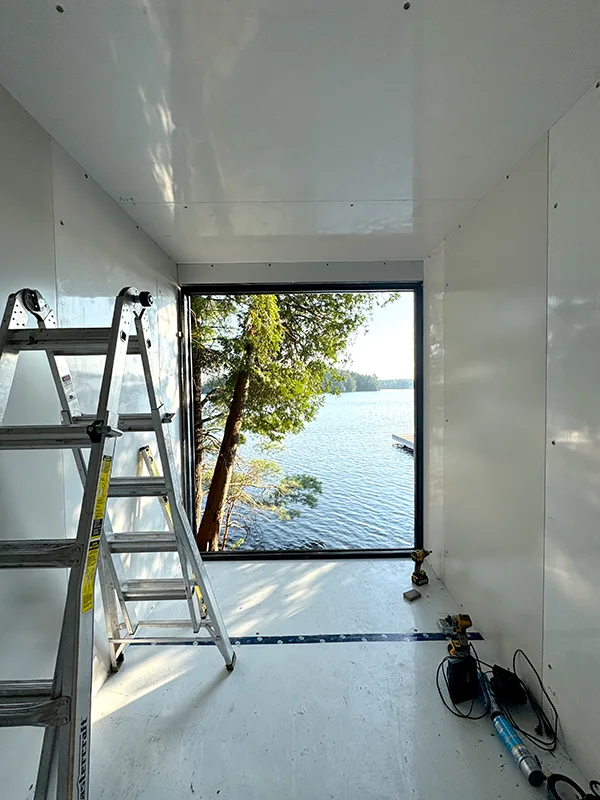
The units are designed to be scalable; different modules can be easily connected to make multi-room homes.
To withstand the specific hardships of the climate, the Tinybox founders made their already hardy structure even more indestructible. To prevent mould, they increased the vacuum insulation of their wall panels, making it double that of standard houses. The steel frame was strengthened to handle heavy snow loads. The unit was cladded with polished stainless steel and while this didn’t necessarily augment its durability, the mirrored surface did reflect the Northern Lights, helping the building blend more seamlessly into the landscape.
“Any initiative that’s aiming to diversify the housing options available is going to do something positive,” Christensen says, adding that, “training people in the community to assemble and repair these units, to basically cultivate the sustainability of the housing ecosystem, is already a huge departure from the way things have been.”
The pilot unit is currently undergoing testing by KRG, and once that’s complete, Tinybox plans to build more, and bigger units in Kuujjuaq. This is part of a larger overall expansion for the company: it’s tripling production this year and by 2030, expects to build hundreds of homes in partnership with various developers.
The team has its sights on other regions, too, and other challenges. “Say you’re a nurse and you’ve got a job in Huntsville and want to move there from Toronto,” Saberi says. “Good luck finding a place to live. There are a lot of beautiful cottages but no places to rent. There is a large housing shortage outside big cities, and nobody is addressing that problem.”
Tinybox Systems was one of six companies in this first adoption accelerator of Mission from MaRS, which was made possible by the Peter Gilgan Foundation.This special initiative aims to accelerate the adoption of Canadian innovations that help decarbonize existing structures and construct better ones.
-
 Jason McBride