Vital signs: The health tech sector’s next big challenge

Canadian innovators are attracting investors and headline-grabbing exits are validating the ecosystem. But across the health tech sector, a familiar tension keeps surfacing: Canada can build globally competitive companies, but can it keep them here?
This report provides a broad overview of the major trends happening in Canada’s life sciences ecosystem.
Scaling up
There’s good news in the health tech sector. After several difficult years globally, investors are once again backing ambitious healthcare companies. Capital is flowing back into the sector, deals are increasing in both size and number and funding has improved across most major markets. In Canada, however, it’s a different story. There have been some headline wins here — monster funding rounds and major acquisitions — but they’ve been the exception rather than the rule. The reality for most homegrown health ventures involves fewer deals, smaller cheques and the challenge familiar to so many of this country’s entrepreneurs: how to translate breakthrough ideas into companies that can scale and endure.
Figure 1
VC-backed funding in Canada across years
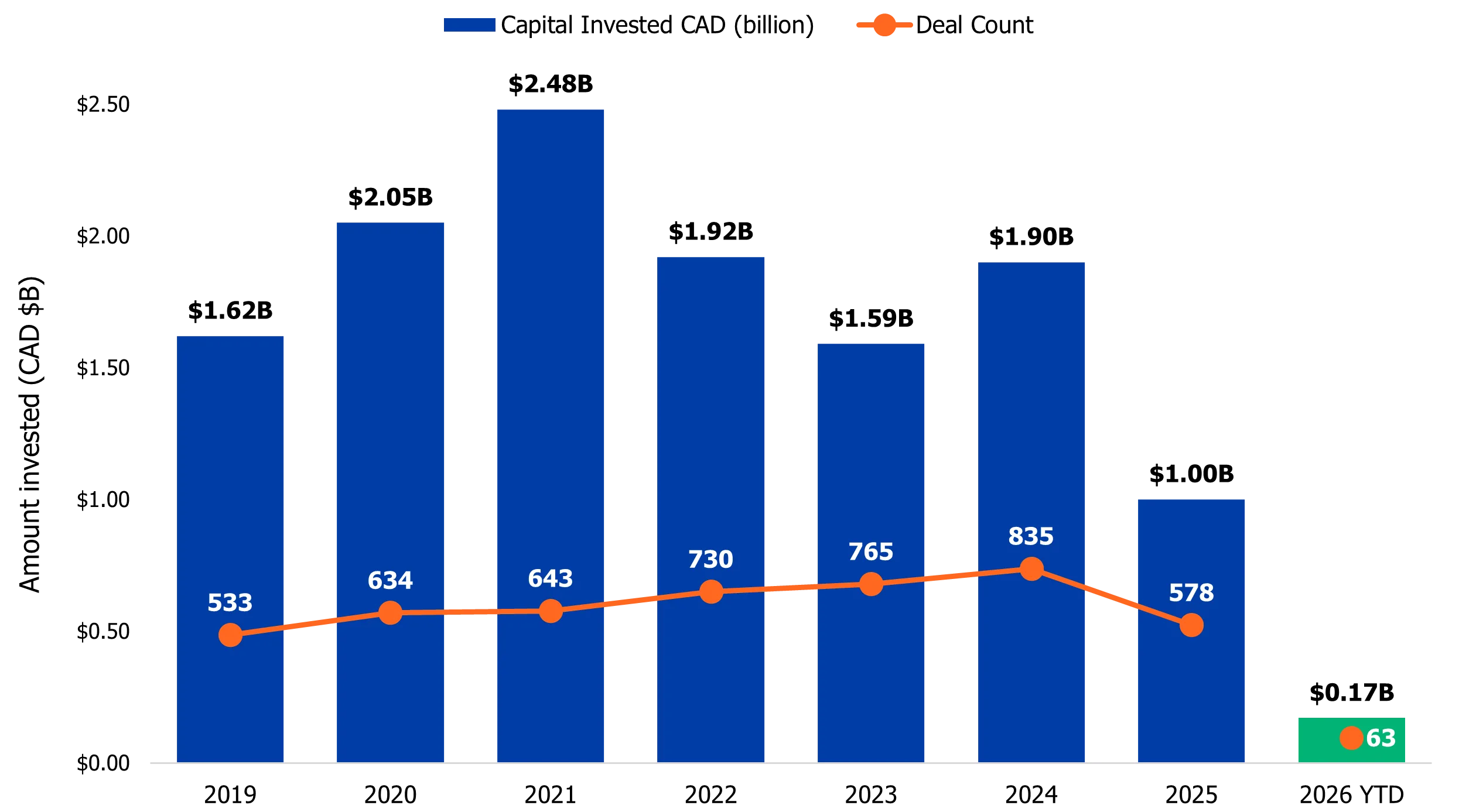
Source: Pitchbook
That challenge, however, looks a lot different than it did a decade ago. “Back then, commercialization was almost a dirty word among academics,” says Louise Pichette, director of health sciences at MaRS Discovery District.
Today, convincing scientists to commercialize their discoveries is less of a hurdle — researchers, whether early in their careers or well established, increasingly view the market as a way to amplify impact. As Pichette explains, the key now is building out the domestic investment ecosystem needed to help those companies grow — and stay — in Canada.
“There’s this desire for a Canadian flavour of commercialization, which is all about impact and access. A lot of our entrepreneurs are passionate about advancing innovation for the benefit of all, rather than just the few.”

Louise Pichette
Director of Health Sciences, MaRS Discovery District
Director of Health Sciences, MaRS Discovery District
The funding gap
Health tech investors spent much of last year playing it safe, with megadeals accounting for a growing share of investment, and less capital flowing to smaller and earlier-stage ventures. And while that was true across many regions, Canada fared worse than most. Venture firms struggled to raise new funds — RBCx, the Royal Bank of Canada’s tech and innovation arm, called 2025 the worst year for fundraising in recent memory.
The disparity compounds over time. A Canadian startup might spend months cobbling together a few million dollars, while a comparable U.S. company raises ten times that amount. With deeper pockets, American firms can pursue several technologies or therapeutic candidates in parallel, streamlining decisions about which ones to prioritize and which to abandon; they can also run multiple experiments in tandem, rather than sequentially, accelerating their path to the clinic. Canadian companies rarely have that luxury, forcing them to move one program at a time, stretching timelines and slowing the path to commercialization.
New players enter the field
There are signs of much-needed expansion and diversification, with philanthropic organizations, public-sector institutions and universities stepping in to help finance the messy middle between discovery and commercialization.
- The Genesys University Seed Fund, backed by the University of Toronto, McMaster University, Venture Ontario, the Temerty group and RBC, secured more than $30 million, with a target of $40 million, giving university-born life-sciences startups early funding to grow in Canada.
- The Weston family’s Wittington Innovation Fund is backing health and climate tech ventures, starting with $14 million in seed financing for Grey Matter Neurosciences, a neurotechnology company working on a new treatment for Alzheimer’s disease.
- The University of British Columbia and inBC, a strategic investment fund, launched the $40-million UBC Catalyst Venture Fund, explicitly designed to help researchers turn research discoveries into commercial ventures.
- This spring, BDC Capital — the Business Development Bank of Canada’s VC arm — inaugurated a $150 million Life Sciences Venture Fund, to help seed- and Series A-stage life sciences companies move from lab to market.
“It’s not going to solve all our issues,” says Maura Campbell, president and CEO of the Ontario Bioscience Innovation Organization (OBIO), of the BDC investment. “But it’s a signal the federal government is recognizing the value of life sciences and that it’s willing to make some bets.”
Building the foundations
A lot of that new capital is being directed toward the infrastructure needed to actually grow life sciences companies. New wet labs, incubators and research hubs are opening from Vancouver to Ottawa to Montreal, and companies like Aspect Biosystems, Entos Pharmaceuticals, and Stemcell Technologies are investing in large-scale research and development and manufacturing facilities.
Aspect Biosystems
Location: Vancouver
Year founded: 2013
Area of interest: 3-D printing human tissue implants
Big raise: $115 million (U.S.) Series B in 2025
Major moment: In January, deepened its multi-billion-dollar partnership with Novo Nordisk to develop bioprinted, implantable tissue for diabetes treatment.
These investments address one of the sector’s longstanding weaknesses: Without domestic manufacturing and development capacity, Canadian companies often have little choice but to scale elsewhere. Building that capacity at home isn’t just about keeping companies in Canada. It means having the infrastructure to develop and manufacture critical vaccines and therapies here, when we need them. The challenges facing Canada’s life sciences sector are real, but commercialization is gaining momentum and the infrastructure needed to support growth is steadily expanding. For a sector still coming of age, those may be the signals that matter most.

Bright spots
From record investments in femtech to billion-dollar acquisitions in radiopharmaceuticals, positive signals across the sector highlight key areas of opportunity.
Clinical trials
Canada excels at running clinical trials — by some measures. Four percent of global clinical trials are run here, despite the country being home to just 0.5 percent of the world’s population. That makes us the G7 leader in the number of trials relative to our population.
That leadership comes with an asterisk. Canada’s trial strength is concentrated in phases 2 and 3 — testing efficacy and monitoring in larger patient populations — rather than the earlier phase 1 studies that establish safety and often generate the first published findings. Geography complicates the picture further. Canada’s clinical trials infrastructure is concentrated in a handful of major cities, and patients in rural and remote communities may have to hours to participate, or they’re left out of the research altogether.
What makes Canada such a clinical trial draw?
1 in 4
Number of Canadians who were born abroad, providing researchers with access to an unusually diverse participant pool
15,000
Researchers concentrated across 12 medical schools and dozens of academic health science organizations
5,100
Clinical trials active in Ontario alone as of 2026
4th
Where Canada ranks globally based on its number of clinical trial sites
Ontario in particular punches well above its weight in this arena. The province’s network of academic hospitals — including Princess Margaret, Sunnybrook and SickKids — has established internationally recognized expertise in cancer, pediatrics and other specialties. Together, these institutions support more than 5,100 active clinical trials, making Ontario the seventh-largest clinical trial jurisdiction in North America. In April, Sunnybrook announced a $41-million philanthropic gift to expand its clinical-trial capacity, including dedicated leadership, specialized teams and an integrated trial-management system. Combined with lower trial-management costs than in the United States, those assets help explain why global drug developers continue to look to Canada — AstraZeneca alone is running more than 210 clinical studies here.
Canada’s appeal in this area persists even as many researchers argue the system here needs improvement. Launching a trial in this country means clearing a gauntlet: Health Canada sign-off, a secured drug supply, and staff trainings, ethics approvals and contract negotiations with every participating site, all before a single patient can enroll. The average startup time for a clinical trial here can stretch to 35 weeks, with much of that time disappearing into the work that has to be repeated at each site. “We take too long to get trials going,” says OBIO’s Campbell. “That’s a problem for multinational pharma, because they want to go to the country that’s fastest.” And where goes multinational pharma, so goes its deep pockets — the global clinical trials market, currently worth somewhere between $65 and $93 billion (U.S.), could surpass $200 billion (U.S.) in a decade.
Australia, for one, has streamlined its regulatory and trial-agreement process to make itself one of the most efficient places in the world to launch a trial. Its Therapeutic Goods Administration’s clinical trial notification scheme can allow studies to begin within four to six weeks. It also offers a generous R&D tax incentive for eligible companies with annual turnover below $20 million (AUD) in the form of a refundable tax offset of up to 43.5 percent on qualifying spending.
In China, so-called investigator-initiated trials let an individual hospital’s own ethics board approve and launch a study, rather than routing it through a central national authority. It’s a shortcut that comes with real questions about transparency and oversight, but undoubtedly makes trials dramatically faster and cheaper to start. In 2010, the country accounted for less than 8 percent of global clinical trials; last year, it registered roughly three times the number of trials compared to the United States — a gap that’s widening just as geopolitical volatility makes sponsors more willing to look beyond the U.S.
The encouraging part is that Canada has started implementing fixes that could help unblock the bottleneck.
- In 2024, Clinical Trials Ontario introduced a universal agreement for clinical trials, a pre-negotiated contract between research institutions and sponsors for industry-funded investigations designed to help the province reach its trial activation timeline goal of 45 days.
- The Canadian Cancer Society unveiled an action plan in 2025 to double cancer-trial participation by 2035, in part by cutting through regulatory and administrative thickets.
- Last year also saw the launch of CanReview, a pan-Canadian effort to centralize the ethics review for trials that run across multiple sites in different provinces.
None of this is novel, exactly. Australia, Brazil, Denmark, Spain, the U.K. and the U.S. have all had similar systems in place for more than a decade … which simply underscores the point: Canada is finally adopting proven fixes that have borne fruit elsewhere. Clinical trials aren’t just about economic activity — they’re also how Canadian patients get early access to next-generation therapies. Losing trials means losing that access.
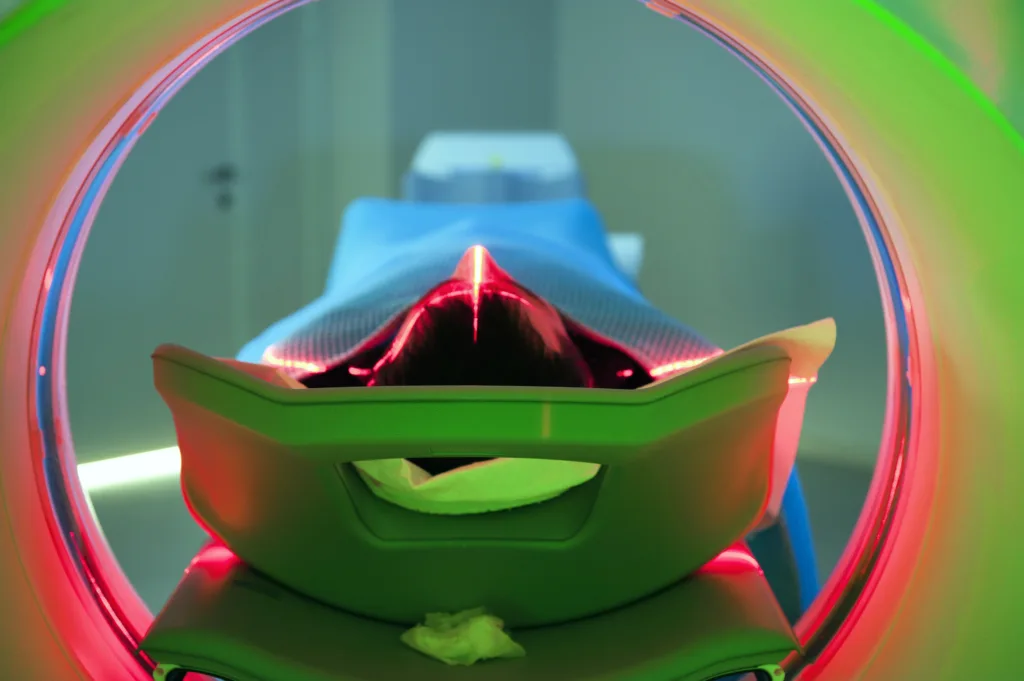
Image-guided therapy
In 2015, researchers at Sunnybrook Health Sciences Centre became the first in the world to use focused ultrasound to temporarily — and non-invasively — open the blood-brain barrier in a human patient, allowing therapies to reach parts of the brain that had previously been inaccessible. The technique is now being explored as a way to treat conditions ranging from brain cancer to obsessive-compulsive disorder to Alzheimer’s disease.
Across the country, companies are building on technologies that use imaging, ultrasound and AI to diagnose disease earlier, guide treatments more precisely and, in some cases, replace invasive procedures altogether. That’s in part thanks to a homegrown competitive edge in the form of longitudinal imaging datasets generated by a dense network of academic health centres. Researchers at Sunnybrook, University Health Network, Princess Margaret Cancer Centre and other institutions have spent decades collecting MRI, ultrasound and CT scans and tracking patient outcomes over time, establishing an invaluable resource pool that cannot be easily replicated by would-be competitors.
“Canada has this unique trove of diverse population data that we should treat like a natural resource, the way we do oil and critical minerals.”
Louise Pichette
Director of Health Sciences, MaRS Discovery District
Director of Health Sciences, MaRS Discovery District
The sector is developing a track record of successful spin-outs. Between 2025 and the first quarter of 2026, Canadian companies developing image-guided therapies and diagnostics landed at least $150 million in funding.
- Halifax-based ABK Biomedical raised $35 million (U.S.) for a liver cancer treatment that uses radiopaque microspheres — tiny beads infused with radiation that are visible on CT imaging — allowing physicians to both deliver and visualize therapy in real time.
- Mississauga’s ProFound Medical secured $40 million for its MRI-guided, incision-free prostate treatments.
- Sound Blade Medical, also in Halifax, raised $16.5 million (U.S.) to accelerate the development of its ultrasound-guided technology for non-invasive surgery.
- Ottawa’s MolecuLight, which develops imaging technology that helps clinicians detect and monitor wounds, showed there’s action beyond the startup stage, securing $39.5 million in institutional financing.
The techniques are moving upstream, too. Image-guided medicine is increasingly helping physicians detect disease before symptoms emerge. Toronto’s RetiSpec uses retinal scans to identify early signs of Alzheimer’s disease, while companies including Perceiv AI, AiimSense and Interaxon are harnessing imaging, sensors, and machine learning to discover new neurological biomarkers.
Profound Medical
Location: Mississauga
Year founded: 2008
Area of interest: MRI-guided, incision-free prostate treatment
Big raise: $40 million public-market raise in late 2025
Major moment: In May, Humana became the first major U.S. insurer to cover ProFound Medical’s TULSA Procedure, helping pave the way for broader coverage of the incision-free treatment.
Canada’s challenge when it comes to medical technology isn’t innovation — it’s adoption. Companies have long-faced a “valley of death” between successful pilots and widespread procurement, with no clear route to be deployed within provincial health systems. Launched last September, Ontario’s Health Innovation Pathway aims to streamline the review and procurement of medical devices and digital health technologies.
That matters because this is a sector where speed counts. Image-guided technologies can often be developed faster and at lower cost than new pharmaceuticals while still delivering significant clinical impact. In light of Canada’s strengths in AI and medical imaging, that should make the country a natural leader. INOVAIT Canada is working to foster that potential. The national network was launched out of Sunnybrook Research Institute in 2020 with support from Canada’s Strategic Response Fund, and has committed $41M to support collaborative image-guided therapy and AI R&D projects with more than 120 industry and academic organizations across the country. To date, INOVAIT has attracted upwards of $219M in follow-on investment and helped bring more than 50 new medical devices to market.
Adding AI
Artificial intelligence now underpins much of Canadian health innovation, reshaping everything from diagnostics to drug discovery to the daily grind of clinical work. Here, a by-the-numbers look at what that shift means.
$349M (U.S.)
The potential value of a partnership between Vancouver’s Variational AI and Merck, which is using the startup’s platform to design new drugs
3 years
The duration of Toronto-based BenchSci’s licensing agreement with French pharma giant Sanofi, putting AI to work in the pharmaceutical industry’s notoriously slow R&D pipeline
PQ203
This new drug for advanced metastatic cancer from Toronto’s ProteinQure is one of the first AI-designed peptide therapies to reach human clinical trials, with just three years — a fraction of the typical timeline — between its discovery and when it was first administered to patients
25,098 hours
The amount of clinical time reclaimed across five Ontario pilots by Heidi Health’s AI scribe — an estimated $2.51 million in returned capacity, and evidence that one of AI’s most immediate healthcare benefits may be fewer hours spent on paperwork (and more spent with patients)
Cell and gene therapy
Throughout most of the history of modern medicine, the discipline has focused on managing disease. Cell and gene therapies promise something far more ambitious: curing what ails us. Rather than simply treating symptoms, these modes are designed to repair, replace or reprogram the cells that are causing the problems. And unlike conventional drugs, many are designed as one-time interventions with potentially lifelong effects.
More than 60 years ago, Canada laid the groundwork for these revolutionary treatments. In 1961, University of Toronto-affiliated researchers James Till and Ernest McCulloch, working at what is now the Princess Margaret Cancer Centre, produced the first evidence for the existence of stem cells. That discovery helped launch the field of regenerative medicine, which has since expanded into a full ecosystem of regenerative research, clinical translation and advanced manufacturing capacity.
Regenerative intelligence
Gene therapy: Delivers genetic instructions into a patient’s cells, often via engineered viruses or lipid nanoparticles, to correct, silence or replace faulty genes.
Cell therapy: Introduces new or modified cells into the body, rather than fixing the ones already there, to attack cancer, replace damaged tissue or produce therapeutic proteins from within.
Biomanufacturing: The infrastructure layer — the specialized facilities that turn a cell or gene therapy from a lab discovery that can be produced at clinical or commercial scale.
Canada’s key players: Aspect Biosystems, Morphocell Technologies, Apiary Therapeutics, Modulari-T Biosciences, Centre for Commercialization of Regenerative Medicine, OmniaBio
Today, that legacy is represented through an integrated web of national assets that includes world-class research institutions, hospital-based trial networks, public-private commercialization engines and an emerging biomanufacturing base. Few jurisdictions have that many pieces of the puzzle operating in the same ecosystem. “That kind of resource integration is really what put Canada on the map,” says Janet Rothberg, a senior director with the Centre for Commercialization of Regenerative Medicine (CCRM).
As Rothberg explains, a discovery emerging from a University of Toronto lab, for instance, can be tested through clinical trials at the University Health Network or SickKids, then refined and commercialized with support from CCRM before being manufactured at one of its subsidiaries like OmniaBio in Hamilton, Canada’s largest biomanufacturing facility. Buy local, at a cellular level.
Diabetes is one area where Canada has emerged as a leader, particularly in cell therapies that could supersede the need for lifelong insulin management. One of the biggest deals of 2025 was Vancouver’s Aspect Biosystems, which raised $165 million to 3D-print living, implantable pancreatic tissue that could replace the insulin-producing cells destroyed by the disease.
Beyond diabetes, Montreal’s Morphocell Technologies is developing tissue and organ replacement therapies for liver disease, securing roughly $50 million (U.S.) in series A funding. CCRM spin-out Apiary Therapeutics uses genetically engineered cells as drug delivery vehicles, while Modulari-T Biosciences engineers immune cells to target cancer and other diseases with greater precision and fewer side effects than current therapies.
The opportunities are enormous, but so are the costs. Cell and gene therapies are the most complex and expensive treatments to manufacture, and the average price tag for bringing one to market is almost $2 billion (U.S.). Many cost millions for a single dose, but an astronomical price isn’t the whole story. The goal of gene therapy is to be a one-and-done treatment, and a single dose — however expensive — can cost less than a lifetime of managing disease symptoms.
“We used to think we had to design a drug for each disease individually. With these new gene therapies, we can test one approach and potentially copy-paste from one disease to another. We could be in for an explosion of therapies without needing startup investment each time. Things could start moving much more quickly. It’s really exciting.”

Rachel Harding
Assistant Professor and Principal Investigator, Pharmacology and Toxicology,
University of Toronto
Assistant Professor and Principal Investigator, Pharmacology and Toxicology,
University of Toronto
Nevertheless, the sticker shock is real. Even advocates of the sector acknowledge that scientific breakthroughs alone won’t be enough. The real challenge is scaling production, reducing costs and ensuring promising therapies can move efficiently out of the lab to be accessed by patients.
That’s where outfits like CCRM come in. The only global public-private partnership of its kind, it works end-to-end on commercializing regenerative medicine. Its newest initiative pairs quantum computing and AI with manufacturing data to build something that could be a game changer: the ability to predict in advance whether a given therapy will work for a given patient.
In the decades since Till and McCulloch discovered the foundations of regenerative medicine, Canada has been a leader in putting together nearly every piece required to commercialize these therapies. The greatest challenge is what comes next: mobilizing fast enough to transform that rare head start into companies — and potential cures — the rest of the world can’t ignore.
Patent cliff promises
Over the next five years, the pharma industry is set to lose about a sixth of its total revenue, or roughly $300 billion (U.S.). That’s thanks to the patent cliff — the imminent expiration of patents on nearly 200 drugs, including about 70 blockbusters that each generate $1 billion (U.S.) in annual sales.
And while this development may be bad news for Big Pharma — the top five companies stand to lose half their revenue — it could be good for Canadian life sciences companies as multinationals will be forced to refill their pipelines. “What we’re seeing is that they’re looking for high-risk, low-cost preclinical and clinical assets,” says OBIO’s Maura Campbell. Given Canada’s strength in precisely that realm, there is tremendous potential for the country to fill that billion-dollar void.
The calculus, however, is complicated by Washington’s own pressure campaign. Trump’s most-favoured-nation pricing push and a phased tariff regime on generic drugs — zero for two years, then climbing to 200 percent by 2029 — are squeezing the same multinationals from another direction, adding uncertainty to how and where they’ll rebuild their pipelines.
Women’s health
In 2023, researchers from the University of Toronto and the Centre for Addiction and Mental Health surveyed the past 11 years of Canadian Institutes of Health Research grant funding and determined that only six percent of that funding was allocated to women’s health. Even in heart disease — the leading cause of premature death among Canadian women — female-focused research drew less than 12 percent of designated funding. Women were excluded from clinical trials in Canada until 1997, and even now make up just 30 percent of participants. This underrepresentation has measurable repercussions: women spend nearly a quarter more of their lives in poor health compared to men.
However, when it comes to innovation, women’s health, which spans reproductive care, menopause, chronic disease management and more, is emerging as one of the fastest-growing areas of opportunity. The global market is projected to reach more than $65 billion (U.S.) in the next five years. Closing the women’s health gap isn’t just a matter of equity — it could boost the Canadian economy by at least $37 billion by 2040.
The purse strings change hands
As part of the “great wealth transfer,” older generations are expected to pass on anywhere from $80 to $124 trillion (U.S.), either to their heirs or “sideways,” to surviving spouses. Women are set to inherit roughly 70 percent of this wealth. In Canada, women are projected to control nearly $4 trillion in assets by 2028, up from $2.2 trillion in 2019.
That shift is already reshaping how healthcare is bought and valued. As women gain control over more household and intergenerational wealth, spending decisions are beginning to tilt toward areas of medicine that have historically been underfunded and under-researched.
That gap is also an opportunity, and Canadian institutions have started building to meet it. Femtech Canada, launched out of Hamilton’s Innovation Factory in 2021, has since helped start some 170 women’s health companies, supported the creation of more than 1,200 jobs and grown into the world’s third-largest femtech ecosystem.
Across that ecosystem, the wins are starting to add up.
- Coral, a menopause-care platform founded by the team who previously scaled Dialogue, raised $8 million in total funding over the past 18 months.
- Last year, Montreal’s Eli Health closed a $17 million Series A — the largest ever for a Canadian women’s health startup, according to the company — and won Best of Innovation in Digital Health at the Consumer Electronics Show for its at-home hormone-testing technology.
- Also specializing in hormone health, Science & Humans, an online clinic that serves more than 50,000 Canadians, closed an oversubscribed $10-million Series A in January.
- This spring, Toronto’s Future Fertility raised $4.1 million (U.S.) to scale its AI-powered egg quality assessment platform into global markets.
It’s not a coincidence that so much of this activity is consumer-facing: women drive an estimated 75 to 80 percent of consumer spending in Canada, giving founders in this space a clearer, faster path to market than in areas where the customer is a hospital, an insurer or a health system. But that leaves enormous opportunities on the table. Brain health, mental health and chronic disease are harder to crack — but the companies that attempt to do so could unlock enormous value.
Eli Health
Location: Montreal
Year founded: 2019
Area of interest: At-home hormone testing
Big raise: $12 million (U.S.) Series A, the largest ever
Major moment: Won Best of Innovation in Digital Health at CES 2025 for its at-home hormone-testing device.
Consumer-facing companies have a real advantage here: unconstrained by provincial formulary approval or traditional pharmaceutical procurement timelines, consumer health companies can build, launch and reach customers on a startup’s timeline rather than a regulator’s.
Companies pursuing clinical validation face a steeper climb. Longer development timelines and a higher risk profile mean they hit funding walls earlier and often struggle to access the support that helps consumer-oriented firms scale so quickly. To help close that gap, Femtech Canada launched the Women’s Health Medical Pathway last year, offering as much as $20,000 in services to help startups still working toward clinical validation and regulatory approval get through this stretch of the pipeline.
Canada’s women’s health strategy was last updated in 1999. That’s why various groups, including Femtech, Deloitte Canada and IWK foundation, are pushing for a new one — and it might be on the horizon. Last December, the senate tabled Bill S-243, a national framework designed to strengthen investment and innovation in women’s health, foster collaboration between public and private systems and improve access to care and treatment.
For every $1 invested in women’s health, the return is $3 — in the form of reduced healthcare costs, sustained workforce participation and economic growth. The economic argument is clear. Whether Canada musters the oversight to capitalize on this $37-billion opportunity remains to be seen.
Radiopharmaceuticals
In 2020, Fusion Pharmaceuticals bet $25 million that TRIUMF, a particle accelerator in Vancouver that’s been operating for more than 50 years, could fulfill a global need: producing actinium-225, a rare isotope used in targeted alpha therapy, a cutting-edge cancer treatment, at scale. Four years later, when multinational giant AstraZeneca bought Fusion for roughly $2.4 billion (U.S.), it seemed the Hamilton-based company’s bet had paid off.
Fusion Pharmaceuticals
Location: Vancouver
Year founded: 2014
Area of interest: Using radioactive isotopes to deliver cancer-killing radiation directly to tumour cells
Big raise: $105 million (U.S.) in an oversubscribed 2019 Series B
Major moment: Acquired by AstraZeneca in 2024 for $2.4 billion (U.S.) — one of the largest exits in Canadian biotech history.
Canada’s radiopharmaceutical advantage rests on infrastructure that took decades to build. The National Research Universal reactor at Chalk River, Ont. — once one of the world’s leading sources of medical isotopes — helped establish the country as a global leader in the field after it started running in 1957. While the reactor was retired a decade ago, Canadian Nuclear Laboratories has continued producing and shipping actinium-225 from the same site since 2017. Together with TRIUMF, it’s part of a national network that gives Canadian companies access to a critical ingredient in next-generation cancer therapies.
But building a radiopharmaceutical sector requires more than reactors and particle accelerators. In 2008, the federal government and McMaster University launched the Centre for Probe Development and Commercialization, a not-for-profit focused on bridging the gap between research and industry. Since then, the CPDC has helped shepherd more than a dozen radiopharmaceuticals into clinical development and incubated four companies, including Fusion. McMaster has also become a manufacturing hub, partnering with Fusion to build a 27,000-square-foot facility capable of producing radiopharmaceuticals at commercial scale.
In recent years, the federal government has put its money where its isotopes are. Ottawa committed $35 million through the Strategic Innovation Fund to create the Canadian Medical Isotope Ecosystem, a national initiative led by CPDC and TRIUMF. That program in turn funds research and manufacturing and commercialization projects at organizations including CNL, McMaster University and TRIUMF itself, reinforcing a supply chain competitors would struggle to replicate.
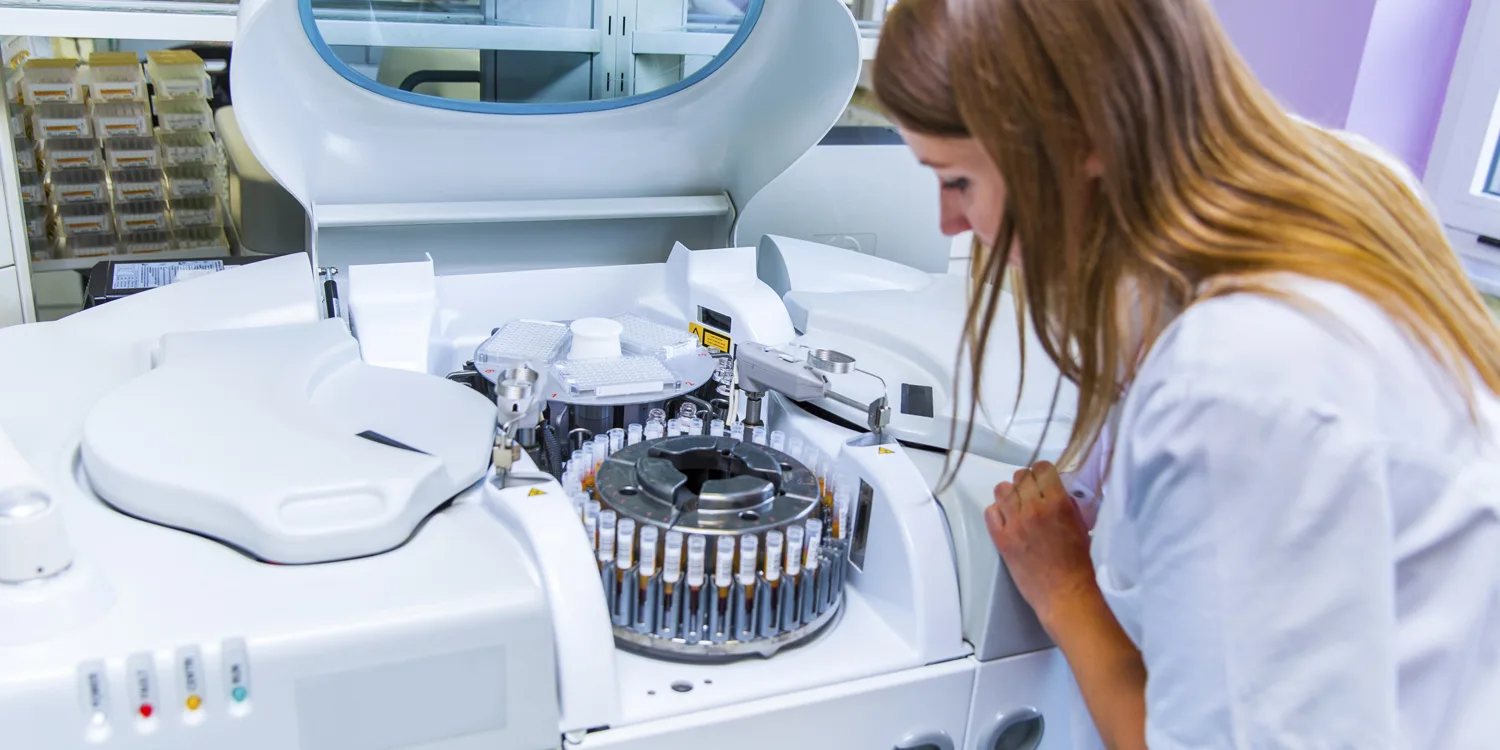
Investment is also flowing into the next generation of applications. In 2024, the University of Toronto and the Centre for Addiction and Mental Health received more than $3 million — matched by nearly $4 million in funds from industry partners — to establish a national radiopharmaceutical hub focused on new treatments for cancer, cardiovascular disease and neuropsychiatric disorders. These developments prime Canada to capture a larger share of a global market projected to reach $33 billion (U.S.) by 2030.
Fusion is far from the only mega-success story. Point Biopharma, a Toronto-based company with a pipeline of clinical and preclinical-stage oncology therapies, was acquired by Eli Lilly, the American drugmaker, for roughly $1.4 billion (U.S.) in 2023. The following year, Burnaby’s ARTMS sold to Australia’s Telix for as much as $82 million (U.S.). These deals reinforce the country’s reputation as a nucleus for radiopharmaceutical production and demonstrate the sector’s ability to generate strong returns, with some companies delivering three to five times the capital invested.
Yet the significance of those acquisitions extends beyond the companies themselves. As MaRS’s Pichette points out, the infrastructural complexities of radiopharmaceutical production mean that relocation is no easy feat. ”The Fusion exit kept a lot of talent and technology in Hamilton,” she says. “Plus, when you have a global player moving in, they bring people and resources that get recycled into the ecosystem.” Another CDPC spinout, AtomVie Global Radiopharma, announced in December plans to invest more than $138 million in a new Hamilton facility that will increase its production at least tenfold.
Canada cannot rely on an uncontested home-field advantage. New entrants in the U.S. and Europe are racing to expand actinium-225 production, which means scarcity, the variable that worked in our favour, may no longer be an issue. The challenge now is ensuring that the country’s decades of investment in isotope production translate not just into successful exits, but into a durable domestic industry.
“Let’s not do the classic Canadian thing — take an area of success like radiopharmaceuticals, underinvest in it and only take a tiny piece for ourselves. We need to take the whole thing before the world passes us by.”

John Valliant
Founder and CEO, Fusion Pharmaceuticals
Founder and CEO, Fusion Pharmaceuticals
Brain health and neuroscience
Earlier this year, ProMIS Neurosciences pulled off the kind of raise that turns heads in Canadian biotech: as much as $175 million in financing — $75 million upfront, the rest tied to future warrants — to support the development of PMN310, an experimental Alzheimer’s antibody designed to attack the protein clumps that drive the disease while sidestepping the brain-swelling side effects that have dogged other treatments.
For much of the past two decades, neuroscience was where biotech optimism went to die. Alzheimer’s alone consumed billions of dollars in research spending while delivering a seemingly endless litany of clinical disappointments. The underlying biology proved maddeningly complex, the diseases themselves poorly understood and the studies were among the largest and most expensive in medicine. For investors, the risk simply wasn’t worth it.
That calculus is beginning to change. After years of false starts, the field finally produced something it had been missing: evidence that new Alzheimer’s drugs like Leqembi and Kisunla could meaningfully slow the progression of the disease. The market responded accordingly, with Alzheimer’s-related acquisitions surging from roughly $2 billion (U.S.) in 2022 to nearly $18 billion (U.S.) in 2024. Brain health is suddenly investable again, and Canada is well positioned to benefit.
Promis Neurosciences
Location: Toronto
Year founded: 2004
Area of interest: Alzheimer’s antibody therapy
Big raise: Private placement funding of up to $175 million in early 2026
Major moment: In July, interim data from its PRECISE-AD Phase 1b trial showed no cases of brain swelling, including among patients at highest risk, a major safety concern with other Alzheimer’s antibodies.
Canada’s real advantage is its sustained public investment and scientific expertise. Since 2011, the federal government and the non-profit Brain Canada have jointly invested $560 million through the Canada Brain Research Fund. The country ranks among the world’s top producers of brain science research, and Canadian researchers specialize in neuroscience more than any other field. Institutions such as Montreal’s Neurological Institute and Toronto’s Krembil Brain Institute have built global reputations in neurodegenerative disease, aging and cognitive health. That research base gives Canada something many jurisdictions lack: a deep pipeline of ideas waiting to be commercialized.
Organizations like the Ontario Brain Institute (OBI) are trying to do just that, by providing funding, mentorship and industry connections to researchers and early-stage companies. OBI’s portfolio now includes more than 110 companies, which together have attracted more than $440 million in follow-on investment. One example is Toronto’s Neuropeutics, which is developing a first-in-class therapy designed to prevent — and potentially reverse — the protein clumping associated with diseases like ALS, Alzheimer’s, Parkinson’s and frontotemporal dementia. It’s received funding from translational research organizations like Ontario Genomics, the Centre for Aging + Brain Health Innovation and OBI.
Neuropeutics is a success story so far. But it’s also emblematic of a familiar pattern in Canadian biotech. The money that gets companies started here tends to come in modest doses: grants of a few hundred thousand dollars, enough to validate an idea but not carry it through the years of expensive trials that turn a promising molecule into an approved drug. For that, most companies still look south.
For instance, Toronto-based Diamond Therapeutics, which is developing psilocybin-based therapies for neuropsychiatric conditions, this spring won a multi-million dollar award from an American government agency to fund a trial of its treatment for generalized anxiety disorder. And though ProMIS is anchored in unmistakably Canadian science — it’s built on the work of Canada Research Chair Neil Cashman — the company is listed on the Nasdaq, runs its trials at American sites, and its roster of investors is overwhelmingly American.
“A lot of Canadian companies are approached by foreign investors who insist they have to relocate. We need to unlock more domestic capital — Canadian funds can lead investment rounds and help keep companies here.”
Louise Pichette
Director of Health Sciences, MaRS Discovery District
Director of Health Sciences, MaRS Discovery District
The field of brain health and neuroscience has crossed a threshold. But if the capital that scales companies and the trials that prove them keep flowing south, Canada risks settling in a role it knows too well: producing the breakthroughs and exporting the value.

Should they stay or should they go?
Canada has a long history of producing breakthroughs only to watch others profit from them, dating back to 1923, when Canadian researchers Frederick Banting and Charles Best sold the patent for insulin for a dollar, believing it to be unethical for a doctor to profit off a life-saving discovery. For six decades, the Toronto lab where insulin was perfected made it available at cost. Then, in the 1980s, the federal government privatized the lab and sold it to a foreign buyer. Today, three drugmakers — American, Danish and French — control roughly 95 per cent of the multibillion-dollar insulin market, while Canada doesn’t produce a single drop of it.
“We’re the only G7 country without one,” says Pichette. “What do we need to do to create a Canadian anchor company?”
It’s a question Canada may finally be better positioned to answer. The global biotech market is surging back to life, Canadian companies are attracting more capital and attention, and a new generation of founders is building businesses with ambitions that go well beyond the next acquisition. The opportunity now is to turn that momentum into companies that can scale here, stay here, and capture more of the value they create.
And there are signs that the pieces are beginning to fall into place. AbCellera’s latest results for its non-hormonal menopause treatment — an 83 percent reduction in hot-flash symptoms — sent its stock to a three-and-a-half-year high. New pools of capital are emerging, too, including a new $58 million (U.S.) fund to support innovation in women’s and children’s health from Toronto-based Cross-Border Impact Ventures. And by tag-teaming to ensure startups at every stage receive support to access the precise resources, market intelligence and guidance they need, Life Sciences Central, a collaboration between OBIO, Toronto Innovation Acceleration Partners and MaRS, is working to tackle one of the sector’s most persistent problems: fragmentation.
None of this means Canada has solved its commercialization problem. But the ecosystem is no longer just producing good science and watching the value leave. It’s beginning to build the capital, infrastructure and ambition needed to keep more of it here.
Caitlin Walsh Miller, writer
Sarah Liss, editor
Andrea Teolis, designer
Mayisha Sultana, research
Louise Pichette, Director of Health Sciences, MaRS
Kathryn Hayward, Director of Content