Building Biotech: How Canada can ensure early-stage innovators can access the resources they need
Here’s everything you need to know about wet labs, sandboxing and other life sciences discovery zones.
The Building Biotech series explores how this country can become a global player in life sciences by streamlining the entrepreneurial path to commercialization.
When Providence Therapeutics began scaling its operations in Toronto, it quickly ran into a familiar obstacle: There was a dearth of affordable labs. Founded in 2015, the biotech venture was developing an mRNA platform designed to produce personalized cancer vaccines and other therapies. By 2019, the team had grown from a single desk at JLABS at MaRS to producing batches of mRNA and preparing for clinical-grade manufacturing.
As the company was preparing to advance its programs toward clinical trials, the team struggled to secure adequate lab facilities. “We ran a search committee to find space in the area for a team of about 40 people,” explains Brad Sorenson, CEO at Providence Therapeutics. The company also looked at proposals to convert non-lab space to built-for-purpose labs that might meet its needs. But at the time, “there was no built-out lab space available in the target area,” says Sorenson.
The lack of suitable lab infrastructure soon became a constraint on the company’s growth. “You keep coming up against a ceiling as you try to succeed in Toronto,” he says. “You might need to hire 10 people, but you have nowhere to put them.”
Providence’s experience is far from unique. Across Canada’s biotech ecosystem, founders frequently describe similar challenges when trying to secure the specialized laboratory space needed to translate scientific discoveries into new medicines. In major hubs, such as Toronto, Vancouver and Montreal, vacancy rates were reported to be near zero in recent years. According to a CBRA report published in 2022, the demand for lab space in the Greater Toronto and Hamilton Area (GTHA) was estimated to exceed supply by a factor of 141 to 1, with more than 3.5-million square feet of active tenant requirements and a vacancy rate of just 0.2 percent. Some companies left for biotech hubs where lab facilities are more readily available, like Boston or San Francisco — or Calgary, in the case of Providence Therapeutics, which moved west in 2020. “Ultimately, we found affordable lab space that had been used in oil and gas, but was readily converted to the type of work we had planned,” says Sorenson.
There has been an uptick in the number of new biotech startups founded in the past decade, which increased demand for the available wet lab space. The bottleneck, however, can’t be explained by venture formation alone. A more pressing issue is how infrastructure is identified, allocated and matched to venture needs.
The problem extends well beyond the issue of square footage. Given the varied background of biotech founders — academia, industry, startups — we need to develop a responsive framework to ensure they can access the resources they need, and allocation is prioritized based on their needs.
Here’s everything you need to know about wet labs, sandboxing and other discovery zones.
What’s behind the bottleneck in securing wet lab space?
The problem isn’t that there aren’t enough wet labs — it’s that there aren’t enough that are well-equipped, accessible and affordable for ventures. According to a recent MaRS analysis of PitchBook data, there are 361 biotech companies operating nationally. In the GTA alone, there are approximately 15-million square feet of available commercial space — more than sufficient, in aggregate terms, to accommodate all 361 ventures. This perception of scarcity has undermined effective allocation.
In high-demand markets such as Toronto, available lab space is frequently off-market, informally brokered or bundled into long-term lease structures that early-stage ventures cannot absorb. According to Jim Wilson, senior vice president and life sciences lead at Lennard Commercial Realty, early-stage ventures frequently find themselves “working out of darkened basements of research institutes or the end of hallways in universities, cobbling together temporary solutions until they can secure dedicated lab space.” He also explains that startups often operate as “shadow tenants,” securing space through personal networks, temporary subleases or ad hoc arrangements rather than through transparent listings. Because wet labs require specialized HVAC and plumbing systems that meet stringent regulatory standards, their construction costs are much higher than those associated with conventional office spaces. Real-estate developers are reluctant to build without guaranteed long-term tenants, and many Canadian biotech startups are still small, under-capitalized and pre-revenue, which makes it difficult for them to commit to extended leases and high rents. Meanwhile, real estate brokers are incentivized to find long-term tenants rather than supporting the broader aims of a robust biotech ecosystem.
“It’s cheaper to move to the U.S. and convert an old chicken restaurant into a wet lab space,” says Abdellahhad Barbour, CEO, co-founder and director of Ostia Sciences. “It already has vents and refrigeration — you just need to add a few pieces of equipment.” In fact, one of Barbour’s collaborators did just that: They purchased a vacant fried-chicken restaurant in Texas for roughly $400,000 and converted it into a laboratory facility. As Barbour says, the example illustrates how much easier and cheaper it can be to establish biotech infrastructure south of the border, even for unconventional spaces.
The perception of shortage, reinforced by opaque market signals, risks becoming self-fulfilling: Companies relocate, outsource or delay development not necessarily because space does not exist, but because it is not visible, affordable or allocated with venture success in mind.
“Getting access to this lab space in the MaRS ecosystem has really enabled us to accelerate our development,” says Serena Mandla, CSO of Noa Therapeutics.
So how can we improve allocation of wet lab space?
Canada needs to implement a system in which those with domain expertise help guide allocation decisions.
A coordinated, publicly supported platform to register and match available space with venture needs could reduce fragmentation and improve utilization without requiring immediate new builds. Interviews with venture leaders across the country suggest that infrastructure providers — including universities, hospitals, incubators and private landlords — often operate independently, without a shared registry or neutral allocation framework.
The coordination problem has knock-on effects. Capital and space timelines are frequently misaligned. As Providence Therapeutics’ Sorenson explains, “you might have access to capital, but modifying rental lab space can eat into that capital and take precious time; alternatively, you can find a great opportunity, as we did with Sunnybrook, but it doesn’t quite fit within the whole scope. Lining it all up can be tough, and requires some good fortune.”
How can we make it easier for founders to access the resources they need to scale?
Because biotech leaders can have different affiliations, whether that’s grant-funded research or academic appointment or established commercial enterprises, infrastructure planning cannot assume a single pipeline. The discovery and early preclinical system must be designed to support ventures according to their own needs. This requires intentional alignment across owned, shared and outsourced infrastructure models, ensuring founders can move fluidly from experimentation and validation to scaling without encountering structural dead ends. For instance, Life Sciences Central, which was established late last year, aims to streamline and refine the process by assessing which resources would be most appropriate and effective to meet the needs of startups in the program.
Where can founders find spaces to refine their innovations?
To ensure that viable ideas can be developed, founders need access to sandboxing space — places where they can test and refine their innovation. This discovery space is critical. Access remains uneven, however, often tied to institutional affiliation, grant status or tenancy structures that limit flexibility.
Founders looking to develop solutions outside of an academic institution have limited options when it comes to finding infrastructure to support essential early-stage experimentation.
Last August, when JLabs announced it was closing its innovation centre in Toronto by the end of the year, there was uncertainty about the 30 early-stage ventures that were housed in the facility. In March, the University of Toronto partnered with BioLabs, an international provider of shared lab infrastructure, and made a renewed commitment to provide specialized equipment and entrepreneurial programming.
These early-stage shared facilities are important, says Gordon McCauley, president and CEO AdMare Bioinnovations, in that they “provide a leg up” to companies until they have the resources to make a commitment to a private landlord.
For companies that are further along in their growth journey, leasing or building private laboratory space can be an option — provided that they have sufficient capital. This model provides autonomy and control but is typically viable only after initial validation milestones have been achieved.
How does outsourcing fit in?
Contract research organizations (CRO) enable ventures to access specialized scientific teams that can perform clinical testing and other early-stage experiments that comply with regulations. This flexibility can be crucial.
“There’s no overhead, no rent to pay,” says Anmol Napal, CEO and co-founder of Nospharma, a Montreal-based firm developing therapeutics for rare neurological conditions. “I don’t have to find a location for all of that.”
CROs are relatively scarce in Canada, particularly outside major urban centres, which limits the extent to which early preclinical work can be conducted domestically. When companies outsource discovery and exploratory preclinical studies to international CROs, the benefits of that knowledge, workforce training and technical expertise are lost.
What could help early-stage founders access the infrastructure that suits their needs?
Finding a balance between these three models — owned, shared and outsourced — will help startups move efficiently from ideation to validation and beyond.
An optimized discovery system would treat these infrastructure models as complementary rather than sequential. Shared spaces should provide low-friction entry points for experimentation. CROs should be integrated as domestic capability partners, enabling early validation without exporting expertise. Owned infrastructure should emerge as a natural progression for ventures that have demonstrated technical and commercial viability. The objective is not to privilege one model over another, but to ensure fluid movement among them.
This fluidity directly impacts workforce development and retention. In ecosystems where shared labs, CROs and scaling companies are co-located and coordinated, talent circulates. Technicians trained in CRO environments transition into startups. Academic researchers test ideas in shared spaces before forming ventures. Experienced operators move between companies without geographic disruption. Over time, this circulation compounds expertise and deepens cluster maturity.
Rather than focusing solely on increasing square footage, policy-makers and ecosystem leaders should examine how incentives, governance mechanisms and visibility tools can align owned, shared and outsourced capacity into a coherent discovery continuum.
A key piece of this puzzle involves acknowledging the influence of economic cycles on life sciences infrastructure. During periods of capital contraction or slower domestic venture formation, underutilized capacity can strain operators and landlords alike. A mature strategy would therefore position Canada as a place where domestic ventures can grow and as an attractive destination for foreign companies seeking high-quality laboratory space, CRO services and translational expertise.
The next phase of ecosystem development will depend less on expanding square footage and more on deliberate coordination. If designed effectively, discovery infrastructure can do more than house experiments. It can anchor expertise, retain talent and create the conditions under which Canadian ventures grow and remain in Canada.
About this series
The Building Biotech series explores various barriers biotech startups face in commercializing their solutions in Canada. We conducted in-depth interviews with 50 experts nationwide, issued a national survey to 320 biotech companies (receiving responses from 33 firms), and held a roundtable discussion with 25 sector leaders. Find other articles in the series here.
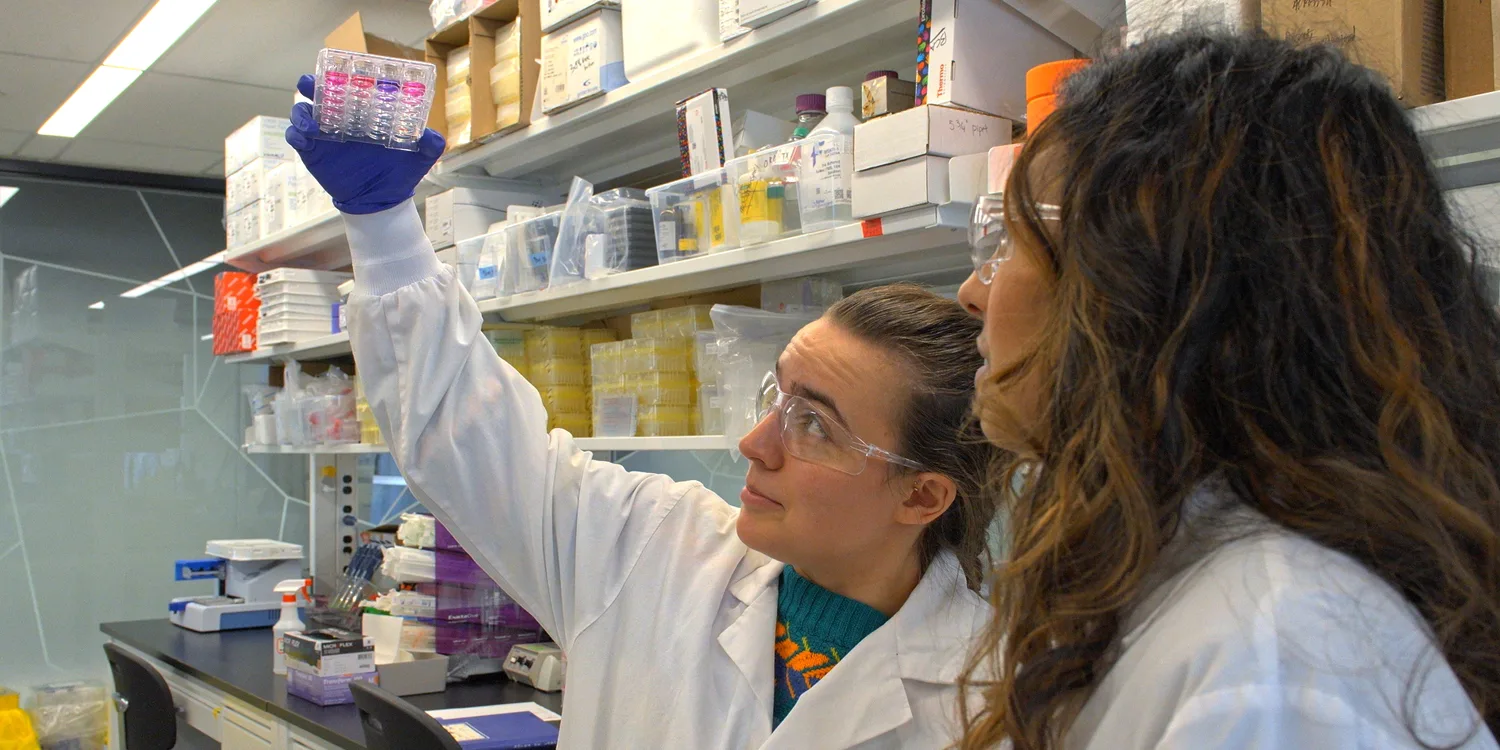
Image courtesy of Noa Therapeutics
-
 Sana Maqbool