Mind over matter: Could brain-computer interfaces lead to a new era of innovation and healing?
Brain-computer interfaces are transforming the lives of children with severe disabilities, allowing them to do things never before thought possible. On the latest episode of Solve for X, host Manjula Selvarajah digs deep into this rapidly evolving new technology and its extraordinary medical potential.
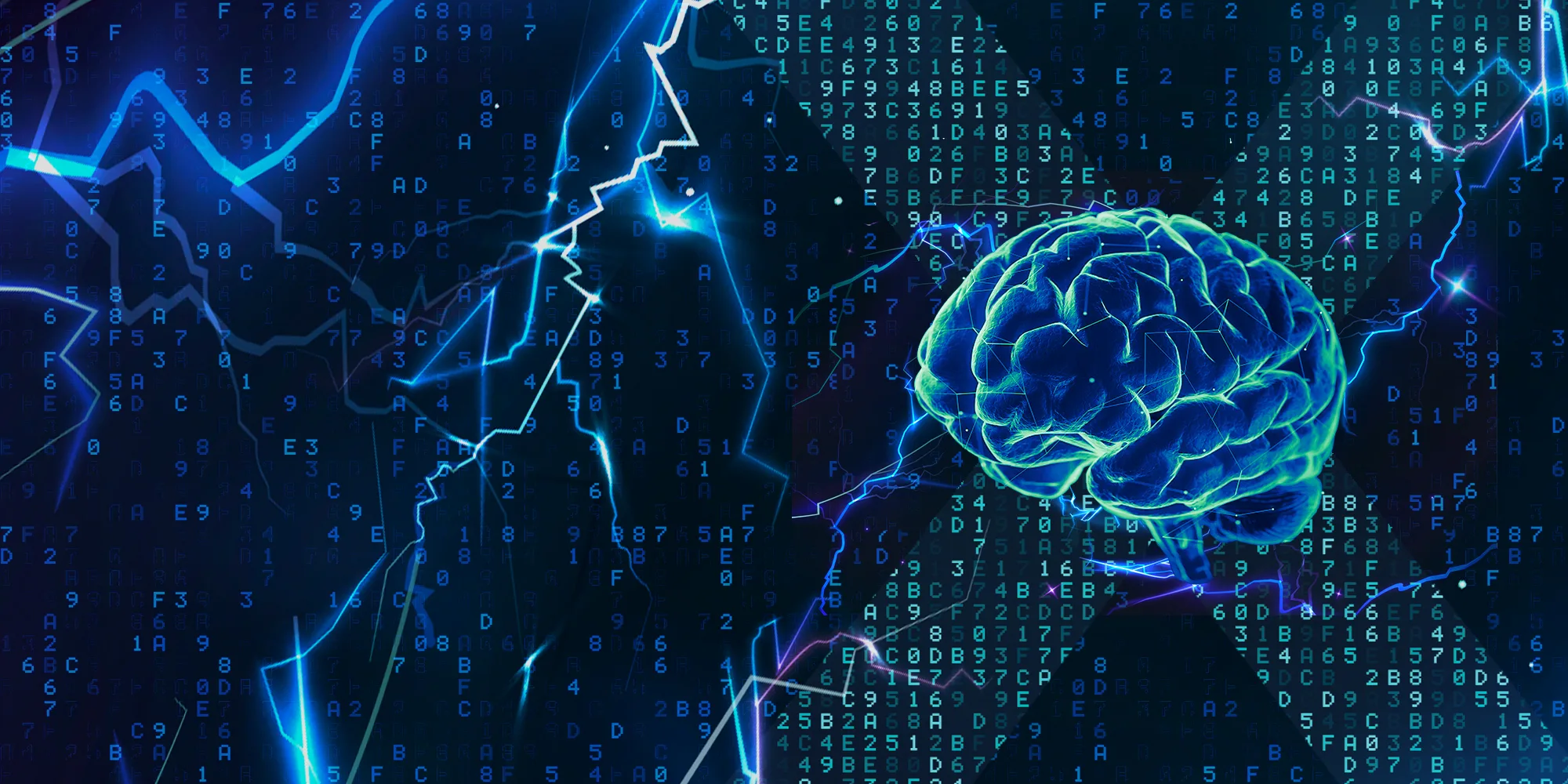
Brain-computer interfaces (BCIs) have been allowing humans to control objects with their minds for nearly half a century. But in recent years, thanks partly to advances in AI, the technology has evolved dramatically; wearable and implantable devices are now being used to restore speech and movement to stroke survivors, alleviate depression and treat pain. While companies like Elon Musk’s Neuralink grab headlines, a somewhat quieter revolution is happening in Canada, where researchers are using BCI to help a historically underserved population: disabled children. In this episode, we explore BCI’s potential to transform medicine, the knotty ethical questions at its core and how the tech might just bring us closer together.
Featured in this episode:

Further reading:
- The past, present and future of brain-computer interfaces
- We’ve been connecting brains to computers longer than you’d expect. These three companies are leading the way
- Adam Kirton’s Lindenlauer lecture, Columbia University, November, 2024
- Altman’s Merge raises $252 million to link brains and computers
- What it’s like to have a brain implant for five years
Subscribe to Solve for X: Innovations to Change the World here. And below, find a transcript to “Mind over matter.”
Narration: If you could control a machine with your mind, what would you do? Turn on the TV without a remote perhaps? Brew a cup of coffee? Send a text to a loved one just by thinking it? For people living with paralysis, using your brain to escape your body would be nothing short of miraculous. This is the promise of brain computer interfaces, or BCIs. They allow people who can’t move their limbs to perform everyday tasks. They can even help people who can’t speak, communicate just by using their thoughts.
Dion Kelly: Think, go, go, go. Almost like, shout it in your mind: Gooooo.
Manjula Selvarajah: I’m screaming in my mind. You can’t hear it, but I am screaming.
Dion Kelly: Yeah. OK.
Narration: I’m Manjula Selvarajah and this is Solve For X, a series where we explore the latest ideas in tech and science. Today we’re exploring the potential of BCI. While these devices hold enormous promise for the future, a group of researchers right now, right here in Canada is exploring ways they could help a population that’s been historically overlooked.
The researchers say the tech could make a seismic difference for millions of kids with disabilities, helping them participate in life in ways never thought possible.
Anne Vanhoestenberghe: They can change lives. They can change lives with people who have so far not been able to rely on existing assistive technologies and existing medical interventions to have a quality of life.
Stephanie Sonnenberg: When Claire was a baby and we found out — in seconds our world was taken from us, you know — she would probably never walk, she would probably never talk. And those milestones seemed so big. And you realize, in those moments, that it’s the inchstones that really matter, you know. And they’re not small. You know, for Claire, for this girl who is the strongest person that I have ever met, when she gets to do something or when she finally does it, it is everything.
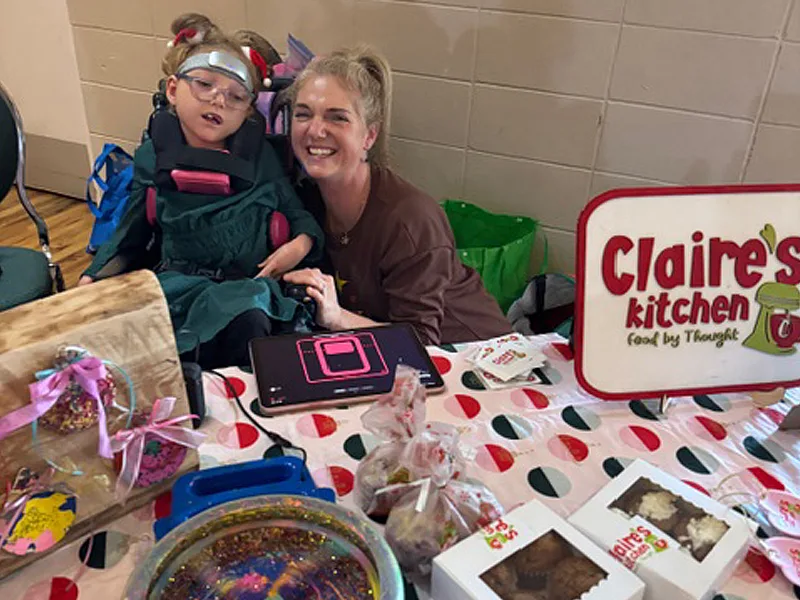
Narration: Today, several companies around the world — most famously Elon Musk’s Neuralink — are racing to expand clinical trials and take this idea out of the lab and into everyday life. Generally speaking, these approaches fall into two buckets. Implants, like placing electrodes directly on the surface of the brain or within the nervous system. Or wearable applications, like headsets that read EEG more broadly from the scalp.
While this could prove transformative for medicine, interpreting the brain signals also raises some big societal questions. What happens to the neural data that’s obtained, and how do we decide where the human ends and the machine begins?
Could BCI lead to a new era of brain-powered innovation and healing? Let’s get into it.
Adam Kirton: My name is Dr. Adam Kirton, and I’m a pediatric neurologist at the Alberta Children’s Hospital in Calgary.
Narration: I caught up with Dr. Kirton during a rare pause between patient visits. His work sits at the intersection of medicine and neuroscience research.
Adam Kirton: I have a special interest in children who’ve had injuries to their brain around the time of birth. Particularly stroke and other types of acquired brain injuries in the newborn. I see them in my clinical practice, I work in the intensive care units to see children with neurological problems. They are also the focus of my research program here, trying to understand how young brains develop after they’ve had a serious injury. And try to help them do the best they can and function better.
Narration: Children’s brains, he says, are uniquely plastic, remarkably adaptable. His lab focuses on supporting their recovery. Part of that involves brain computer interfaces.
Adam Kirton: We had a young girl in our intensive care unit a few years ago who had a brainstem stroke. She was only 13. And she was locked in, and the intensive care doctor, who’s a very good doctor, saw her and said, “Gee.” Like, after a few days, was like, “I’m really worried. I don’t know if she’s ever gonna be aware of things.” And I said, “Actually, I’m pretty sure she already is.”
Narration: Being locked in, or having locked-in syndrome, is when someone is fully conscious but almost entirely paralyzed, unable to speak or move.
Adam Kirton: We had one of our very simple BCI systems and so we took it to the ICU and we gave her a chance to do something just to show us that she was there. And she got it just like that. And the intensive care doctor was questioning his own judgment. He was like, “Gee, I made an assumption there that I really shouldn’t have made. And thank you for” — he said it to her — he said, “Thank you, thank you for showing me that I made a bad assumption and now I know that you’re here and I’m going to talk to you more.” And so that was just a particularly good example of that.
Manjula Selvarajah: What is it that she did?
Adam Kirton: At that time we had pretty limited applications. She played a video game and we had a way to hook it up and we could train her to think a certain thought and it would jump the character in the game. And then we would start the game and she went along and jump, jump, jump. And she played it, probably better than I could. It left no doubt that she was fully capable, fully aware. And yeah, that’s what happened.
Narration: Each small success has a ripple effect. A child who can show they understand what’s happening, who can express themselves in a new way, changes everything.
Adam Kirton: It turns out, in terms of the world’s burden of people with long-term disabilities, severe neurological disabilities, the largest group are actually people who are born with those disabilities. So, cerebral palsy is a general term used to describe many such young people. And they are very much in need of this type of technology. In fact, they live for many, many decades. And for many children who I see in my clinical practice, they have a very high level of capacity. Many are intellectually normal, some are quite gifted, but they can’t move and they can’t speak. And so their life is extremely challenging. And a new way for them to connect like BCI is extremely exciting with the potential that it brings.
Narration: BCIs are transforming medicine, but they’re also helping to unlock the mysteries of the mind.
Adam Kirton: There is, if you look at the BCI literature, a lot of it is focused on it being a solution for severe disability like we’ve been talking about. But there’s actually a whole sort of parallel or surrounding literature about how BCIs can be used to understand human behaviour, human learning, brain plasticity. What we learn on the BCI sort of rehabilitation side teaches us a lot about the brain, including in complex conditions like we’re focused on, and people who are using BCI to answer some of these other more fundamental questions, what they learn may be applicable to helping people with severe disabilities. So there is a nice sort of synergy between the two and there’s certainly been growth on both sides of that equation.
Narration: The growth Dr. Kirton talks about is pretty fascinating. Clinical work and neuroscience, pushing each other forward, teaching us what the brain can do, how it heals, and how technology might help. Since at least the ’60s, scientists have wondered, if you can read the brain’s electrical activity, could you use it to control machines? Or decode it well enough to know how a person wants to move or what they want to say?
To get a sense of where we are on the tech side of things, I spoke with an expert who specializes in building and refining these devices.
Anne Vanhoestenberghe: My name’s Anne Vanhoestenberghe. I’m a professor of active implantable medical device technology at Kings College London. And this is where you’re reaching me today, from in the U.K.
Narration: Anne once pictured herself working on the teeny tiny microelectronics that make space exploration possible. Instead, she ended up working in another hostile environment, the human body. She’s now designing the next generation of implants that interface directly with the nervous system.
Anne Vanhoestenberghe: I work on making the electronics parts sustainable for longer in the body in smaller dimensions.
Manjula Selvarajah: We’ve been seeing a lot of coverage in the news about Neuralink. Quite a bit actually in the last year. How much of that is hype and and how much of that is real?
Anne Vanhoestenberghe: Can there be both? I don’t think it’s mutually exclusive. It’s real. It’s happening. They are implanting people with devices, but it’s also very hyped in as much as I will meet people who think Neuralink were the first. They weren’t, and they won’t be the most advanced for very long because other companies are coming on — when I’m saying on the market, I still mean as clinical trials, but nevertheless are coming into availability for human participants to experience the BCIs. So there will be catch-up with more advanced devices in the coming years.
Manjula Selvarajah: What do they do right now? What do BCI interfaces currently — in the market, and you’re saying when we say in the market, we mean in labs — what can they do right now?
Anne Vanhoestenberghe: Not all of them, but most of them are interfacing on a computer. It may be a language-focused BCI. So what they’ll do is they’ll, after a lot of training, they’ll be able to interpret the signals that they’re recording and turn them into words, sounds, speech. These are really important BCIs.
Narration: Anne says there’s also promising stuff happening around restoring movement, too.
Anne Vanhoestenberghe: There’s a group in France and in Switzerland, so they’re having brain computer interfaces that will record the intention to move of people after they’ve had a spinal cord injury. And this is then combined with a delivery device that stimulates the spinal cord and helps these people with mobility, lower limb mobility usually.
Manjula Selvarajah: So what’s happening is that it’s actually translating that — what do I call it, a brain signal — into movement by the limbs of the person. Not a robotic arm or anything of that kind.
Anne Vanhoestenberghe: Yeah, it’s probably a little bit more indirect than that. So it’s not quite bridging the area of the injury. But in experience, this is what it would look like to somebody not involved in the technology side of it. It is reading intention. It is decoding and it is providing signals that, together with a lot of training, and a lot of efforts from the participants, will enable them to move. And you’ll find on YouTube or other media platforms, videos of these people using the systems to take a few steps, to be able to make movements that are otherwise impossible for them.
Narration: I wanted to see it for myself. So I looked up one of the videos Anne mentioned. It’s jaw-dropping. Amazingly, some trial participants regained a bit of voluntary movement even after the stimulation was turned off, hinting at the body’s ability to rewire itself.
Anne Vanhoestenberghe: So there’s definitely an element of closing the loop, although it’s not as straightforward as just sending the information from the brain to the bottom of the spinal cord injury.
Narration: Now the field is pushing further in a new direction to find less invasive ways to place implants. Anne explained how one company, Synchron, is skipping brain surgery altogether by threading implants into arteries, kind of like a stent procedure.
Anne Vanhoestenberghe: The speed at which a person using a Synchron device can generate words and sentences is remarkable. It’s not amazing for somebody who speaks everyday and doesn’t think twice about it, but if you’ve lost the ability to speak, having a near conversational rate of generation of sentences is just remarkable. But then there is another element, which has been the demonstration of the long-term reliability of all of the technology that is used in the implanted parts. And this has been essential in seeing the number of clinical trials now being approved across the world. So there is an element of that which is not so visible, I guess, it’s less exciting, but it’s extremely important. And you know it, it’s always gonna work if you have five engineers around you. But you want something that somebody can take home, and that’s a very different level of product development.
Manjula Selvarajah: All of this to me, Anne, sounds like a feat of engineering. You’re talking about something that the body doesn’t reject. You’re talking about something that’s small. With all of this compute power. There’s so many aspects here. Just how difficult is it to build something that is tiny and long-lasting that goes in the body?
Anne Vanhoestenberghe: Oh, it takes so many different areas of expertise. So it’s a feat of engineering, as you said, and it’s so much more as well. From the surgeons, the anesthetic, all of the people who do the imaging — we have to make sure that the devices go where they are meant to be. And importantly, these devices must not interfere with the best standard of care that the participants, when they are patients in hospitals, can receive. So there’s lots of questions around MRI compatibility or the possibilities of doing imaging of the brain whilst they have this device. So there’s a whole element of interdisciplinarity even within the clinical area.
Manjula Selvarajah: I want to step back for a second. I want to understand the potential of BCIs here. How transformative could they be for science and medicine?
Anne Vanhoestenberghe: I like your question, because it’s certainly transformative for medicine. There’ll be a lot of stroke survivors that will, in the future, benefit from these devices. It’s also changing science in many ways, from the most obvious — we get access to more data and neural data, so we will see a lot of improvements in our already very good understanding of neural functions in humans. Assisted breathing — where currently assisted breathing is a ventilator, and that’s got a lot of issues as you can imagine in terms of that person being able to be mobile, that person being able to sleep comfortably, those people being able to communicate as they have to have the ventilator on, and I should imagine that in my lifetime, certainly we will see fully implanted breathing assistance through BCIs. And further development of the technology is required, but they’re coming. So that’s a new area that we’re definitely going to see. There will be others in, as I said, in control of bladder, bowel, in control of pain also will certainly be improved further. There’s already a lot of work on neuromodulation and implanted neuromodulation for pain. We’re going to see that a lot more.
Narration: Even as we wait for some of the implant developments Anne’s talking about, which could still be years away from reaching patients, Anne says we’re on the brink of change.
Anne Vanhoestenberghe: I think we’re seeing a moment when everything’s coming together to turn research devices into actual medical devices, which means we’re gonna go beyond the trials. People will start benefiting from this technology. People already are, but the numbers will grow. And we’re serving a community that has for a long time been underserved by other medical progresses. And that’s really exciting to me, to see people who were not able to be in the community to their full potential receiving attention.
Manjula Selvarajah: And you’re talking about people with disabilities here?
Anne Vanhoestenberghe: Yes. People living with disabilities. People living with mental health issues that were not responding to the mainstream pharmacological interventions. These people have, to date, not had any hope. And I think these devices — it’s not just hope, it’s actual practical change. It’s life-changing. It’s not hoping for life-changing. It will be life-changing for a lot of people.
Narration: It’s clear the technology has come a long way since the first patient received an implant. That was in 1998, to help someone who had had a brainstem stroke move a cursor across the screen. Since then, BCI has become a lot less clunky and a lot more efficient at reading and interpreting brain signals.
Adam Kirton: Still less than a hundred people in the world have implanted brain computer interfaces, but that’s changing quickly. And so the concept has made great progress, but it’s always been very limited by the technological complexity. The, some would say, invasiveness of having to have a chip in your brain and a cable, literally in your head. The technology advances are starting to minimize some of those difficulties, so that field is booming and moving forward very quickly. Still, almost entirely in adults, although, as I said, we’re, we’re trying to advocate for the inclusion of young people in that progress.
Manjula Selvarajah: Why do you think, so far, kids have been left out of that space or not being treated by these technologies?
Adam Kirton: There’s no doubt about the need for young people, but because they’re born with these conditions, their brains, they have never had the chance to go through the normal phases of development like we all did, where we learned to walk and talk and use our hands. That’s how all of our brains are now hardwired and quite predictable about where functions live and how the brain works. All of those rules kind of go out the window when you’re born with a condition like severe cerebral palsy. And for brain computer interface, everything that’s been done to date relies on some knowledge of how does a typical brain work? Where are certain functions located? Where should we detect the signal? And you can do that very reliably in adults who became paralyzed, because their brains are normal. Kids with cerebral palsy, they’re all very unique. And so it’s probably that complexity of the underlying problem that has been the single biggest factor as to why. It’s not that the BCI world doesn’t want to help kids with cerebral palsy, they’re just — sometimes I joke with my neurosurgeon friends, who are usually not very easy to intimidate, I say they’re afraid of kids because their brains are really complicated. We’re trying to get them to change their thinking on that.
Narration: Dr. Kirton remembers the first time he heard about the promise of the technology.
Adam Kirton: I remember turning to my engineer and saying, “We need to look at this. How are we ever going to catch up with this?” And the big international meeting for BCIs was happening the following month in California and we said we should just go. And so we went, sat in this meeting for four days with all the BCI experts from around the world and we were the only pediatric people there. It was all focused on adults. I was one of the only clinicians there. It’s all very technical engineering type people. That was kind of one of the first steps that got us really excited. Since then, that was about six or seven years ago, we’ve been trying to change that. We’ve been trying to fill that space and help kids catch up to the very exciting world of BCI technology and progress.
Narration: After that conference and seeing just how much potential there was for kids, Adam’s team picked up some off-the-shelf BCI headsets. They then started building their own applications designed specifically for the families in his practice, and that took them along a whole other path.
Adam Kirton: Stuff we’ve been developing is working and it’s helping kids in our local area, our city in southern Alberta here. But that’s, you know, a fraction of 1 percent of all the kids out there who might benefit. And so, trying to scale the concept on research dollars and the clinical healthcare system is literally impossible. It takes — we could work on it for the next hundred years and we would never get there. And so commercialization became an obvious avenue to do that. This was all new to me. I’m a doctor, I have no business background, and even three years ago, I would’ve said, ‘oh, you only commercialize if you, I don’t know, you’ve patented some miracle new drug or something like that.’ The University of Calgary here, where we work, is very entrepreneurial, and so we’ve really taken advantage of that over the last three years to start this company. Dion was a PhD student in my lab. She did a lot of the seminal early studies working with the families. So she gets it. She understands the tech, she understands the families and the kids. But it’s been really eye-opening and it really is a whole new pathway to impact, is the way that I see it as a clinician and a researcher.
Narration: Dr. Kirton wanted to figure out how to get BCI into the homes of families who need it. So he and his PhD student, Dion Kelly, co-founded a startup called Possibility Neurotechnologies. Today, they work with over 150 families from around the world.
Adam Kirton: To have a potential, even if it’s simple to start, but a potential solution or opportunity for them is really, really exciting.
Dion Kelly: I’m Dion Kelly. I’m the co-founder and CEO of Possibility Neurotechnologies.
Narration: I had the chance to speak with Dion about the device she and Adam have developed. It’s called Think2Switch. With access to an EEG headband, a smart plug, and a bit of training, it can help kids with disabilities turn on and control a range of household objects.
Dion Kelly: We’re not marketing this as like a medical technology. It’s a technology for anybody who wants to control things or interact using their thoughts. The idea is that, you know, kids of all abilities will be using this so that they can interact on a level playing field.
Manjula Selvarajah: What have you seen that’s blown you away with Think2Switch?
Dion Kelly: With the communication aspect that we’ve enabled on this, that’s been pretty fantastic because the users, often kids who have never been able to communicate before, are able to communicate their choices.
Narration: There’s one young girl in particular who stands out to Dion — Claire.
Dion Kelly: And her teacher uses it with her, which is unheard of in the assistive technology space. Like, technologies aren’t simple enough for a teacher or even an average person to just set up and start using with someone.
Manjula Selvarajah: Dion explained that for Claire who has cerebral palsy and who can’t speak or move her body, having a device she can bring with her and use easily with other people in class is important.
Dion Kelly: Her mom sends the iPad in her backpack, sends the headset, and her teacher sets it up for her at school and she chooses her library books and she chooses which activities she wants to do in art class. She chooses which colours she wants to use for her art projects.
Manjula Selvarajah: She uses the headband on this page as an example to go and pick the book that she wants.
Dion Kelly: Yeah.
Stephanie Sonnenberg: So my name’s Stephanie Sonnenberg. My daughter’s Claire Sonnenberg and we have been using BCI since she was three and she’s turning 10 this year. She is spunky and smart and funny. She is probably the happiest person that I have the pleasure of knowing. Claire has cerebral palsy. She has a hard time using her arms and her legs, so it’s difficult for her to do things on her own. We tried switches, which is when you use your arms or your leg or your head, whatever you can, to activate a switch to make a choice or for it to talk for you. So Claire can do it for a bit, but then her muscles get tight and her arm doesn’t want to reach for the switch anymore, and it’s very frustrating for her. You know, some people may just have one little issue, they may walk with a little limp. Some people — it might just affect their speech. So for Claire, unfortunately, she is quite severe.
Narration: Claire was one of the first kids to try BCI in Dr. Kirton’s lab. Stephanie still remembers that day.
Stephanie Sonnenberg: Dr. Kirton was there with his team, and what he said to me was, “If she can’t do this, then that’s OK. This is hard.” And we went into the room and they put all these electrodes on Claire’s head, calibrated everything to her brain. And then they told her to think, go. And she turned a light on. And I just remember looking around the room and everyone was smiling and writing stuff down and I just knew at that moment that a door had opened for Claire. I didn’t know what door, but it was something exciting that would change her life.
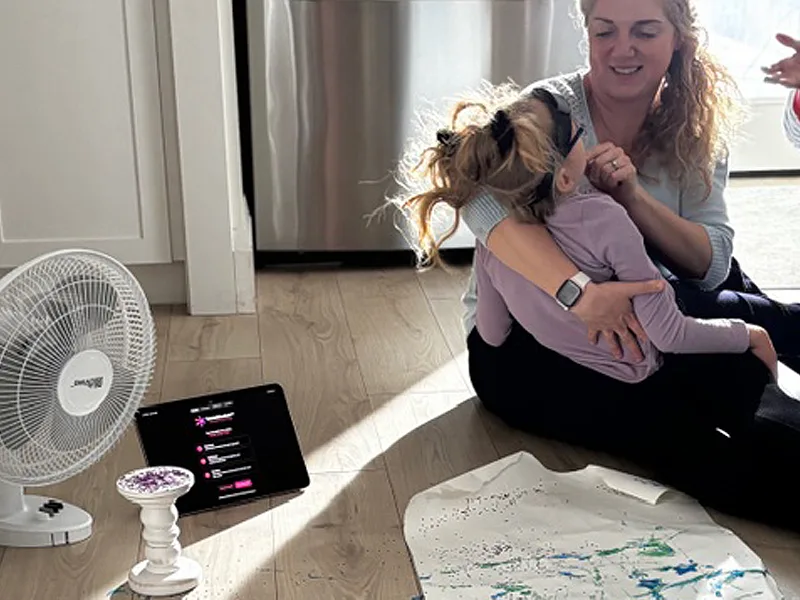
Narration: Stephanie invited us to visit Claire at school — she’s now in grade four — to watch her and her best friend Hailey create art together.
Stephanie Sonnenberg: OK, there we go, Claire. OK, keep going.
Manjula Selvarajah: Is this one of her favourite things to do? Spin art?
Stephanie Sonnenberg: It is. So she makes lots of greeting cards, she makes ornaments — all using the spin art.
Stephanie Sonnenberg: Go, go, go, go, go, go, go, go. Yeah, there we go.
Narration: I asked Hailey to walk me through the steps involved.
Hailey: So I’m adding the paint onto the paper and she’s using her brainwaves to activate it. So it will cause a cool creation when she thinks Go, go, go, go, bell.
Narration: That pinging sound is Claire’s brain activity firing when it activates the BCI. A little while later, the painting is finished. A kaleidoscope of pink, blue, yellow. Lots of glitter — the girl’s favourite. Stephanie told me that Claire can now do all sorts of things: make milkshakes and cookies, play musical chairs with her brothers — she’s the DJ — slice cucumbers for pickling. The device gives her a kind of autonomy and agency that nobody could have imagined a decade ago, when she was born.
Stephanie Sonnenberg: Claire was always involved in all of our activities, but you know, we had to move her hand for her or say something for her, make a choice for her. And this has given her complete independence. She’s her own, you know, player in the game. She has her own role that is separate from our roles and that is so important. You know, we take for granted sometimes, I think, what we can do. And watching someone who has worked so hard, you know, to have that active piece. BCI has brought us complete happiness.
Narration: It’s amazing to think that even a relatively simple BCI device, basically an app and an off-the-shelf headset could have such an impact. When Dion offered to let me try it out for myself, of course I said yes.
Manjula Selvarajah: So how do we get started?
Dion Kelly: OK, so I’ll first get you to relax your body. So, sitting with your feet flat on the ground and your hands just resting on your lap so that your body is as relaxed as possible.
Narration: Picture this: I’m sitting in a studio. I have a headband on. In front of me is a tablet. And by my side, guiding me, is Dion.
Dion Kelly: What we typically suggest is doing inner speech. So, when I press go here, you are going to say “go” in your mind.
Manjula Selvarajah: So we’re training it now.
Dion Kelly: And this is really important because this technology doesn’t just read your mind, which is a big misconception. It only reads what you teach it.
Manjula Selvarajah: OK.
Narration: I’m about to try to click on something using just my thoughts.
Dion Kelly: Right now I have the sounds muted, but I will unmute them. And now think, “Go.”
Computer voice: Hello. Hello.
Manjula Selvarajah: Oh my gosh.
Narration: Just by thinking the word “go,” I was able to activate a smiley emoji.
Dion Kelly: Yep.
Manjula Selvarajah: Wow.
Narration: That felt really good. And it felt even better when Dionne said I had decent control of my inner speech. Don’t we all like to think we’re in command of our own minds? But this was just the beginner level. I wanted to try something a bit more challenging, like choosing a book from a library of options.
Manjula Selvarajah: I think I’m going try to make my way to Where Is the Green Sheep? Let’s see.
Dion Kelly: OK, so that’s the last option.
Manjula Selvarajah: Why is that not working for me? That’s interesting, because the last one was so definite.
Dion Kelly: Yeah, so it involves a lot of working memory as well.
Manjula Selvarajah: It does need practice then.
Dion Kelly: Yeah. So I usually go into here, get people to play around with it. So you can even just start to learn what it’s like to activate something with your thoughts.
Manjula Selvarajah: Does the system learn about me as well?
Dion Kelly: Yeah. So the system is learning to decode your intent.
Manjula Selvarajah: OK.
Dion Kelly: And you’re learning to produce more consistent brain signals. So you guys are helping each other out and learning about each other. So now we’ll go back in and just add another 36 seconds of calibration data.
Narration: Trying it myself was strange and amazing, harder than I imagined. But it made me think as this kind of technology spreads and similar devices both implanted and wearable get out in the world, most people won’t have a neuroscientist like Dion guiding them or explaining what’s happening. And when something starts to look like mind reading, how do we make sense of it? Where do we draw the line? I brought these questions to Anne Vanhoestenberghe to hear her perspective on what comes next.
Manjula Selvarajah: Would you call it mind reading, Anne?
Anne Vanhoestenberghe: No.
Manjula Selvarajah: [laughs]
Anne Vanhoestenberghe: No. Simply because — for two things. The first thing is, even the more advanced implantable brain computer interfaces only see one small part of your cortex. So they only see a little bit of the whole of your brain. And if you think about the wearable device that you had, it was around your head, but it wasn’t precise. So it would be like trying to read a book by seeing the front and the back cover and a sort of a page in the middle and only five words on those. You wouldn’t be able to read it, even though I gave you the whole book, until you were trained to recognize the characters and their meaning and their interpretation. And that’s why it takes hours of training to be able to use the more complex devices. The headband that you were using, you had to concentrate, and there was a little bit of a training process where the machine was learning what your signals look like —
Manjula Selvarajah: Yeah.
Anne Vanhoestenberghe: — when you think that. And it was trying to identify a pattern that was unique to that thought in all of the noise of all of your other thoughts. Because I’m sure at some point you were thinking about an ice cream or anything else, and it’s got to identify everything that’s not interesting, reject it, and just pick up these unique patterns. So they’re not reading your thoughts, they’re identifying these patterns that you have trained it to recognize.
Narration: And despite the hype you might hear about mind melding or human machine fusion, that future isn;t here yet.
Anne Vanhoestenberghe: We’re not yet at the stage where we;re augmenting humans. Let’s just be serious. If you wanna order a pizza, you take your phone and you order the pizza, or you go online.
Manjula Selvarajah: And you order the pizza.
Anne Vanhoestenberghe: You’re not gonna wear that headband. You can imagine yourself —
Manjula Selvarajah: And dream up a pizza.
Anne Vanhoestenberghe: If your experience was anything like that of most other people, you’d be frustrated before you’d written the order correctly, and you’d end up having sort of three colas and no food whatsoever coming to your home. But there is a huge amount of potential for different categories of people, either people who are non-communicative or people who for other reasons can’t — they may have paralysis, they can’t use a keyboard or maybe with difficulties. There’s also, again, with the headbands, a whole host of mental health applications. Because if you experienced it, you had to concentrate, you had to do something patiently, you had to do it. And you can use that as in a game version. So there’s trials on autism, there is trials on depression, there are different companies working in this field. There is a huge potential benefit here with the wearable devices.
Manjula Selvarajah: What do you think we have to be careful about as we see this technology develop? I mean, we’re talking about — some of the stuff that we;ve talked about is invasive and very much on the cutting edge.
Anne Vanhoestenberghe: The risk that is the most talked about in the communities in which I am most involved is trusting the interpretation. So you have a brain computer interface and you’ve trained it, as I explained previously, to decode your alphabet so that you can use it to communicate. How does anybody know that what you are saying through this machine is truly what you are thinking if you are unable to communicate otherwise? Maybe initially when you were training it, you consider it to be trustworthy and it was reproducing your intended communication in a way that you felt, oh, well maybe I wouldn’t have chosen that word exactly, but OK, I’m fine with that. But progressively it may start, and I say it may because this isn’t something that is happening, but there is a risk that the machine starts interpreting faster and taking it a little bit more loosely with your intention, always with a desire to enable you to communicate more conversationally.
Narration: Anne compares this to the way predictive texts can take over typing. At the start it can feel helpful until it begins shifting the way you speak.
Anne Vanhoestenberghe: But as the person that has control, you can stop using the predicting text and type the word. So we will be faced with questions about the trust we put in these interpretations. At what point does that barrier get crossed and the machine makes a decision that wasn’t yours? So trust in all of that will be really important. And these are debates we must have now.
Narration: And then there’s the question of neural data, how it gets used.
Anne Vanhoestenberghe: I understand this is really concerning and it should be concerning because it’s not like we’re short of stories of people using things that we gave away unsuspiciously, and we should have been a bit more careful. But at the moment, it’s lower on my radar because of my concern with trust and the fact that this is something that people aren’t aware of and that we should really be aware of. Thankfully, the communities that we’re part of, the scientific communities, are taking this extremely seriously. There’s a huge amount of work on trust and AI and trust in all of these interpretive devices. As far as neural data, thankfully, regulators across the world are starting to put in place frameworks for that. I think these risks start as philosophical questions, but they go beyond that. Being aware of them and thinking about them, and therefore thinking about how as a community we respond to that… because we’re not going to stop. There’s only one direction. Like a lot of other innovation, there is a nefarious side to them or a potential misuse of the technology, but that doesn’t stop us from progressing the technology. And so it’s about how, as a global worldwide tech community, we respond to that and how many actors we engage in this process of discussion to make sure that everyone is heard. There are always imbalances in the way some fractions of some populations in some countries are so much more dominant in these conversations. So another thing we’re doing in all of that is making sure that we think about everyone or trying to think about everyone.
Narration: That becomes even more complex when the everyone we’re talking about includes children. As Adam Kirton sees it, there’s also a moral imperative to not leave children behind as implant technology advances.
Adam Kirton: This is the future of the technology, where its capacity will go up exponentially as that approach gets refined to be safe and accessible. And it’s already, as I said, made a lot of progress there in the adult world, and so we’re seeing progress on the pediatric side in that space occurring over, we think about the next five years to see that become a reality for people with cerebral palsy and other pediatric onset conditions.
Narration: As Adam thinks through the potential evolution of the technology and the complexity of not leaving children with disabilities behind, I keep returning to the moment I saw Claire using her BCI.
Stephanie Sonnenberg: Good girl. Should we look at your art, Claire? Should we take a minute and let it stop? [laughs]
Narration: It did feel quite honestly magical. There’s lots to think about as we see BCI develop. But how it’ll shape the future is a matter of debate and ongoing discussion. What strikes me as perhaps the most hopeful thing is what it could enable. The new freedom it promises for so many also represents a kind of freedom for all of us to come closer, to see one another, to connect.
Solve for X is brought to you by MaRS. This episode was produced by Ellen Payne Smith, and written by Jason McBride. Lara Tovi, Sana Maqbool and Sarah Liss are the associate producers. Mack Swain composed the theme song and all the music in this episode. Gab Harpelle is our mix engineer. Kathryn Hayward is our executive producer. I’m your host, Manjula Selvarajah.
llustration by Kelvin Li; Image source: iStock
-
 MaRS Staff