4 lessons from community leaders on improving access to cancer screening in rural and remote areas
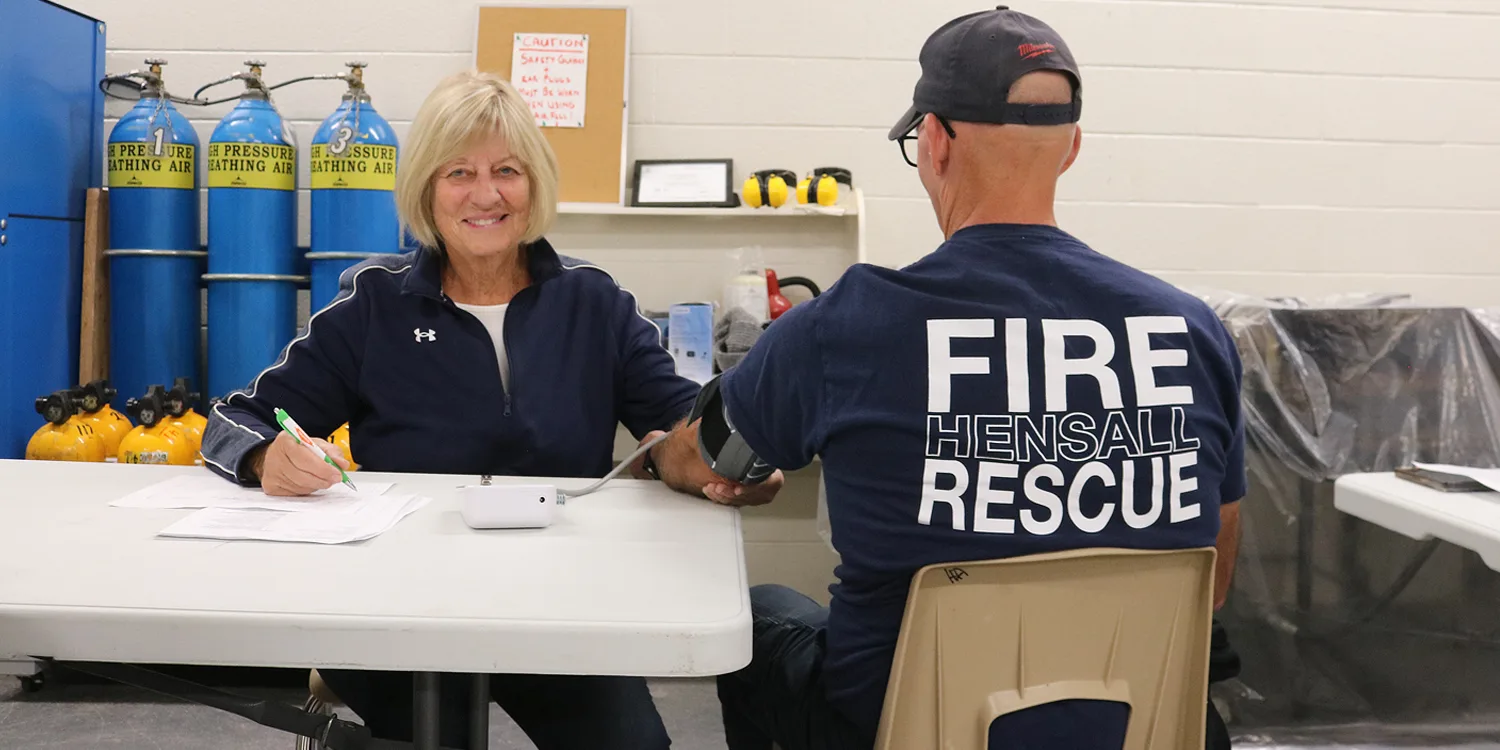
The finalists in the Rural and Remote Community Cancer Screening Challenge share tips and best practices to help increase participation in cancer screening.
When it comes to cancer, time is of the essence. The earlier it’s detected, the better the outcome. Take lung and bronchial cancer, for instance. Research from Statistics Canada has found that the five-year survival rate for those diagnosed with stage 1 of the disease was more than 60 percent, compared to 16.3 percent for those diagnosed with stage 3.
But access to cancer screening differs greatly across Canada. It’s particularly challenging for the six million people living in rural and remote areas. Only 9.3 percent of family doctors practice in remote areas, and virtual care is not always possible in places where the internet is spotty. Fewer family doctors mean health communication, support and education are less pervasive, and travelling to urban areas for medical appointments carries both a financial and time burden. As a result, these communities report higher rates of cancer-related mortality.
To help address this issue, the Canadian Cancer Society partnered with MaRS to create the Rural and Remote Community Cancer Screening Challenge. Five finalists were announced last September and received funding to roll out their solutions.“These communities have deep knowledge of the issue and are incredibly innovative,” says Shilpa Sharma, a senior manager in health equity innovation at MaRS. “They know how to build solutions tailored to local needs, and we want to utilize that strength and knowledge to improve outcomes.”
After months of in-depth discussions, stakeholder meetings, outreach programs and community events, here are takeaways from four of the finalists on what’s needed to improve access to cancer screening in rural and remote areas.
Word of mouth is the best advertisement
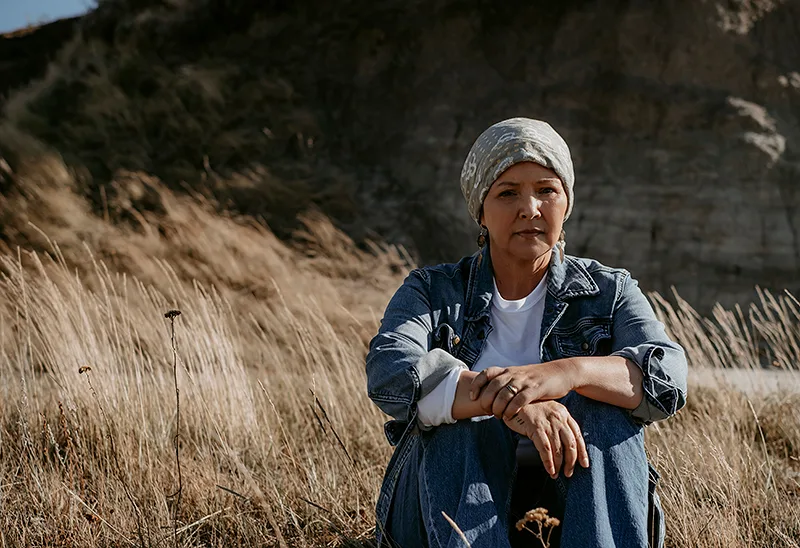
In 2021, Tracy Persson was blindsided by a diagnosis of breast cancer. For 14 months, her daughter drove her back and forth between her home in Grande Prairie, Alberta, and the hospital in Edmonton, more than 450 kilometres away. “I used about seven different platforms to organize everything, from Excel to notebooks,” she says. “I thought there’s just got to be a simpler way.”
With input from the 300 women in her support group, Persson devised a digital organizer to address what she and the group felt was missing for people in remote, rural and Indigenous areas — something that could combine appointments, notes about meetings with doctors, cancer education and resources. In October 2024, she launched My Breast Day — a one-stop digital platform to log appointments, medications and contacts. She designed the app to meet the specific needs of people living in northern Alberta and the Northwest Territories, where as Persson says, “lack of information is just as much of a barrier as geography.”
Many of the people she wanted to help don’t currently have a family doctor. Plus, it can be difficult to access culturally sensitive information. Getting the word out to the community became “less about campaigning and more about word of mouth,” says Persson.
She collaborated with cancer care leaders in the NWT to ensure that information on the platform addressed local priorities, including establishing inclusive screening pathways and community programs to raise awareness — all with the goal of increasing cancer screening participation. As Persson says, “community support is bigger than anything.” Now, the platform is available and trademarked across Canada and the United States.
Listen to people who have been there
In addition to dismantling the barriers to care in rural and remote areas, lung cancer screening advocates have another challenge to tackle: In the early stages, lung cancer rarely produces symptoms, so people don’t prioritize screening. “We’re really trying to move that dial,” says Kara Patterson, senior director of cancer screening for the Calgary-based Praxus Health. “If we can diagnose at stage 1 or 2, there are a lot more treatment options.”
The non-for-profit aimed to increase awareness around the importance of early detection in rural northern Alberta. As a first step, Praxus partnered with local Rotary Clubs and assembled an advisory committee with representatives from the RCMP, Indigenous peoples, farmers, the francophone community and public health representatives to develop an engagement strategy.
The key, for Patterson, was to set aside fixed ideas and simply listen. “Hearing from me sitting in my house in Calgary isn’t going to resonate,” she says. “But if we have people who can talk about their own lived experience, it becomes a lot more powerful — sharing those stories can really help people understand what it’s like and what the challenges are.”
Take the time to build trust
The initial plan for Kitchener, Ontario-based Oncology Simplified, an on-demand telehealth platform, was to raise awareness about the importance of screening for colorectal cancer in the Northwest Territories, where the incidence of the disease is almost twice as high compared to the rest of Canada. But once the team started analyzing data, another imbalance became obvious. “Fifty-five percent of eligible women get screened for breast cancer but only 20 percent get screened for colorectal cancer,” says co-founder Haya Sarras. “We realized you have to break barriers between programs.”
The company posted information about colonoscopy sites in the region and other screening programs where people were getting mammograms. “Any woman who gets screened for breast or cervical cancer will likely have an influence on other family members,” she adds. “And if they’re already engaged in screening, they’re more likely to get engaged in other forms of screening.”
But with 33 different communities across the NWT — some of which are so isolated they don’t even have roads — including three different Indigenous populations and 11 governments, the organization had a steep learning curve. “You have to understand how people consume information and what their cultural norms are,” Sarras explains.
The team conducted calls with young people, cancer survivors, caregivers and members of Indigenous communities to understand their perspective, how they consume information and what or who are trusted sources of information. Building a sense of trust is not something that can be rushed, says Sarras. “You cannot create innovations without local partners. People in the community have to trust you, and then they can deliver the information to the people who trust them.”
Reframing the information makes difficult conversations easier
The Gateway Centre of Excellence in Rural Health, which was awarded the challenge’s grand prize in April, works with many communities surrounding Goderich, Ontario that face a number of health challenges. Research shows there’s a higher incidence of chronic diseases and a higher mortality rate for cancer in the area. And compared to the rest of the province, a larger proportion of the population are seniors, and there are more cases per capita of heavy drinking and obesity — all of which are risk factors for cancer.
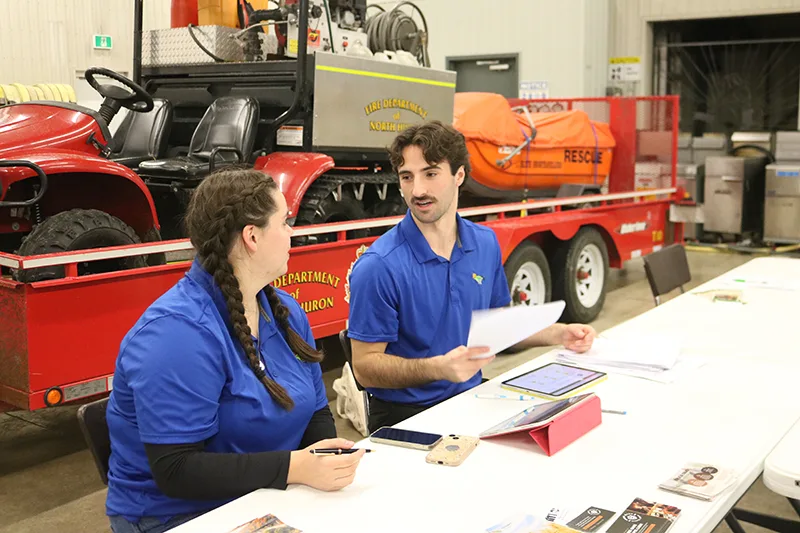
So Gateway added cancer screening, awareness and education into active programs that target different groups, such as firefighters, farmers and seniors. “It’s a safe, communal setting,” says Gwen Devereaux, who heads up the organization’s board of directors. “We thought this way we could facilitate discussions that weren’t otherwise being had.”
To get people talking, Nyden Greenfield, a student who worked on this project for Gateway CERH, found it was effective to flip the narrative. “When it comes to talking about cancer, people just immediately freeze up,” he says. Instead of focusing on high rates of diagnosis as a way to encourage people to get screened, facilitators talked about the hefty survival rates when cancer is caught early. “We found that adding 20 minutes at the end of our events for questions would get people talking,” he says. “Not only to us but to each other.”
Read more about the Rural and Remote Community Cancer Screening Challenge.
Photos courtesy of Gateway
-
 Nora Underwood