A short guide to restoring trust in medicine
The mess of misinformation
Next Thursday, at our first MaRS Morning of the year, we’ll be taking a hard, cold look at medical misinformation. It’s a sadly familiar subject, but our panellists are approaching it from a somewhat different direction — what happens when genuine scientific breakthroughs lead people to believe in treatments that may not be what they seem? Below, in a sneak preview of the event, Dominique Ritter chats with one of our speakers, neuroscientist and science communicator Samantha Yammine, aka Science Sam.
Also, in this week’s newsletter:
Stories from the ecosystem, upcoming events and the hottest jobs this week
Don’t believe the hype: A Q&A with Science Sam
What’s the most common piece of medical misinformation?
There’s so much, but a common one is related to vaccines and vaccine safety. I’ve heard, “The flu shot sucks this year. Why do I need to take it?” I’ve heard, “I’ve already taken a bunch of COVID vaccines. I don’t need any more.” Or, with misinformation coming out of the U.S., “Vaccines are dangerous.”
How big a problem is it?
Huge. Thirty-one percent of Canadians have taken medical advice found online instead of advice received from a medical professional.
That has dangerous consequences for people’s individual health and for public health. Like, measles is back. We lost our elimination status. That affects the whole population, with downstream economic impacts and increased burden on an already strained healthcare system.
With a wealth of reliable information at our fingertips, why are medical facts so easily distorted?
Medical misinformation has always existed. What’s new is the speed with which it travels and our increasingly polarized environment.
When you’re not concerned about being factual, you can say something that is sticky, shareable and will get millions of views online. Someone like me, who cares about evidence, has to couch everything with context and limitations, and it’s just not as clean a soundbite.
What factors make people susceptible to medical misinformation?
A lot of it stems from people’s frustration with the healthcare system. It’s easy to become disillusioned when you’ve had a negative experience. Quackery is enticing when someone is listening.
I look to the scientific and medical communities and say, “We’ve made information less accessible. We’re part of the problem.”
Another aspect of misinformation is people trusting the wrong information. In a field like, say, stem cell research, there have been medical breakthroughs grounded in rigorous science, but some treatments being offered may be ineffective, expensive or harmful. What new developments should people be excited about and where should they apply a critical lens?
Stem cell science, stem cell biology and regenerative medicine are really, really exciting. And Canada is a big leader in those fields.
Some of the most exciting developments are on the discovery side, like stem cells allow us to understand biology really well.
On the regenerative side, there are applications led by the Centre for the Commercialization of Regenerative Medicine (CCRM) for healing. Right now they’re mostly in the blood and in the eye, and there’s some stuff starting to happen in the spinal cord. CCRM has the Signals blog, which puts out really good quality information.
I would be wary of anyone touting a stem cell treatment outside of a major academic hospital. That’s not a real clinical trial. Travelling to another country to get some kind of treatment that is not a treatment. Often they’re injecting cells from other animals that haven’t undergone quality and safety testing to be put into humans, or they’re injecting basically nothing and then it’s just a waste. Those things really scare me.
Do you have advice for people as they navigate health information, in all its reliable and fraudulent forms?
Pay attention to how you’re feeling. If you’re angry or emotional while engaging with information, you might be inclined to be aligned with it because of factors like political values, which are unrelated to science. — Dominique Ritter
Stories from the ecosystem
CLEANTECH: The 2026 Global Cleantech 100 spotlights nine Canadian companies, including five from MaRS: Carbon Upcycling, Cyclic Materials, Moment Energy, Pani Energy and Planetary.
HEALTH: Recent breakthroughs in Parkinson’s disease are laying the groundwork for new treatments.
AI: Evan Solomon wants Canada to trust AI. Can we trust Evan Solomon?
STARTUPS: Ottawa’s shutting-out of startup founders is shutting down Canada’s future.
HEALTH: Women’s health exits surpassed $100 billion.
My First: Dispersa

In this 90-second video, learn how Dispersa, developer of the world’s first waste-derived biosurfactant, found a clear path to commercialization.
Upcoming events
- Life Sciences Ontario hosts a knowledge and networking breakfast focused on the political, economic and regulatory outlook for 2026. January 22.
- Impact Health, MaRS’s annual health tech summit, is still months away (April 23, to be precise), but early-bird tickets go on sale January 26.
- The MaRS programming team, along with supporter Definity Financial, presents a free information webinar on the MaRS Adaptech Accelerator, supporting ventures developing solutions that deal with climate crisis impacts. January 26.
- At the next MaRS Morning, “Healthy skepticism: Debunking miracle cures,” science communicators and journalists discuss medical misinformation with TVO’s Molly Thomas. January 29.
- PaceZero Capital Partners host “Building Faster: Canadian Projects & Clean Technologies,” an in-depth discussion with leading public and private sector experts on innovation in the built environment, new financing models and emerging policy frameworks. February 18.
For more, visit our events page.
Careers: The hottest jobs in tech this week
- New School Foods, purveyors of plant-based meat alternatives, is looking for sales representatives, a shift supervisor and an R&D assistant. (Toronto and other cities)
- UHN, Canada’s #1 hospital, is hiring a communications operator, environmental services assistants, a discharge and flow administrator and dozens of other positions. (Toronto)
- Vention, which specializes in AI-powered factory floor automation, is looking for a mechanical design technician and a campaign manager – performance marketing manager. (Montreal)
- Multiverse Computing, whose quantum-inspired platform makes AI greener and faster, is hiring a DevOps manager. (Barcelona)
For more, visit our jobs page.
In the queue: What we’re reading, watching and listening to at MaRS
This week, Bibaswan Ghoshal, senior director, technology adoption at OBIO, shares his picks.
 A must-listen podcast about the business and science of medical tech: State of MedTech is my go-to for staying up to date on the disruptive technologies and commercial strategies currently shaping the healthcare landscape. An invaluable look at the bridge between scientific innovation and the complex realities of market adoption and patient impact.”
- A hauntingly beautiful novel of resilience: “I was captivated by the lush descriptions of the marshland in Delia Owens’ Where the Crawdads Sing, and the protagonist’s profound, survivalist connection to the natural world. It illustrates how our environment shapes our identity and our will to endure.”
- A Bollywood tearjerker about the ties that bind: “Homebound is a poignant reflection on friendship and the systemic hurdles faced by marginalized communities during times of global crisis. The film’s raw storytelling captures the deep bonds that sustain us when the world becomes unrecognizable.”
Thanks for reading! See you in two weeks.
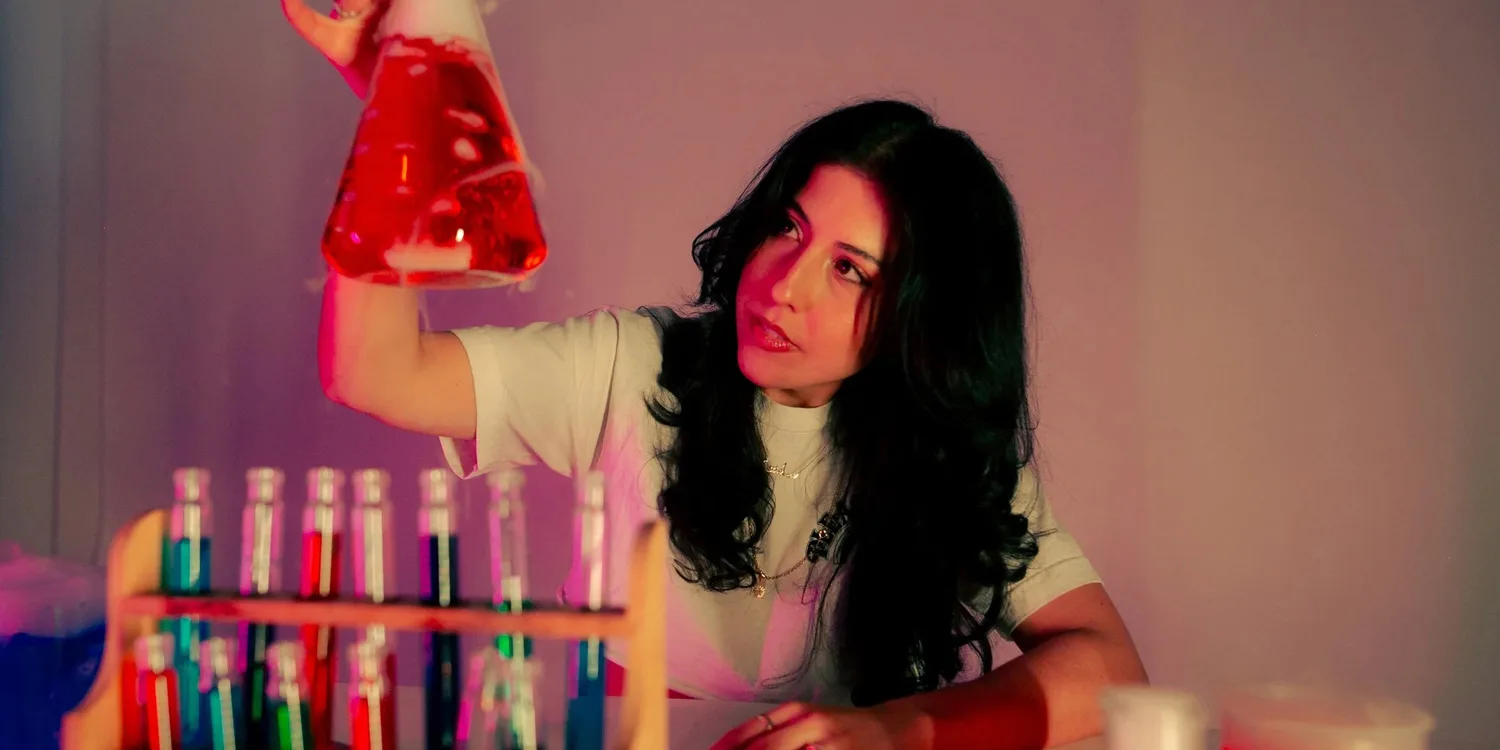
Featured image courtesy of Felice Trinidad
Sign up for our newsletter
-
 MaRS Staff