Big tech’s one-woman scourge
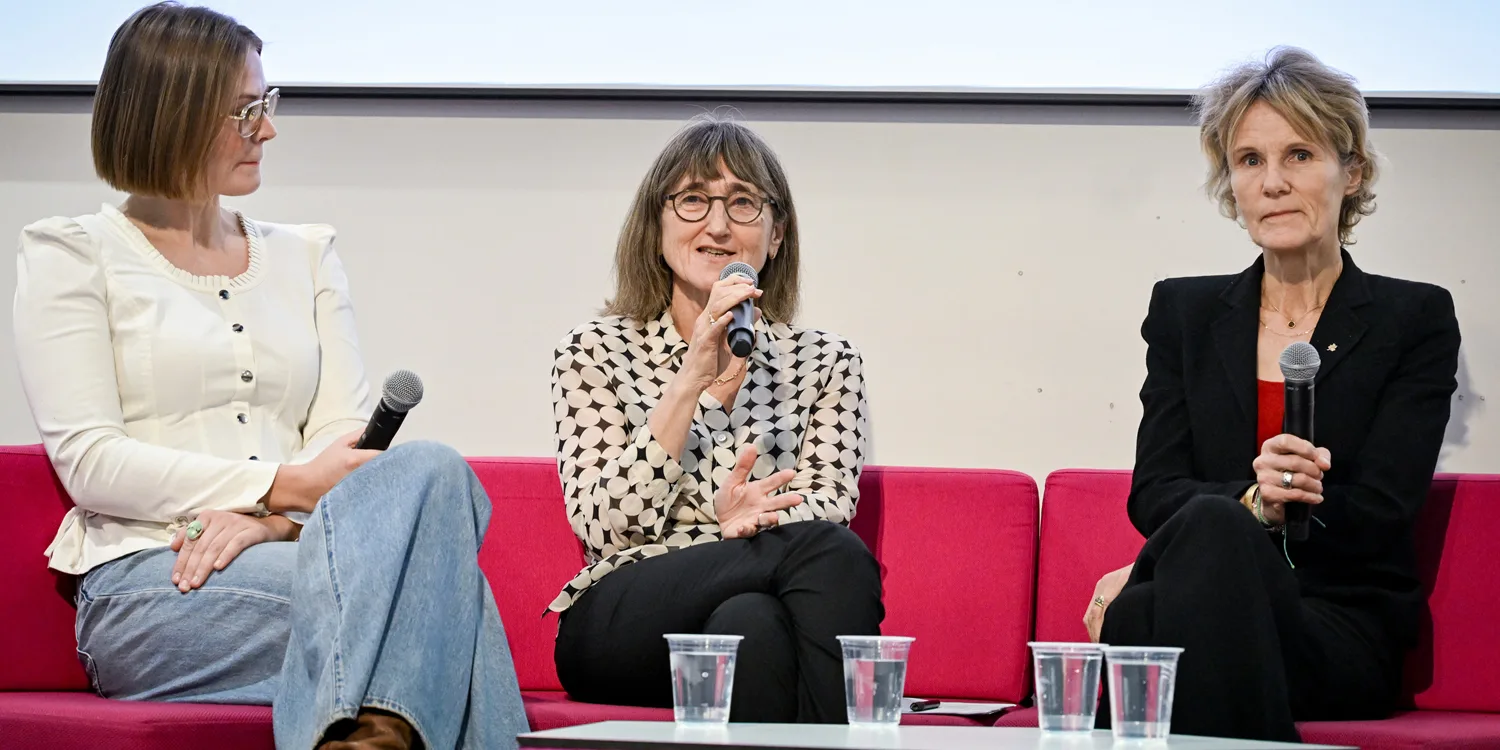
Beeban Kidron is on a mission to save kids from their phones.
It’s been four months since the federal government, following similar moves in Australia and the U.K., introduced legislation to make social media services and AI chatbots safer for children. Last week, British activist Beeban Kidron joined Diana Fox Carney and Ava Smithing at MaRS to discuss the complexities of such regulation — and the big challenge of ensuring that technological advances actually improve society. Below, we dig into some of the conversation’s highlights.
Stories from the ecosystem
The hottest jobs this week
Harm reduction
Baroness Beeban Kidron, a British legislator and digital rights advocate, has spent 15 years talking to kids about their online lives, but something a young boy said to her a couple months ago stopped her in her tracks. During an online workshop with children from around the world, she asked the participants what they would like to say to the leaders of their countries about AI. “The older I get, the more frightened I am,” one 13-year-old said. “I don’t see myself in the future. The future is disappearing.” Even more chilling, Kidron recalled, was that all the other kids on the call — in Kenya, the U.S., Malaysia — nodded along furiously.
Helping us avoid such a dystopic vision — while also making things safer and more fulfilling for kids right now — has been Kidron’s life mission. The former filmmaker (among other things, she directed Bridget Jones: Edge of Reason) is the founder and honorary president of the 5 Rights Foundation, which works to ensure that the digital world is, by design and default, suitable for kids and youth. It’s been a long, difficult battle, but Kidron’s had success: In 2018, she drafted and introduced to British Parliament an historic legislative amendment that eventually became the Age-Appropriate Design Code, which requires online services to be designed in the best interests of children. This year, she published her first book, Users: How Big Tech Took Control and How to Fight Back.
Last week, during a MaRS Morning co-presented with the Toronto Star, Kidron joined economist and policy expert Diana Fox Carney and Ava Smithing, host of the Left to Their Own Devices podcast, for a conversation with the Star’s Raisa Patel about the toxic power of social media and how we can combat it as communities and consumers. With technological change moving at an unprecedented pace, and Bill C-34, our own proposed social media safety bill, making its bumpy way through the legislature, there were lessons here for all us around how to balance impact, the need for collaboration and how government and industry can better work together. Here are three takeaways from that discussion.
What government needs to do
In Kidron’s opening address, she made a fundamental point — in most areas of life, if a product causes harm, it is withdrawn or severely restricted, even if it has recognizable benefits. So why is the digital realm exempt from this? Why are tech companies above the law?
They are not, Kidron said, and it is up to governments to forcibly regulate them. “I have one warning for Canada as you start your journey with C-34,”she said. “It’s not that regulation fails, it’s that regulation, without enforcement and without government standing together behind it, allows companies to resist the change that we try to impose on them.”
One of the most important things that can be regulated is the design of digital platforms. Protective mechanisms need to be built in from the outset, not things that parents (or savvy kids) can turn on or off. “There is phenomenal evidence that says the optional tools are not used,” Kidron said, “but that default settings absolutely work.”
Smithing pointed out that it’s important to focus on the specific features you want to protect kids from. In California, for example, the state recently passed a bill that prevents children from accessing platforms that use engagement-maximizing algorithms or allow adults to contact children. “I would make these rules as firm as possible,” she said, “leaving room for them to be updated because we see how these platforms are updating constantly.”
Setting boundaries
None of the panellists are currently on social media, a position that Carney admitted was privileged, but one they all took to protect their own mental health, time and safety. For 25-year-old Ava Smithing, the choice was an existential one. “This is the only version of the world we’ve ever known,” she said, speaking of her generation. For Smithing, the online world — and particularly Instagram — led to an eating disorder when she was a teen.
The answer, she argued, is to design technology that isn’t used in an exploitative, unhealthy way or to show youth an alternative to that digital world. “Bring them into real-life places and let them hang out together,” she said. Taking phones out of schools has been a good illustration of this strategy. “You tell kids, we’re going to take phones away, and they’re like, good luck. Then we take them out and they come back to you and say, ‘Thank you so much for doing that, you’ve made my life so much better.’”
Parents shouldn’t have to be police
In the workshops that Kidron’s done all over the world, the thing she most frequently hears from kids is one simple, sad request: could you ask our parents to put down their phones? “They feel abandoned,” Kidron said. “They feel abandoned by us.”
At the same time, as Fox Carney pointed out, neither parents nor children should be expected to regulate phone use on their own. Providing unlimited access to an addictive product and then telling users to “deal with it” is a recipe for failure. And parents having to become an “enforcer” can result in enormously difficult relationships. “We set the rules, but we don’t want to be constant police in our house,” she said. “That’s why it’s so important we get it right at source,” she added, meaning regulating the tech companies themselves.
Kidron echoed this: “Childhood is not simply an absence of harm. It is a period in which children develop the confidence, relationships and capacity to become themselves. And yet we have an environment in which there are fewer rules than there are for an air fryer.”
Stories from the ecosystem
HOUSING: How to solve the housing crisis. (Toronto Life)
CLIMATE: A new partnership in Nova Scotia demonstrates how Indigenous communities can drive cleantech innovation. (Toronto Star)
CRITICAL MINERALS: Governments are rushing to build new mines, but the development of critical mineral projects is fraught with physical and financial hazard. (Globe and Mail)
HEALTH: A research team that spans four universities, boosted by massive new funding, is targeting HIV in novel, promising ways. (Be Giant)
CAPITAL: Ottawa kicks off process to give VC industry $1.75-billion boost. (Globe and Mail)
Pro tips: Hiring for growth
MaRS executive in residence Marty Reaume explains why a venture needs to develop a long-term strategy before drafting a job posting.
Upcoming events
- This month’s Together Toronto, hosted by TechTO at the Schwartz Reisman Innovation Campus, brings more than 35 startups together with accelerators, founder programs and investors. November 2.
- At Femtech Canada Forum, industry experts, innovators and investors explore the opportunities within the rapidly expanding global femtech market. November 3.
- The Global CleanAI Summit gathers the AI industry’s foremost founders, investors and entrepreneurs to discuss the technologies of tomorrow and how they’re transforming energy, food and infrastructure. November 4.
- MaRS’s Better Buildings: Hospitality and Recreation program, which helps owners and operators of hotels, motels and inns reduce expenses and increase efficiency, hosts an informational webinar on November 10.
- MaRS Climate Impact, featuring XPRIZE CEO Anousheh Ansari, Qikiqtaaluk Corporation president Harry Flaherty and General Fusion CEO Greg Twinney, among others, is November 17 and 18.
- On the second and final day of Climate Impact, MaRS’s First-of-a-Kind (FOAK) Lab hosts a venture showcase with Carbonova, Exterra Technologies, Green Graphite Technologies, Hyperion Global Energy and Planetary Technologies. November 18.
- The Canadian Disability Tech Summit, the national conference on assistive technology and disability innovation, is November 18.
For more, visit our events page
In the queue: What we’re reading, watching and listening to at MaRS
Rosalind Share, a member of MaRS’s Market Intelligence team, shares her current obsessions.
 A classic album best heard on vinyl: “I reach for One Night Stand: Sam Cooke Live at the Harlem Square Club at least once a week. On vinyl, you can hear every cheer, laugh and sigh from the crowd. The live recording captures even the faint echo of the audience singing along with him. I highly recommend hosting a listening party to experience it. It’ll take you to your happy place.”
- A Substack for those who love a good rabbit hole: “Writer Sherry Ning came to Toronto a few weeks ago and spoke at the Isabel Bader Theatre as part of The Viaduct, the public lecture series put on by the Toronto Society for the Diffusion of Useful Knowledge. On her Substack, she asks deep philosophical questions while seamlessly guiding you through mythology, history and random side quests. Her questions and anecdotes have a way of lingering in your mind, then popping up in your next conversation.”
- A podcast that helps you see the future: “The Risk Intelligence Podcast, produced by the Global Association of Risk Professionals (GARP), is super interesting because it focuses entirely on sustainability and climate risk. You hear from everyone from Obama administration soil specialists to experts who’ve contributed to the IPCC report and food security professionals. GARP does an excellent job unpacking the complex nature of climate-related risks and describing, in a very accessible manner, how those risks can bleed into various financial systems. If you’re interested in understanding the mechanisms by which we ought to prepare for a changing climate, put this on your radar.”
Careers: The hottest jobs in tech this week
- Evercloak, which makes nanomaterial films for cleantech applications, is hiring a controller. (Kitchener, Ont.)
- Optical semiconductor firm Ranovus is looking for a senior analog ASIC design engineer. (Nuremberg, Germany)
- AR technology company LeapTools is hiring managers for its customer success and account management teams, as well as several other positions. (Canada; remote)
- Litmus, which helps companies connect and operationalize industrial data, is hiring an account executive EMEA, a director of customer support, an ABM manager and other positions.
For more, visit our jobs page
Did you know that MaRS is a charity?
Your support helps us advance Canadian innovation and science, bring our community together and transform the world for the better. For instance, through our carbon removal donation program, you can help support Canada’s most promising CDR companies through tax-deductible donations. Learn more here.
Thanks for reading! See you in two weeks.
Photo credit: Ernesto Di Stefano/George Pimentel; L to R: Ava Smithing, Beeban Kidron, Diana Fox Carney
Sign up for our newsletter
-
 MaRS Staff