Canada’s clean energy sector is on the move
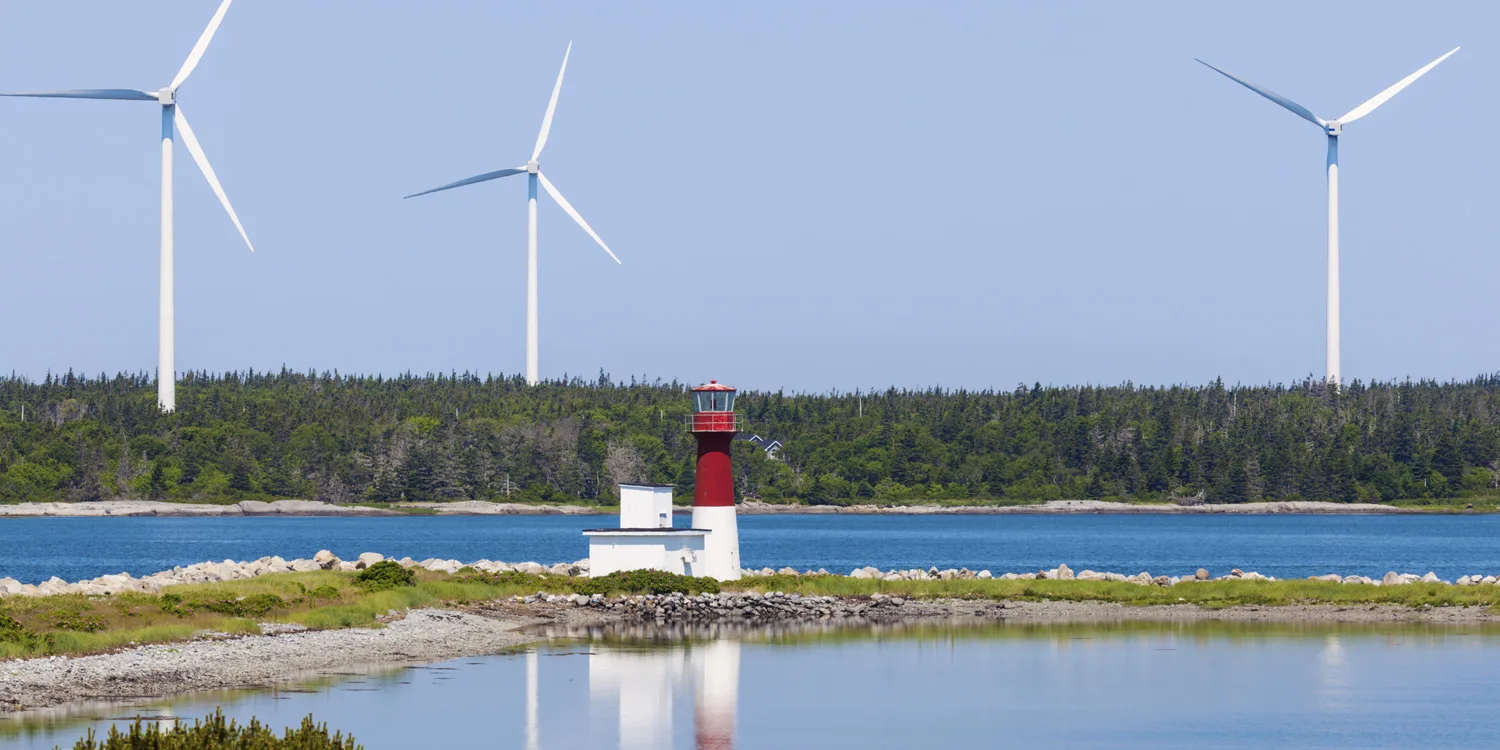
Recent headlines have suggested that Nova Scotia has supplanted Alberta as the country’s leader in renewable energy. The actual story is more complicated than that, which is ultimately good news for the entire country. Below, Dominique Ritter takes a look at the shifting sands in the energy sector and what that means for investors.
Also, in this week’s newsletter:
Stories from the ecosystem, upcoming events and the hottest jobs this week
Power shift
In a world where politics too often trumps progress, Alberta seems prepared to lose a lot of money in the effort.
Last week, the Business Renewables Centre published its 2025 report on the state of Canada’s corporate clean energy market, which highlighted a near-total collapse of new renewable deals in Alberta. Before Danielle Smith’s government introduced policy changes that sowed investor uncertainty, the province led the country in new corporate procurement. Last year, it only announced a single project — a 99 percent decline in such activity. Meanwhile, tax revenue from earlier projects generated more than $70 million in municipal tax revenue in 2025.
While the BRC — an advocate for corporate buyers — demonstrated that Nova Scotia has replaced Alberta as the country’s leader in corporate renewable deals, the big picture on clean energy is actually more complex and encouraging. Renewable energy is hardly fizzling in Canada; in fact, the sector is set to surge.
Accelerating change
Last year, renewables accounted for 9.7 percent of Canada’s energy demand. According to the Canadian Renewable Energy Association (CanREA), which operates as the broad industry advocate, the sector is expected to grow by a third by 2030 and double in the coming decade, by which time the country is forecast to generate 60 gigawatts of renewable energy (140 percent more than current levels). Building out that potential will create between $143 and $205 billion in investment opportunities in solar, wind and energy storage.
“These are numbers that the investment community is paying attention to,” says Imran Noorani, vice president of policy at CanREA. “You’re starting to see that the big money — the institutional investors — are moving into this space.” And Canada is recognizing the role of the clean electricity sector as “the backbone of modern economic development.”
Federal incentives, like the 30 percent tax credit, are helping to attract global investors — particularly after the United States cancelled U.S.$35 billion in clean energy projects last year. All of which is securing Canada’s role as a renewable-energy leader and a centre for excellence. Last year, for example, the Oneida Energy Storage Project warehousing 250 megawatts of power made headlines as one of the largest facilities of its kind in the world. There are several new energy storage projects in the works and two Ontario facilities will be even larger than Oneida.
Spreading the green
“Previously, a lot of renewable development was concentrated in Alberta,” says Noorani. The province, with its abundant sunshine, high winds and deregulated electricity market made it a favourite among investors until a seven-month moratorium on renewable power put the brakes on growth in 2023.
“Investors remember. They’re like elephants,” says MaRS senior director of climate Tyler Hamilton. “The next time they’re looking at a market, even if there is a political change, they’re going to wonder, ‘How permanent is this change?’”
Now, development is on the rise elsewhere across the country, where investors are finding more favourable conditions. B.C. and Ontario are taking the lead, with Quebec and Atlantic Canada also building out their wind and solar infrastructure. In Nova Scotia, the province’s Green Choice Program produced 262 MW of wind capacity in 2025.
A defining characteristic of the Green Choice Program is its partnership with local Mi’kmaw communities, who co-own the off-shore wind farms. And partnership with Indigenous communities is also a key component of Canada’s renewable energy sector as a whole. Last year, almost every renewable energy procurement process included criteria or incentives for Indigenous participation or ownership.
After a few years of slower growth, the revolution in renewables is hitting its stride. That applies to “behind-the-metre” (BTM) solutions being adopted in homes and businesses across the country, adding storage batteries to basements and solar panels to roofs.
It so happens that Alberta is a Canadian leader in BTM devices. The people are opting for positive energy. — Dominique Ritter
Stories from the ecosystem
CLEANTECH: A new Senate report, featuring MaRS portfolio ventures Planetary and CarbonRun, explores how ocean alkalinity enhancement could remove carbon from the air and store it in our waterways.
SUPPLY CHAINS: How Canadian tech can help stabilize the rocky market for rare earth minerals.
AI: What does artificial intelligence mean for Canadian healthcare?
BIOTECH: How Intrepid Labs found the perfect home for its HQ.
CONSTRUCTION: Concrete’s competitor climbs nine storeys in Toronto.
ENERGY: The energy boom is coming for Great Lakes water.
Pro tips: Kristina Cleary

MaRS advisor Kristina Cleary shares one of the most common challenges ventures face, and why a marketing scorecard is a winning tool in any founder’s arsenal.
Upcoming events
- PaceZero Capital Partners is hosting “Building Faster: Canadian Projects and Clean Technologies,” an in-depth discussion with leading public and private sector experts on innovation in the built environment, new financing models and emerging policy frameworks. February 18.
- MaRS and Tailwind host a free informational webinar on the future of Canadian adaptech. February 18.
- At the next MaRS Session, “Turning insights into action,” four Canadian ventures — LandLogic, GeoRetina, Skygauge Robotics and QEA Tech — share how they turn fragmented data into scalable intelligence. February 19.
- Impact Health, MaRS’s annual health tech summit, is still months away (April 23, to be precise), but early-bird tickets are on sale until February 22.
- At the first instalment of our founders series, Technically Speaking, startup leaders discuss recent return-to-office trends and how to build a thriving work culture. February 24.
- TechTO’s “Health Toronto” brings together industry leaders and founders for a discussion of how tech is reshaping healthcare. February 24.
- At the next MaRS Morning, “Why housing is healthcare,” Manjula Selvarajah talks to Andrew Boozary, physician and executive director of UHN’s Gattuso Centre for Social Medicine. February 26.
For more, visit our events page
Careers: The hottest jobs in tech this week
- Layer 6 AI, a machine learning research company, is hiring for multiple positions, including data engineer, credit analyst, debt specialist and more. (Multiple cities)
- The Toronto Region Board of Trade is seeking a digital applications lead, a director of finance, a manager of policy and economic research and more. (Toronto)
- Clir Renewables is hiring a head of business development for North America. (Vancouver)
- Vention, a factory automation company, is hiring for several roles: application engineering specialist, account executives, mechanical engineer and more. (Multiple cities)
For more, visit our jobs page
In the queue: What we’re reading, watching and listening to at MaRS
Here are the books and shows MaRS advisor and leadership coach Kristina Cleary (who also shares key advice in the video featured above) recommends.
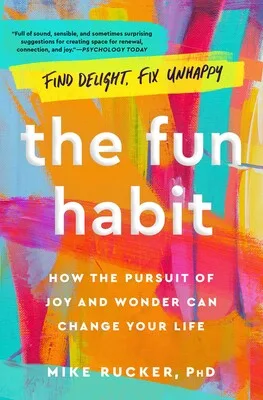
- A practical guide to daily delight: “Fun and adventure are core values for me, so I’m always asking myself how I can intentionally build more of both into my life. Mike Rucker’s The Fun Habit is a great reminder that joy isn’t something you earn after the work is done. It’s something you choose, and something that actually fuels better living and leadership.”
- A tantalizing social network tell-all: “Careless People, a behind-the-scenes account of the early days at Facebook, hit closer to home than I expected. Anyone who’s worked in or built a startup will recognize the intensity, the idealism and the emotional whiplash that comes with scaling fast. An honest reminder that ambition and impact come with real trade-offs.”
- A manual for finding more meaning: “In my work supporting busy, high-performing leaders, I’m constantly looking for resources both practical and grounding. Tanya Dalton’s On Purpose immediately made its way onto my ‘recommended reading’ list — it’s relevant for me, and for almost every client I work with who’s trying to build a meaningful life alongside a demanding career.”
- An underappreciated Laura Linney dramedy: “The Big C landed deeply for me given my own cancer journey. Raw, human and at times unexpectedly hopeful.”
Thanks for reading! See you in two weeks.
Featured image source: iStock
Sign up for our newsletter
-
 MaRS Staff