Clean plate: Innovations that can help shrink the food industry’s carbon footprint
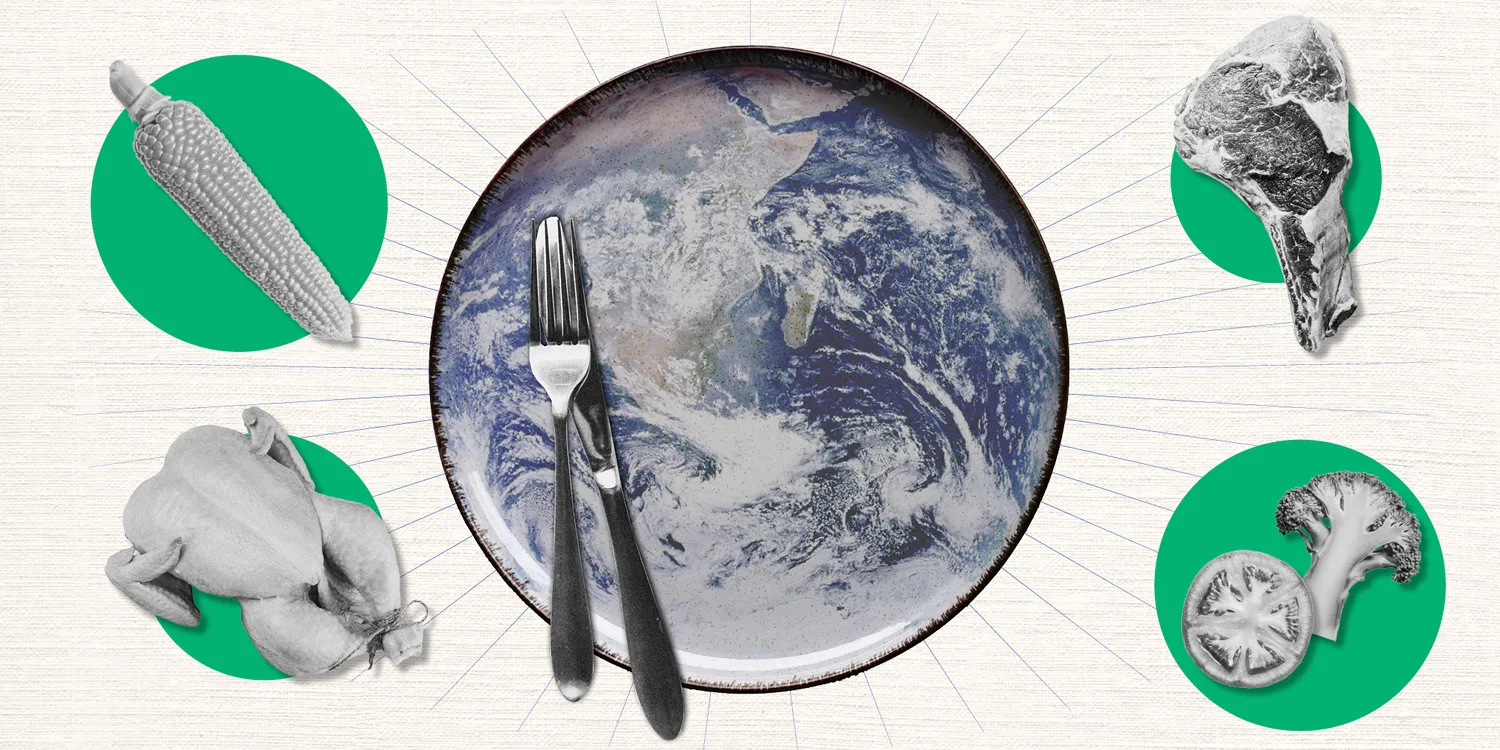
The nine ventures in the newly launched Mission from MaRS: Food and Agtech are optimizing logistics, harnessing the power of robots, tackling waste and ensuring our food is as fresh as possible.
At the core of our food supply system is a complex web called the cold chain, a network of storage facilities, transport routes and distribution networks that move produce across this vast country. It’s what ensures perishables last longer and remain shelf stable by keeping produce refrigerated or frozen from the farm gate to food manufacturing facilities and to point of purchase.
The miracle of the FSCC means Canadians can eat mangos in winter, but many things can go wrong on the journey from farm to fork and the environmental cost is steep. Gas or diesel-powered farm equipment, fertilizer production and livestock make the agricultural industry the source of 10 percent of Canada’s greenhouse gas emissions — the fifth largest emitting sector in the country. Transport is another big polluter and is highly vulnerable to disruptions due to extreme weather events, power outages or refrigeration mishaps.
Then there’s the issue of food sovereignty. Due to Canada’s short growing season, close to 80 percent of fruit and 60 percent of vegetables are imported. “We are wholly reliant on a global food supply chain that is no longer sustainable, reliable or efficient,” says Katherine Festeryga, the food and agriculture lead at MaRS. “It’s paramount that we change the way we produce, distribute and consume food in Canada.”
To that end, MaRS has launched the Mission from MaRS: Food and Agtech Accelerator, a comprehensive initiative that aims to speed up the commercialization of solutions that can help shrink the carbon footprint of the food industry, and improve food security and sovereignty. “This inaugural Food and Agtech venture accelerator is so exciting because it covers the entire food supply chain: growing at source, cold chain storage, optimizing transportation and warehousing,” says Festeryga.
Meet the nine startups working to change how we feed ourselves and our communities.

Luke Scales, CEO, Arbia
Arbia brings a high-tech solution to an analog industry
What it does: Growing up in the food industry, Luke Scales, the CEO of Arbia (formerly known at StockyAI), saw just how inefficient the sector could be. “We knew farmers who ended up shipping their produce halfway across the globe because they couldn’t find local buyers,” he says, “only to find out that a local business had bought the same product at twice the price from another neighbouring country.” With co-founder Conor McKenna, he developed a platform where farmers, distributors and growers can coordinate orders, track inventory and transfer payments.
How it helps: Arbia’s customers have reported that the site eliminates 15 to 20 hours of manual admin work each week — no more handwritten inventory lists or endless email exchanges. And by implementing online sale channels, they’ve seen revenue growth of up to 20 percent.
What’s next: With funding from Techstars, an accelerator and venture capital firm, Arbia has entered the U.S. market ahead of schedule. The startup is now preparing to raise a pre-seed round in the new year.

“The best way to protect ourselves against global shocks is to have farmers close to home without having to rely on others,” says Growcer CEO Corey Ellis.
Growcer is transforming the supply chain
In 2016, Growcer installed its first modular, vertical farm in Churchill, Man., where food security can be precarious. Growcer’s team trained the local community how to operate and maintain the hydroponic farm that is housed inside what looks like a shipping container where plants grow on stacked shelves under LED lights. Within weeks, the community saw the cost of vegetables plummet by 50 percent simply because the locally grown produce replaced leafy imports. Today, 1,000 of the Growcer’s smart farms have been installed in 40 countries; of the 135 farms in Canada, 50 have been set up in First Nations communities.
How it helps: Growcer farms are especially well suited for places where food can’t be grown year-round; they have been installed in hurricane zones and regions prone to drought.
They take up less space and require less water than conventional growing. “By bringing the farm closer to people, you get all these benefits: higher nutrition, better shelf life,” says Ottawa-based co-founder and CEO, Corey Ellis. “With this technology, they’re eliminating imports and bringing all of the supply chain into their community.”
What’s next: Growcer farms supply 500,000 people around the world with fresh greens daily. The startup has now mobilized sufficient capital to support its goal to feed 10 million people a day by 2029.

Pierre-Xavier Roy, CEO and co-founder, Hydrocool Systems
Hydrocool Systems jumpstarts the decarbonization of the cold chain
Every long-haul rig outfitted with a Hydrocool refrigeration unit helps avert 30 tonnes of carbon dioxide emissions by virtue of running the cooling system on hydrogen. Developed by a small Ontario team with extensive experience in the automotive industry, the AI-enabled hydrogen-powered transport refrigeration unit (TRU) attaches to the trailer of a truck as a replacement for the standard diesel refrigeration unit.
How it helps: TRU is three to four times more efficient than diesel and cheaper to maintain. Hydrocool’s “fridge on wheels” reduces climate-warming pollutants, helping stakeholders meet net-zero targets while improving food affordability.
What’s next: Hydrocool is raising funds to deploy pilot projects of the hydrogen-powered transport refrigeration in 2026, with two major Canadian customers lined up for early adoption in the new year.

Knead Tech CEO Lourdes Juan started the company to help nonprofits and municipalities optimize their daily food rescue systems.
Knead Tech optimizes food recovery by cutting waste
In 2012, Lourdes Juan had an aha moment. Helping out on a food donation program, she went to a bakery in Calgary and ended up hauling away 200 pounds of surplus bread. She realized that scarcity was not the cause of food insecurity. It was a problem of logistics. Many food recovery initiatives rely on manual coordination, spreadsheets, even texts to source surplus food. To help streamline efforts, Juan founded Knead Tech and developed a digital solution that automates scheduling for pickups, route optimization, volunteer sign-up and reporting. It also tracks environmental impact.
How it helps: By making rescue operations more efficient, less organic waste ends up in landfill emitting methane gases. For instance, Metro Food Rescue in Detroit, a Knead customer, partnered with the NFL Draft and recovered over 100,000 pounds of food from the event.
What’s next: Knead recently closed an $800,000 pre-seed round, which is supporting plans to expand across Canada and the U.S.

Francois Menard is the founder and CEO PULR.
PULR’s digital food labels unlock key steps along the supply chain
Francois Menard, founder and CEO of PULR, is laser-focused on “supply chain traceability — “the art of figuring out where things are, where they’re going, whether they’re being wasted or spoiling.” The software vendor does this through digital labelling that gives every unit of packaged food a unique code using radio-frequency I.D. or RFI — the same kind of identification currently used on some clothing labels that let the customer place a garment in a basket that automatically generates the price. Typically, the embedded antennae in digital labels becomes e-waste. But PULR has developed a sustainable version using ink and graphite to replace metal.
How it helps: Traceability at such a granular level means retailers can pinpoint where in the supply chain something has gone wrong. Instead of issuing a broad recall, businesses can isolate and remove only the affected products — saving time, money and waste.
What’s next: Menard and his team are gearing up for a three-year research initiative to develop the next evolution of the ink they use to make the labels.

Marcia Woods, CEO, Purchs
Purchs helps keep grocery shelves well stocked
As the variety of niche packaged consumer goods on the market proliferates, both retailers and vendors are scrambling to keep up, says Marcia Woods, CEO of Purchs. Retailers, she explains, are finding they spend too much time sourcing products and negotiating with vendors and vendors are struggling to maintain stock between payment cycles. Purchs’s AI-powered fulfillment system helps streamline order management, logistics and invoice financing.
How it helps: Vendors can take advantage of a one-touch system for fulfillment, invoicing and payment. Woods has seen order-management time cut by as much as 50 percent for both buyers and sellers.
What’s next: Purchs is gearing up for a U.S. launch in early 2026 and anticipates doubling the size of their team.

Wayne McIntyre, CEO, Relocalize
Relocalize’s micro-factories supersizes automation to minimize emissions
Montreal-based Relocalize offers grocers and food delivery services the means to produce a steady supply of packaged ice and cold packs through its on-site, fully autonomous, micro-factories. In 2023, Relocalize set up its first micro-factory on the grounds of a distribution centre for the Winn-Dixie supermarket chain in Florida, demonstrating that its compact container system can produce as much ice as needed to supply 170 of its retailers. The kicker is that Relocalize’s micro-factories, which at 1,200 square feet are 5 percent the size of a conventional factory, can achieve this without using refrigerants.
How it helps: The micro-factories dramatically lower operating costs and greenhouse gases by avoiding refrigerants, eliminating middle-mile trucking and producing plastic-free packaged ice on demand. The value proposition is simple, says co-founder and CEO Wayne McIntyre: “it’s better, greener and cheaper.”
What’s next: The company has ambitious plans to expand, says McIntyre. “Our plan is to deploy about 10,000 robots that operate the equipment and 2,000 micro-factories across North America within the next five to 10 years.”

Yun Yao, CEO, Soralink
Soralink delivers AI-driven solutions to keep machines humming
Equipment failure in food processing can be catastrophic, causing revenue and production loss, waste and recalls. Montreal’s Soralink offers a predictive maintenance service for industrial machines using an AI-powered sensor system that picks up on any changes in vibration, sound or temperature, alerting operation managers before problems occur.
How it helps: Because Soralink retains ownership, customers don’t need to make big upfront investments. Within days of receiving an order, Soralink will install the system and get it up and running. One customer was able to reduce maintenance costs by 30 percent within the first three months of using Soralink’s technology.
What’s next: Soralink recently acquired an upgraded, and more affordable, version of the sensor technology that is integral to their predictive maintenance system. As a result, in 2026, customers will be able to allocate a larger percentage of their operations for sensor coverage at the same price point.
Tewari De-Ox Systems unwraps a better packaging system for vendors
“Our goal is to be everyone’s shelf life extension partner in any industry where a product has an expiration date,” says Anat Tewari, co-founder of Tewari De-Ox Systems. “That expiration date is the bane of their existence.” Based in Richmond Hill, Ont., the startup has invented a novel packaging film and sachet for exported meat products that prolongs the life of certain enzymes, thus keeping it fresher, longer.
How it helps: Because exporters typically lose 10 percent of products with every order, retailers routinely over-order to ensure sufficient supply for their customers. De-Ox’s wrapping extends the shelf life of fresh meat products from around 10 days to 120 days, which not only prevents spoilage, it also reduces transportation costs and ensures fewer animals are needlessly slaughtered.
What’s next: Tewari De-Ox Systems is developing another method to keep meat fresh. The team is working with labs at Northeastern University in Toronto and Tufts University in Massachusetts to grow enzymes for use as an active ingredient that can be injected into meat products to ward off spoilage and discolouration.
Want to learn more about how we can make Canada’s food system more resilient, competitive and reliable? Visit Mission from MaRS: Food and Agtech.
Photo illustration by Stephen Gregory; Images: Unsplash
-
 Victoria Foote