Could data centres actually strengthen our energy systems?
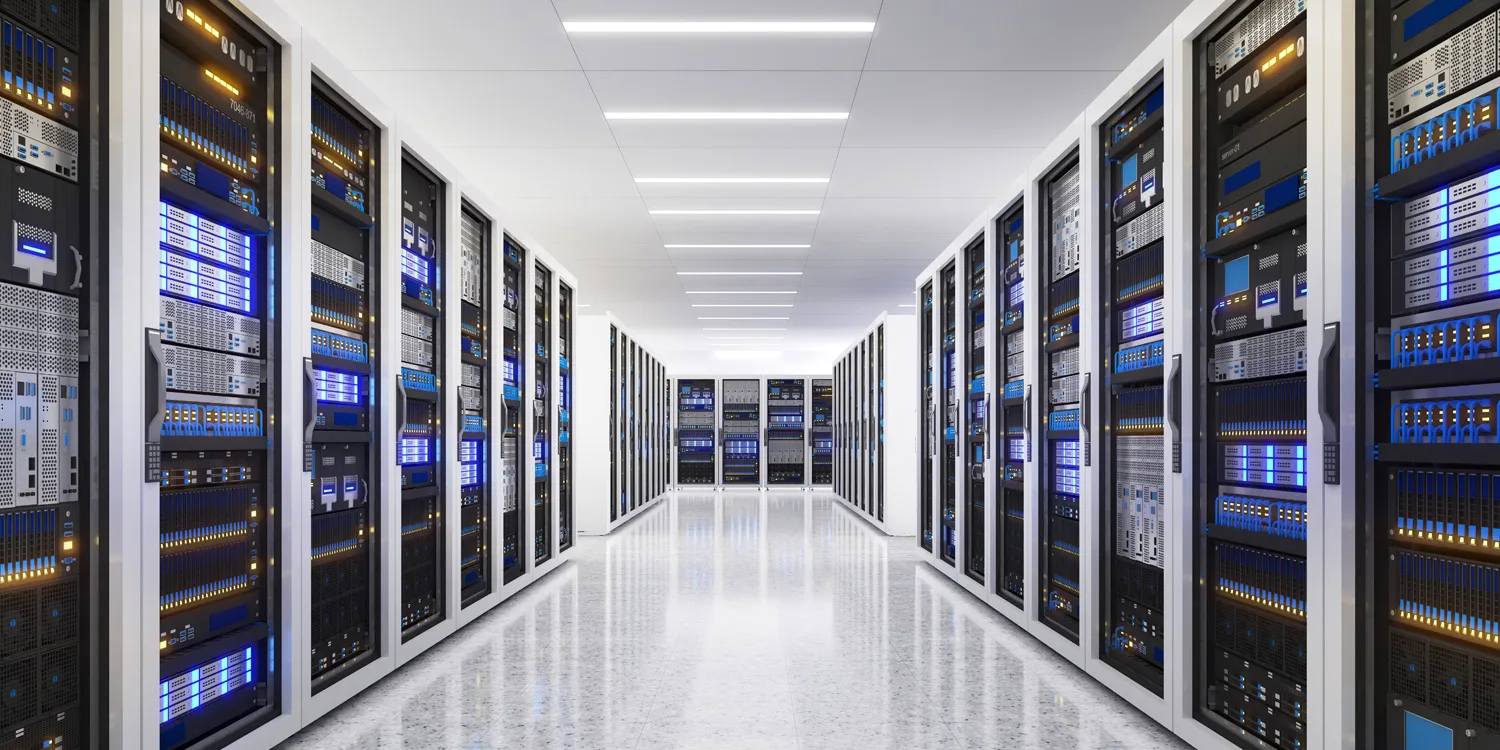
Data centres get a bad rap and for good reason: they’re massive consumers of limited resources. But dig a little deeper and you’ll find a more complicated — and encouraging — story. A new report, produced by MaRS and Mantle Climate, shows how responsible, collaborative data centre expansion could, in fact, lead to a better grid. Below, Dominique Ritter gets into it with Mantle’s Irene Lam.
Also, in this week’s newsletter:
Stories from the ecosystem, upcoming events and the hottest jobs this week
Power houses
Judging by the headlines, there’s a lot to dislike about the data centre construction boom: massive energy and fresh water consumption, community disruptions, growing carbon footprints. But the fact remains that data centres are essential to business, innovation and our highly-connected daily lives. Demand for their compute power is ramping up faster than you can ask Claude to “fix taxes.”
So how do we bridge the gap between our need for vital infrastructure and our responsibility to climate commitments? A new report from MaRS and Mantle Climate tackles the question of how Ontario can chart a viable course to data centre expansion.
We spoke with Irene Lam, Mantle’s director of client services (and former MaRSian), about how data centres can actually enhance energy systems and what’s needed to achieve a sustainable and responsible rollout.
Data centres have a bad rap because of the electricity and water they consume. What might people not get about how AI infrastructure could actually strengthen energy systems?
Over the next decade, Ontario can treat AI data centres as a catalyst to modernize the grid. That can be done by pairing growth with strategies that reduce or shift demand, improve system flexibility and lower emissions intensity. Ongoing investments in renewables, storage and nuclear refurbishment would also support that transition.
With proper planning, the same growth that could otherwise strain capacity can instead strengthen reliability, protect affordability, support climate commitments and deliver durable economic and community benefits. Especially if development is planned through coordinated infrastructure hubs that align factors like siting, permitting and energy infrastructure.
What’s the risk of falling short on secure AI compute power?
Losing our innovation and talent to other places. A lot of Canadian researchers and innovators already don’t have enough compute capacity to do their work. Our leading universities are at a point where they need to decide how they’re going to proceed with their research. Do they lease? Do they build their own? And a lot of the startups and innovators are looking for the same.
How committed to improving climate outcomes is the digital infrastructure industry?
Working in the industry, we’ve never seen any group more invested in sustainability. The Microsofts, Googles and Amazons of the world have very strict metrics when it comes to understanding environmental performance and improving those.
What are the most feasible decarbonization solutions for data centres?
There’s a lot of innovation in this space. Over the next 10 years, the shortlist of feasible measures includes: shifting or curtailing load during peaks, clean power purchase agreements that bring new clean generation online, energy storage to support peak management and backup, and waste heat reuse to displace system‑wide heating demand and emissions.
Your report underscores the importance of collaboration. What does that look like in Ontario, where the province’s regulator, the Independent Electricity System Operator, doesn’t share the locations of proposed data centres?
Part of the lack of transparency is due to the way our systems have been built. To resolve these challenges, there has to be more crossover. Through our study, local digital infrastructure and energy industries got to talk to each other and there was an appetite to be able to share more and resolve some of the bottleneck issues.
What do you wish more people understood about the situation?
This is a once-in-a-generation opportunity to innovate the energy system in a way that we’ve never seen before. The City of Toronto has some of the largest urban development projects in the world. They present opportunities to think outside the box to meet the energy needs of these sites, such as better integrating and leveraging waste heat from data centres, which is more difficult to do in existing communities. — Dominique Ritter
Stories from the ecosystem
MEDIA: Bloc Digital is helping companies optimize through next-level visualization.
VC: Canada is bleeding startups, writes MaRS’s Liam Gill. We can learn how to fix this from the U.K.
FINANCE: In today’s tighter funding environment, debt financing is no longer a stopgap, it’s a deliberate tool to maintain momentum.
ENTREPRENEURSHIP: MaRS has updated its Startup Toolkit. Our Learning Bundles have expanded and now answer every question a founder might face, from fundraising to talent development.
HEALTH:Providence Therapeutics’ new vaccine trial could spell big things for the future of personalized cancer treatment.
 “If we’re successful in having an impact in a very vulnerable pediatric population with a very challenging tumour, we’re going to be solving a problem that nobody’s solved in history.” – Brad Sorensen, CEO, Providence Therapeutics. The biotech company is launching clinical trials in Australia this month. Read more here.
Upcoming events
- The next MaRS Morning, “Funding the Future,” explores a startup’s most critical challenge: securing seed capital. Featuring Toothpod founder Vishar Yagoubian, Women’s Equity Lab’s Ariel Siller and National Angel Capital Organization’s Lisa Graston. March 26.
- Procurement Assistance Canada (Ontario region) and MaRS are co-hosting an Innovation Information Forum, focused on supporting entrepreneurs and showcasing emerging opportunities. March 26.
- The MaRS and Innovate UK Manufacturing Showcase introduces eight U.K. startups that are building a more resilient and productive manufacturing sector. April 1.
- The Mitochondrial Innovative Initiative hosts the MitoRevolution Research Symposium and Innovation Day. April 9.
- The third annual National Healthtech Innovation Conference brings together innovators, funders and clinicians for a two-day summit in Kitchener-Waterloo. April 21 and 22.
- Impact Health, MaRS’s annual health tech summit, features dozens of speakers, including Handol Kim, Rachel Harding, Muhammad Mamdani and John Valliant. April 23.
For more, visit our events page
Careers: The hottest jobs in tech this week
- Verto, a digital twin healthcare platform, is hiring for two co-op positions, a junior software engineer and a full stack developer. (Toronto)
- BambooHR, an HR software firm, is hiring for several positions, including a senior data analyst, a senior field marketing manager and a sales operation specialist. (Multiple cities)
- Petal, a healthtech provider, is hiring a technical support advisor and a medical billing agent. (Multiple cities)
- StackAdapt, a digital advertising platform, is hiring for several roles, including a talent acquisition partner (R&D), a senior performance specialist and a quality engineer. (Multiple cities)
For more, visit our jobs page
In the queue: What we’re reading, watching and listening to at MaRS
This week, Bloc Digital co-founder and CEO Keith Cox shares his movie recos and a little life advice. Bloc Digital is one of eight companies in the Innovate UK advanced manufacturing cohort. The company will be giving a demo of its tech at the IUK showcase on April 1.

- Getting outside your comfort zone: “Whenever you can do something you’ve never done before…do it! When I go somewhere new, if I have any spare time, I try to find something new and cool to do. Jump out of a plane, climb a frozen waterfall, hang off a very tall building. (I did this at the CN Tower when I was last in Toronto!)”
- The best (?) decade for movies: “I have a love for ’80s and early ’90s films, which were created when filmmakers didn’t have the modern CGI toolbox that’s so critical to filmmaking today. Back to the Future, ET, Star Wars, etc. all have a warm place in my heart. I do love great CGI, it’s amazing; I started my career as a 3D artist at Rolls-Royce in the late ’90s, which led into what Bloc Digital is today. But films from back in the ’80s are, for me, just timeless.”
- A relaxing hobby: “Everyone needs to have a ‘chill’ thing to help them unwind. Especially when work is crazy busy and hectic. For me, this is painting murals. I try to find a wall where it will make a difference to someone and then see where the paint takes me. I can lose hours and not even realize the day has flown by.”
Thanks for reading! See you in two weeks.
Featured image source: iStock
Sign up for our newsletter
-
 MaRS Staff