Debt financing offers a different path for growth

Debt is no longer a stopgap for distressed startups. In today’s tighter funding environment, debt financing has become a deliberate tool to maintain momentum. For SWTCH, it helped bridge a critical gap as the quickly growing EV charging company closed its Series B round.
Venture capital has long been the primary engine of startup growth. But as fundraising cycles become increasingly complex, founders are taking a more strategic view of their capital stack. More and more startup leaders are looking beyond equity and considering alternative forms of financing as part of a more deliberate capital strategy.
For Carter Li, CEO of EV charging company SWTCH, debt financing turned out to be the best option when he was closing a Series B round in 2023. At the time, venture markets had started to turn and as the due diligence process stretched longer than expected, pressure on the company began to mount. “Our worst-case scenario started happening a little sooner than we would have liked,” Li says. “Things were getting uncomfortable.”
Rather than slow growth, pause hiring or accept a rushed and potentially dilutive bridge round, SWTCH opted for a different kind of financing to extend its runway until its round closed: structured credit facility. A form of debt financing, credit facility allows a company to borrow capital up to a pre-approved limit. Unlike equity financing, it does not dilute ownership. Instead, it provides structured, repayable capital that can be drawn and repaid over a defined period. Strong demand for SWTCH’s inventory helped the startup secure debt financing.
SWTCH’s decision to receive debt financing reflects a broader shift in capital markets. In 2024, the global venture debt market expanded to an estimated U.S.$83.4 billion, up from U.S.$53.3 billion the year prior. A similar trend is happening in Canada; last year, venture debt deployment reached a record $1.4 billion, up from $881 million in 2024. A recent industry survey found that a majority of founders and investors no longer view venture debt as “rescue financing,” but as a strategic tool to extend runway and manage dilution.
Here, Li and Jordan Peckham, founder and general partner of PaceZero Capital Partners explain how debt financing fits into a company’s capital stack, how it differs from traditional bank financing and why debt, when structured properly, can foster continued growth.

Carter Li is the CEO OF SWTCH.
Carter, what led you to seek flexible debt options?
Carter Li: We had been fundraising for six months and we thought we had a comfortable runway of six to nine months. We knew that this Series B was going to be much more difficult. We had some really strong interest, but the diligence itself was taking longer. Once we were in month three or four of our diligence, it felt like we were barely halfway through the process and we were getting closer to the end of our runway. That’s when we really started speaking to Jordan about potential opportunities.
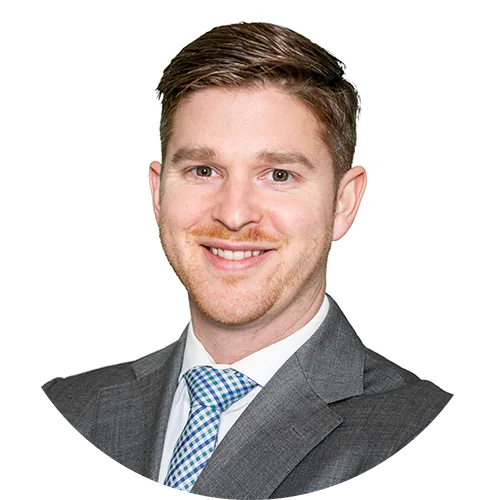
Jordan Peckham is the founder and general partner at PaceZero Capital.
PaceZero is a sustainability-focused private credit firm. What does that mean?
Jordan Peckham: We’re an impact focused private credit firm. The core reason we started the business is because of a lack of flexible capital providers in the Canadian marketplace. Depending on the market and the type of company, venture capital ebbs and flows. Credit can be additive in terms of the value creation opportunities the businesses have to their overall capital stack. We’re on our second fund, which is U.S.$75 million, and we have a range of new institutional investors.
How does borrowing from a private credit firm differ from a bank?
Peckham: Banks generally have a pretty firm checklist. Even if you have nine of the 10 attributes of what a bank is looking for, it’s unlikely they’re going to find a way to solve for that last checkbox. What differentiates us from many other credit providers is a willingness to look for other forms of collateral. We’ll work to try and find solutions to get things done and put capital in place, but in a responsible manner.
How does your approach differ from other institutional investors?
Peckham: We view ourselves fully as an investor — we are doing as much — if not more — diligence as lots of folks out there. We take a tremendous amount of care and build relationships with the companies we invest in and the outcomes that we’re generating for our investors. Whether you’re raising for a debt fund or an equity fund, anyone who’s signing over their money wants to know what you’re doing with it.
In SWTCH’s case, why was debt the right tool instead of raising more equity?
Peckham: A company spends money on a variety of activities and each one of those activities represents a different risk parameter. Different sources of capital can be paired off against different activities, depending on the needs of the company.The implied return in equity is the highest cost of capital, and therefore you have to take the biggest swing with those dollars. That means you need to open new markets and bring new products. In my conversations with SWTCH’s investors, they didn’t actually need equity dollars. You might as well save those bullets for your biggest and best opportunities. In SWTCH’s case, it was backed by the backorder of their inventory. We established that this credit is a de-risked go-to-market mechanism. We’re coming with a lower cost of capital and a pretty flexible offering, allowing them to execute on the more de-risked part of their pipeline.
That’s why very early-stage businesses don’t really get access to debt products. They can’t demonstrate to us, or really anyone else, that this is going to work. SWTCH had already raised their Series A. They were approaching their Series B. There were lots of proof points around that go-to market mechanism and that allowed us to get comfortable.
Li: The point of this was to stay focused around growth. PaceZero understood the business probably better than most folks. The path to confirmatory diligence was clear and knowing that we had that bridge extension in place helped us continue business as usual. Slowing those things down ultimately affects your overall revenue target for that year. The bridge facility really gave us strong momentum and carried us until we completed our Series B. We were able to hit the ground running when our Series B eventually closed.
From the outside, SWTCH was approaching the end of its runway. What gave you confidence to extend debt in that situation?
Peckham: One thing that stood out to me going through SWTCH’s underwriting was that their growth was really strong. The actual critical need for capital here was to fund the inventory that they needed to deliver on a backorder sale. Their order book had extended from when we first talked from around $5 million of backlogs to almost $9 million by the time we actually ended up funding the transaction. The cash burn was driven by capital expenditures. They were going to acquire an inventory that was needed to put into their actual installations in buildings across the country. That’s a very de-risked way for us to see value creation and alignment with both the closing of subsequent equity rounds. I also had a very high degree of confidence that the existing investor base was very happy with how the company was growing and would continue to invest in the business.
Was there any concern that bringing in debt could complicate or jeopardize the Series B for your investors?
Li: Because diligence was longer, the investors felt that this was probably a good situation. The alternative was expediting the diligence process where they would provide some sort of convertible note and things would be diluted from the perspective of other investors. So, this seemed like the cleanest, easiest way. Most loans are six months to 12 months. The flexibility around the term was attractive for the investors.
Can you walk us through the mechanics of the facility and how it was designed around SWTCH’s specific growth profile?
Peckham: We established a borrowing base that was margined against the contractual backlog of signed contracts. Our focus here was on the execution against that contractual backlog. As they continue to grow, they have the option to borrow more capital. We had waterfall outcomes in place: If plan A took longer to materialize, we had a plan B and a plan C, and that’s how we got comfortable with it. We had originally scheduled it as a 24-month loan. The key negotiating point was that we had a very flexible repayment option, so they could essentially repay it at any time. We weren’t standing in the way or creating any sort of friction points.
With valuations down and fundraising timelines stretching, is debt becoming a more attractive option for certain types of companies?
Peckham: Capital is getting more scarce. The expectations are extremely high. There is a lot of focus right now on a certain profile of business. If you are not one of those businesses, the cost of capital is higher, the valuations are lower. Therefore, the competitive value that a credit facility can offer is higher. If you have to go and negotiate with your equity investors for 24 months instead of six, and the valuation you’re getting is 25 to 50 percent lower than it was three years ago, a credit facility can be put in place in 45 days at a relatively attractive cost of capital. It just makes a lot more sense.
What advice would you give founders thinking about debt?
Peckham: What they should do to prepare is no different than what they should do to grow the value and the attractiveness of their business. We are like any other investor or partner. We’re looking for best in class businesses. It’s a very competitive market out there but growth solves a lot of problems. Go and sell to your customers and create value.
Are you a climate tech investor interested in getting connected to the MaRS Climate team? Reach out to Alexandra Zakreski, senior manager in cleantech at MaRS, to learn more.
-
 Sana Maqbool