How this AI-powered startup gives SMEs a helping hand
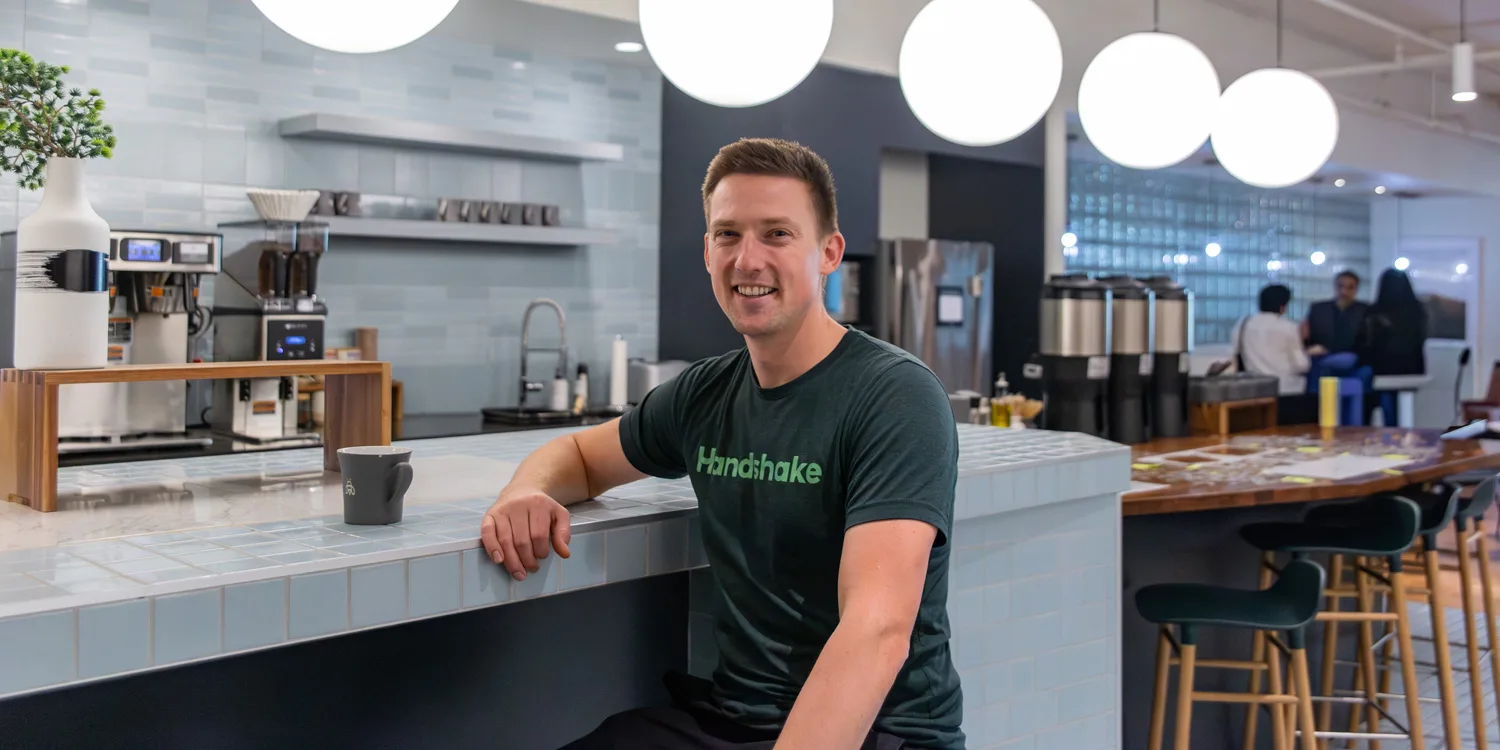
When resource-strapped founders need support, Handshake can answer the call.
For owners of small and medium-sized businesses, doing more with less is a given. With low headcounts and lean overheads, these leaders need to be strategic about the resources they do have. To help employers cover in-house gaps and increase productivity, innovators have been developing AI solutions that can give them a helping (virtual) hand. (To that end, the federal government recently launched its $300 million AI Compute Access Fund to help homegrown startups access the necessary compute power to develop this technology.)
“Julia” is part of this new wave of virtual assistance. Created by Kitchener-based Handshake, this AI-powered voice agent assists business owners by covering the phones when human receptionists are unavailable or busy tackling other responsibilities. Julia is fully customizable and can field questions from as many as 20 customers at once — in 50 languages. When a call is wrapped, business owners and customers get a summary and transcript of the call, along with appointment details and prompts for any required human follow-up. It’s a textbook case of how AI can help with admin and rote tasks to free up workers to tackle other responsibilities.
The company is itself an example of optimizing all available resources: Handshake is run by a team of six members “scattered around the Toronto-Kitchener corridor,” as CEO Tobiasz Dankiewicz puts it. While the startup has been intentionally cautious in its growth strategy — each new client requires some manual building and setup — it secured pre-seed funding earlier this year to help grow its market share.
Here, Dankiewicz explains how he convinces non-tech-savvy business owners to take a chance on Julia, how he uses the technology in his personal life and how Handshake trains its AI to know which questions are best answered by a human.
How do you sell small business owners on a non-human employee?
When you hire somebody for your specific trade, whether you’re a dog groomer, a mechanic or a dentist, you’re looking for an individual who knows everything about that industry. You want to show people that AI can pick up that industry knowledge. If you’re a mechanic, you’re probably not chasing the latest information on LLM developments. When we walk in and show them an example that sounds like an employee from their organization, they try to stump it with a curveball. The shock in their eyes when it relates better than they were expecting — it’s like, OK, we’ve got you locked in.
Can you give an example?
So, we hooked up Julia at a mechanic’s, and as a joke, we called to bring a Tesla in for an oil change. Inherently, the large language model (LLM) knows Teslas don’t have oil: “We don’t do that — maybe you got something confused. Is there something else that you’re looking to have repaired?” When you call a mechanic, there are compressors going off, tools being dropped, people coming in and out. It’s loud, and you’re not really getting answers. We empower them with Julia. There’s no background noise. She’s very articulate. She’s patient. She speaks 50 different languages. If English isn’t your first language, you can say, “Hey, I’d rather proceed in Polish,” or whatever language you like.
So is this meant to completely replace someone who answers the phone?
Receptionists need to open and close, drop off cheques at the bank, things like that. Right now, you can only call an office when the lights are on and the doors are open. We’re here to alleviate annoyance and provide 24-hour access. Doctor’s offices, for example, struggle with phone coverage at lunchtime, and if somebody goes on a vacation, they’re swamped. If they enable Julia, they’ve got coverage. Receptionists hate repeating themselves, so we help answer basic questions: “Are you open today?” “Are you open today?” “Are you open today?” It’s very easy: “We’re open. Come on down.” You don’t need to take away time from human labour.
Are there particular things you’ve made sure your technology delegates to humans?
You need to know its limits. Reliability is an issue. We’re HIPAA compliant. You can call the doctor about your sick toddler, and Julia answers. You might not get a booking immediately, but you’ll get a call back or an email confirming your slot. You call the same doctor’s office and say, “I’m having a bit of chest pain,” and because it’s a trained LLM, it’ll identify that it could be indicative of a heart attack: “Please proceed to emergency services; if they diagnose this as non-urgent, come back and book a follow-up appointment with your doctor.” We don’t want people calling a doctor’s reception and bypassing an appointment and getting an LLM diagnosis, so we guide the system to use these safety nets.
As a small company, do you relate to the logistical challenges your customers are grappling with?
Absolutely. We use Julia to qualify customers when they visit our websites, and, at times, to follow up with clients via outbound calling. Or my personal use case: I use it for voicemail when I’m travelling. I’m too cheap to pay for roaming, so my phone is effectively turned off. Rogers picks it up, Julia queries that info and I get an email with who called so I can call them back from wherever I am in the world. We’re building technology that is vastly useful for ourselves.
We’re always in R&D. We’re not a company that builds one product every year and has an annual release cycle. When we unlock a new feature, all of our clients get access to it.
Given your focus on AI, how do you keep things human?
If a customer needs to make a change, they call, text or email us to let us know. We like to visit our customers in person as well, to let them know who’s behind the technology, that we’re not just some outsourced overseas entity.
What’s your hiring process like in a job market dominated by AI resume algorithms?
When we brought on a couple of our sales people, we didn’t want to parse resumes and judge candidates superficially. We flipped the script and asked them to send us a video of what excited them about the space. We like to do things that are uncomfortable.
Learn more about how MaRS can help startups succeed.
Photograph: Kelvin Li
-
 Steve McCann