The Buy Canadian rallying cries are getting louder

If we want true local, we need to go beyond the label.
We’ve become a nation that’s obsessed with the fine print. Is that romaine lettuce from King City or California? Are those crackers really Canadian made or are they just packaged here? Checking labels and voting with our wallets are important tactics in this renewed trade war (just look at how upset it’s made officials south of the border).
But as Katherine Festeryga, MaRS’s food and agriculture lead, argues below, if we want to build a more resilient food sector, we need to think bigger.
Plus, September — the unofficial new year — is off to a blazing start, and there is a slew of summits, pitch events and networking opportunities. Be sure to check out the events section below, as well as:
Stories from the ecosystem, the hottest jobs this week, recommendations from Liam Gill, manager of MaRS’s capital program, on what to read, watch and listen to.
Food as critical infrastructure
It feels good to buy local. But those “Made in Canada” labels don’t tell the full story. We can choose to buy the lettuce that’s grown in the GTA. However, the seeds are imported from the Netherlands, the greenhouse lights were made in Virginia, the irrigation components are from Japan, and while we might be providing the energy for the greenhouse, we don’t own and produce the equipment. That bag of greens is not exactly “local.” And in this moment of trade disruption, it’s a clear example of the vulnerability of our food system.
We outsource too many aspects of the industry. While this country is the ninth largest exporter of food in the world — in 2024, we shipped more than $100-billion worth of goods — so much of the food we produce is sent elsewhere to be processed and then sold back to us. It’s time we boosted our capacity for the long term: We need to invest in processing facilities, greenhouses, automation and robotics while also encouraging the adoption of home-grown solutions.
Several Canadian startups are making big strides in this sector. Sollum Lighting’s smart LED lighting system was selected for a new 12-acre greenhouse in Ontario earlier this year. Ottawa-based startup Growcer recently announced plans to work with the Canadian Space Agency and Inuit-owned enterprises to co-develop vertical farm units to help address food affordability in remote regions. Vivid Machines’ smart imaging technology is helping fruit growers reduce the use of chemicals while also boosting crop yields.
It’s important to remember that it’s not just consumers’ jobs to purchase Canadian goods; corporations, producers and organizations have a role to play in lessening our dependence on international partners, too. The Buy Canadian mantra applies to the entire food supply chain.
Food is at the nexus of every crisis we’re facing today: the trade war, climate change, high cost of living. Strengthening our food systems, switching out legacy international partners in favour of homegrown solutions, supporting emerging technologies all goes hand-in-hand with a national food strategy. By treating food as critical infrastructure, we can improve our food security, bolster our economy, strengthen supply chains — and feel better about the provenance of our greens. – Katherine Festeryga
Stories from the ecosystem
AI: Accounting for the harm created by tech giants’ products. (Toronto Star)
FUNDING: The shortage of late-stage capital is hamstringing Canadian cleantech companies. (The Logic)
INNOVATION: Toronto’s surprising ranking on the World Intellectual Property Organization’s 2026 ranking. (WIPO)
ENTREPRENEURSHIP: hungerhub’s Sari Abdo shares the benefits of bootstrapping. (MaRS)
INVESTMENT: Canada starting to draw attention from global investors, Carney says (Globe and Mail)
A recipe for success
AuX Labs is developing animal-free cheese that melts, oozes and stretches just like regular mozzarella. In this two-minute video, founder and CEO Ted Jin shows us how it’s done at his startup’s facilities at the MaRS Centre.
Upcoming events
- At “The AI-first startup playbook,” this month’s edition of Technically Speaking, panellists will explore the practical realities of building tech ventures in the AI era, from retrofitting legacy SaaS platforms to defining the human-machine division of labour. September 15.
- Innovation Exchange: MaRS’s Global Summit is an exclusive, invitation-only summit for global startup partners, trade commissioners and international VCs. September 16.
- At “Building food intelligence: A conversation with RxFood,” our next MaRS Morning, RxFood’s co-founder and chief medical officer, Jeffrey Alfonsi, discusses how AI and computer vision are transforming everyday meals into actionable, clinical-grade data. September 17.
- The RBC Women in Cleantech Accelerator Showcase celebrates the achievements of the 2024–2026 cohort and officially launches the 2026–2028 cohort. Featuring a keynote by climate scientist Katharine Hayhoe. September 18.
- At the next MaRS Demo Session, four members of the Adaptech Accelerator — Enersion, NOAH Intelligence, RUNWITHIT Synthetics and ZS2 Technologies — will be showcasing their climate-resilience solutions. September 21.
- At the MaRS Capital Showcase, 20 of the most promising ventures in the MaRS portfolio (spanning climate, health, AI and more) will be pitching investors. September 22.
- Date the Funds, hosted by MaRS and Growth Partners, is a 90-minute lunch date with founders and funders matched by sector, model, stage and thesis. September 22.
- The Elevate Festival brings together tech leaders, startups, investors, policy-makers and media to spotlight Canadian innovation. On September 23, MaRS IAF’s William Ma hosts a roundtable, “Fundamentals of making your business fundable.” September 22 – 24.
- This year, Reaction Hub’s Innovation Summit is exploring nation-building projects. September 23.
- Applications are now open for the second cohort of the Mission from MaRS: Food and Agtech Venture Accelerator. MaRS is recruiting six to 10 Canadian ventures developing technologies that strengthen Canada’s ability to produce, manufacture and distribute food domestically while building a more resilient, low-carbon food system. Apply directly here. Deadline: September 25.
- Liam Gill, manager of MaRS’s capital program, will be speaking at the Investor Reverse Pitch event at the HIN Venture Summit. September 28.
- At “If I were mayor: Competing for the future,” co-presented by MaRS and the Toronto Star, Jennifer Keesmaat, Armine Yalnizyan and Marissa Kassam discuss how the city’s next mayor can advance an innovation agenda. October 1.
- More than 2,000 leaders from agriculture, aquaculture, agribusiness, policy and investment are descending on the Food Forward Summit to explore the future of food. MaRS’s Katherine Festeryga will be discussing why the food sector needs to be recognized as critical infrastructure. October 8.
- Mark your Calendly: MaRS Climate Impact is November 17 and 18. (General admission tickets available until October 14.)
For more, visit our events page
In the queue: What we’re reading, watching and listening to at MaRS
This week, Liam Gill, the aforementioned and very busy manager of MaRS’s capital program, shares some of his current obsessions.
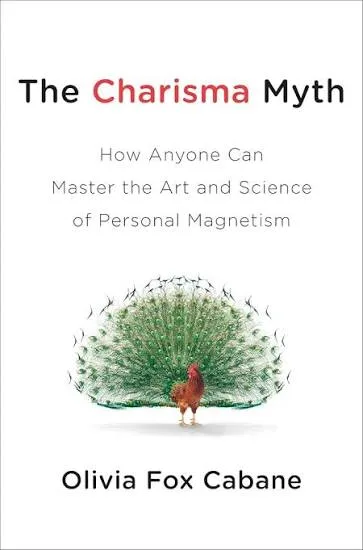 A guide for amping up your aura: “Olivia Fox Cabane’s The Charisma Myth is a great book for founders looking to improve their stage presence and understand how to communicate in a manner that captures an audience’s attention. This is an extremely important skill when fundraising; you need to stand apart from the dozens of others seeking capital from the same investors.”
- An incisive take on the American berserk: “At a time where Canada-U.S. tensions are running high, Ezra Klein’s Why We’re Polarized provides great insight into how the U.S. political and social system created the polarization we see today.”
- An ex-PM’s portrait of our national pastime: “On a lighter subject, Stephen Harper’s A Great Game examines the origins of professional hockey in Canada. As a huge hockey fan, I find the history of the sport extremely fascinating.”
- Our current PM’s come-to-Jesus moment: “Everyone has heard the speech Mark Carney gave at the World Economic Forum in January. But it’s worth revisiting as it presents a vision for the new world order Canada is in the process of building. Things like Canada refusing a new trade deal with the U.S. make more sense when considered within this context. We’re all so focused on day-to-day challenges but taking a moment to think about the big picture helps put those in perspective.”
Careers: The hottest jobs in tech this week
- Carbon Upcycling, which produces low-carbon cement materials using industrial carbon dioxide emissions and byproducts, is looking for a plant operations manager and an industrial operations specialist. (Mississauga)
- Medical platform company FluidAI Medical is currently hiring several positions, including a research and development engineering associate, a technical program director and a product engineer. (Kitchener, Ont.)
- Leap Tools, which builds visualization software for the interior design industry, is recruiting for a customer success manager, an account manager, a director of marketing and several other positions. (Remote)
- Digital insurance platform company PolicyMe has several open positions, including a junior software engineer, a customer success specialist and a talent acquisition manager. (Toronto and remote)
For more, visit our jobs page
Did you know that MaRS is a charity?
Your support helps us advance Canadian innovation and science, bring our community together and transform the world for the better. For instance, through our carbon removal donation program, you can help support Canada’s most promising CDR companies through tax-deductible donations. Learn more here.
Thanks for reading! See you in two weeks.
Main photo source: iStock
Sign up for our newsletter
-
 MaRS Staff