The climate goals Canada needs to hit in 2026

Here’s how we can strengthen our food supply, secure the critical minerals we need and ensure a sustainable future.
On paper, 2025 was a tough year for Canada’s climate tech entrepreneurs. Alberta persuaded the federal government to support a new oil pipeline to the West Coast. In the U.S., the administration halted most emissions reduction efforts. And the UN all but abandoned hope of keeping global warming to 1.5 degrees Celsius.
Beneath the surface, though, new opportunities are bubbling up. The prevailing Canada-strong ethos is creating knock-on effects for startups. “There’s a growing recognition that technologies that are useful to fight the climate crisis are also useful for establishing energy independence and supporting core industries nationally,” says Alexandra Zakreski, a clean technology expert at MaRS.
Olivia Hornby, an investor and co-founder of Spring Impact Capital in Vancouver, has also noticed this shift. She suggests companies like Open Ocean Robotics, which creates marine drones packed with sensors, could benefit. “Their thesis was always around ocean monitoring for environmental research purposes, but now there is a huge potential market with the coast guard,” she says. “Every entrepreneur is trying to figure out how their technology fits into national security requirements.”
So how should Canada approach its climate goals in this new era of realpolitik and hard-nosed competition? Here is what we need to work on in 2026.
1. Get serious about solar
The problem: Canada needs more power. By 2050, demand for electricity is expected to at least double. China and the EU are surging ahead, adding hundreds of gigawatts of renewable energy each year to cut energy imports. We’ve been much slower on the draw. In fact, last year natural gas accounted for 16 percent of Ontario’s power supply, the highest since 2012.
The solution: Embrace solar power, which accounts for just 1 percent of our generation. Mike Andrade, CEO of Toronto-based Morgan Solar, blames the slow uptake on inertia from decades of relying on sources like hydro and natural gas as well as the incorrect assumption that Canada isn’t sunny enough (Toronto gets as much sunshine as Milan). “I don’t see how it doesn’t work for us,” says Andrade. “The sun shines on everyone in the world. So, giving people the tools to use the sun to better their lives is, in my opinion … one of the most fundamental technological adaptations we could pursue.”
Solar power was having a good run in the early 2020s when Alberta, Canada’s sunniest province, was backing it heavily. In a few years, the province went from having almost no solar power to meeting nearly 10 percent of its needs with it. Sara Hastings-Simon, an associate professor at the University of Calgary, puts that down to a concerted effort from the government to educate the public and incentivize solar. “Often a technology doesn’t get adopted because people aren’t really aware of it,” she says. “You need top-down guidance and pressure on utilities from elected officials who can understand this would be beneficial.”
Unfortunately, Alberta has now placed onerous restrictions on new renewable projects. Solar also rated only a passing mention in the federal government’s November budget, which included $60 billion in infrastructure spending.
Ray of sunshine: Solar energy has economics on its side. Last year, it became the cheapest form of electricity generation, and countries like Pakistan are seeing massive growth in solar power. In Canada, some remote communities are making similar calculations, replacing diesel generators with cheaper solar. “It’s the democratization of power,” says Andrade.
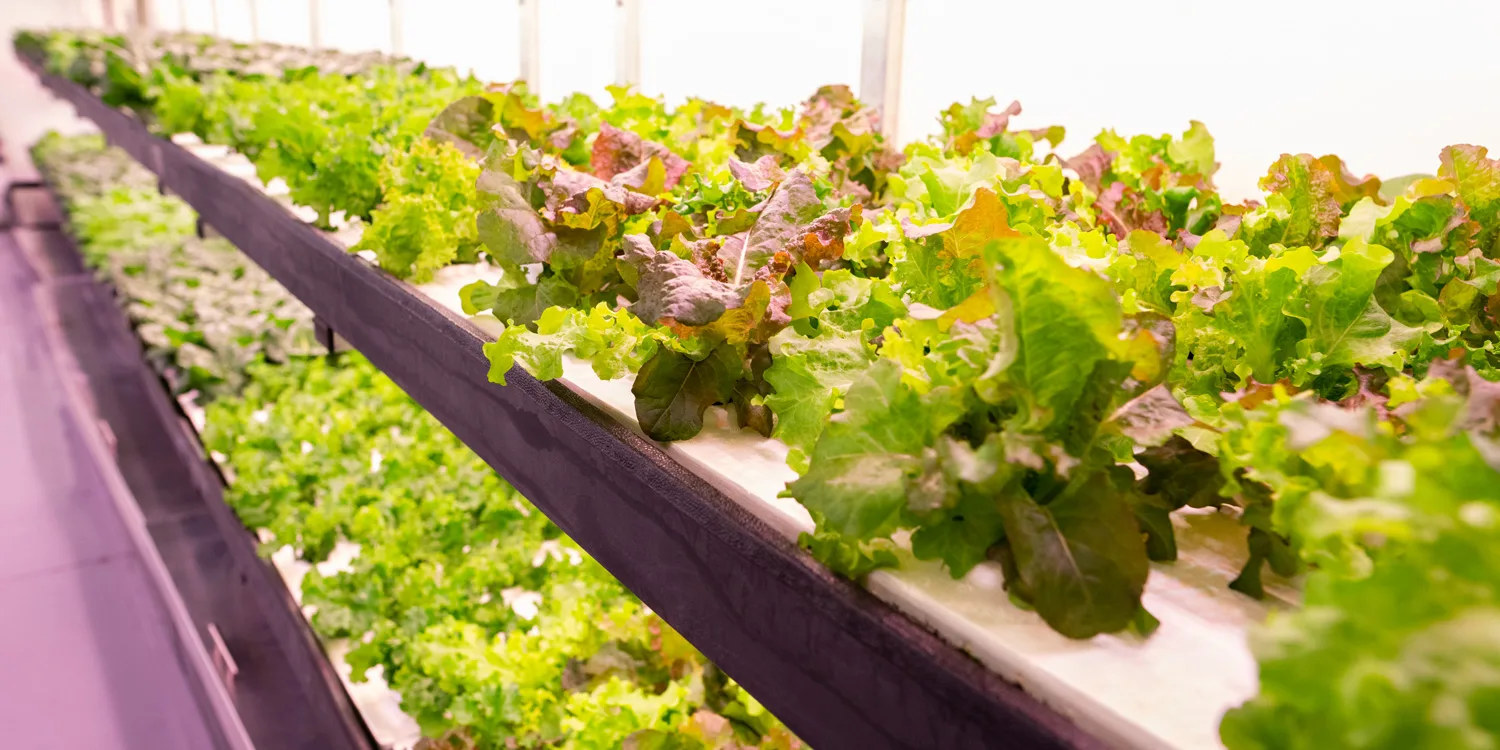
Ottawa company Growcer has established 135 modular, climate-controlled farms, which are about the size of a shipping container, across the country. Photo courtesy of Growcer
2. Fix our food supply
The problem: Canada is a messy eater. With our cool climate and short growing season, we import 80 percent of our fruit and 60 percent of our fresh vegetables. This requires expensive and energy-hungry refrigerated supply chains that are both polluting and easily disrupted. In fact, close to 40 percent of our food is wasted before it reaches our plate.
These vulnerabilities have existed for years. But the one-two hit of pandemic shortages and trade-war anxiety has renewed interest in ensuring our supply chains are sustainable in all senses of the word.
The solution: One answer is to bring more production back to Canadian soil. According to Farm Credit Canada, farmers are increasingly using industrial-scale greenhouses to extend the growing season for such crops as cucumbers, tomatoes and peppers. But some innovators are bringing production even closer to communities through modular, climate-controlled farms. Growcer operates 135 such farms in Canada, which are about the size of a shipping container and can provide leafy greens year-round. The technology is particularly useful for remote and First Nations communities where it can be 50 percent cheaper than importing food.
Canadian companies are also innovating throughout the food supply chain. Data centre operator QScale is planning to use the thermal energy generated by its AI chips to heat greenhouses. Knead Tech’s platform is designed to tackle the tricky logistics of coordinating the collection and redistribution of surplus food. And a startup called Hydrocool is in the early stages of developing a hydrogen-powered refrigeration unit for delivery trucks that could replace the polluting diesel systems currently in use.
3. Take some calculated risks
The problem: Canadian clean technology companies face huge challenges financing their first commercial facilities. Seed investors will cut moderately sized cheques to get a company off the ground and later-stage backers will swoop in when a technology has been well proven. In between, investors are scarce.
As a result, many entrepreneurs look south for funding, often taking their potential for job-creation and intellectual property with them. “I’ve met a number of founders who went to the U.S. and got tens of millions from the Department of Energy, and the permitting process was at least two times faster,” says Hornby at Spring Impact Capital.
The solution: With the U.S. turning off the taps for financing climate innovation, Canada has an opportunity to retake the initiative.
Funding is available here. For instance, Hydrostor, which builds huge energy storage systems, recently raised U.S.$200 million to fund development at several sites. (The Canada Growth Fund and the Canadian Pension Plan Investment board were among the backers.) But Canada needs to find more ways to bring pension funds and large institutional investors off the sidelines, says Zakreski, the MaRS clean tech expert. “I don’t think we necessarily need more money. We need investors to be comfortable entering these kinds of projects.”
She suggests governments could remove some of the risk by deploying their own money through project financing or extending guarantees to co-investors. They could also use the power of their procurement budgets to support emerging technologies, as the City of Toronto has done with projects that have adopted geothermal energy systems for heating and cooling and to electrify some of its garbage trucks.
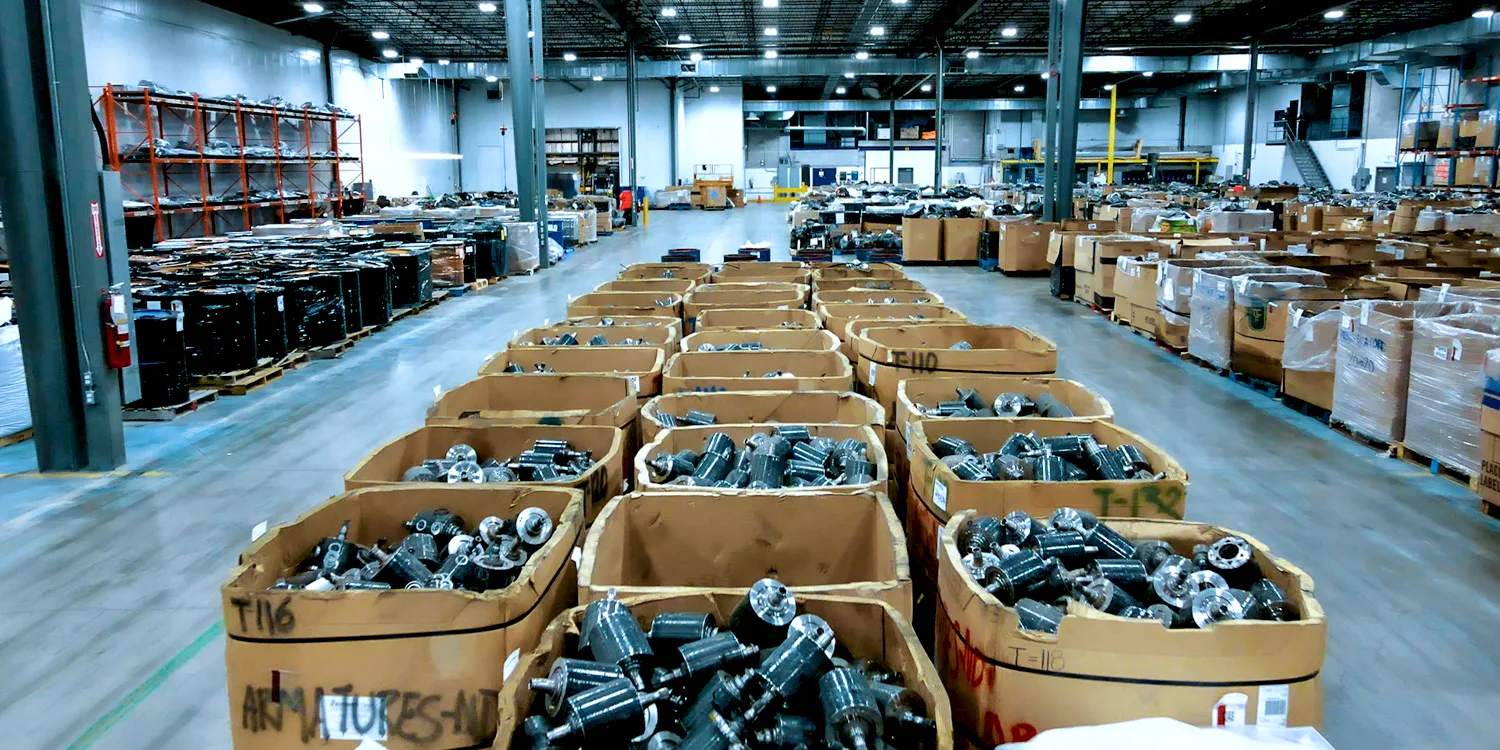
Cyclic Materials has developed a sustainable approach to rare earth mining: it recovers critical minerals from old electronics, aging EVs and discarded appliances. Photo courtesy of Cyclic Materials
4. Own our mineral supply chain
The problem: Magnets made with rare earth elements are essential for batteries and electronics, but their global supply is dominated by China. According to the International Energy Agency, Chinese minerals are used in more than 70 percent of electric vehicles made outside of that country and nearly all power grid batteries. This year, that situation shifted from uncomfortable to downright dangerous as Beijing twice imposed export controls. Although China has eased its restrictions, the episodes highlighted the urgent need for Canada to diversify its mineral sources.
The solution: Canada needs to create a well-managed, integrated supply chain at home by building the refineries that process and purify the minerals, says Nelson Switzer, a co-founder and managing partner at Climate Innovation Capital. “Then, we’d have a series of products that we could sell at a premium instead of getting the Canadian discount for raw materials, which we always tend to do.”
Not all minerals are underground: Cities sit on piles of rare earth minerals locked in old electronics, aging EVs and discarded appliances. Much of it goes to landfill, but today’s scramble for minerals is making recycling economically viable. Ahmad Ghahreman, co-founder of Cyclic Materials, calls North America’s e-waste “a massive above-ground reserve,” like “a domestic mine that has never been developed.”
5. Build better
The problem: Buildings account for 18 percent of Canada’s emissions. Though there’s a long list of market-ready technologies that could reduce their carbon footprint — geothermal heat pumps, solar panels, massed timber frames and low-carbon concrete — none have yet been adopted as standard by the construction industry. In a recent report, the Canada Green Building Council suggested that “many developers incorrectly consider voluntary standards cost-prohibitive, do not understand the value of sustainability investments and lack inhouse capacity to build more sustainably.”
Overcoming that inertia is an urgent need. With 3.5 million new homes being built across the country over the next five years, we’re in danger of locking in higher emissions and higher operating costs for generations.
The solution: We need to play the long game and build homes for the climate and energy mix we expect to have in 20 or 30 years.
Alongside smart heating systems and low-carbon materials, Switzer suggests new homes and infrastructure should be built to operate on a flexible electrical grid that can respond to fluctuating demands and supply. “Homes should be smarter, able to store energy and use it to reduce demand and coordinate with the grid at peak times,” he says. “Imagine every condo, warehouse and school that we build automatically makes the grid cleaner, housing cheaper to operate and the country more climate resilient.”
What else could help: The federal government, which owns around 38,000 buildings, could stimulate the market by adopting and showcasing more innovative technologies in its own portfolio. “Government is an important customer for companies in this arena because it provides a stamp of approval that this technology is worth deploying,” says Zakreski.
Tyler Hamilton is the senior director of climate at MaRS. Learn more about how we are helping to accelerate the growth of high-potential startups working in cleantech.
Featured image courtesy Ocean Robotics
-
 Tyler Hamilton