The real story Canadian investors want to hear

How to perfect your pitch.
Startup founders are, by necessity, good at a lot of things. Generating ideas. Building products. Finding customers. Sometimes, though, they struggle to communicate the impact all this work is having. But a good story can be the difference between a big cheque and an empty promise. Below, Wittington Ventures’ Zeeshan Ali lets Dominique Ritter in on the secret to great storytelling.
Also, in this week’s newsletter:
Stories from the ecosystem, upcoming events and the hottest jobs this week
The art of the spiel
Want to hear a good story? The answer, according to brain science, bestsellers and bingeable TV series, is a resounding yes. A powerful narrative has the power to change our perspective, build empathy and light up our neural circuits. Bonus content: Being a skilled storyteller can even contribute to longevity (is creative writing tech the next biohacking frontier?).
All of which makes storytelling a requisite business skill, particularly in Canada’s startup community.
“Storytelling is a superpower for founders,” says Zeeshan Ali, a partner at Toronto-based Wittington Ventures and an early-stage investor in climate and healthcare. “And for early-stage founders, who don’t have much traction or a product, storytelling is the product. Not only from a perspective of raising capital, but also acquiring customers and driving consumer interest.”
Ali will be appearing at Impact Health next week. To get a sneak preview of his session, we spoke to him about the best way to craft a message that lands with investors. — Dominique Ritter
Can you tell us a good story about the value of telling a good story?
Just this morning, I spoke to a founding team building an AI companion for individuals with Alzheimer’s in a care-facility setting. The care chatbot speaks to Alzheimer’s patients during staff off-hours and tracks what they’re doing throughout the day, which is unlocking data and insights not only for their families, but also for care facilities. It can have a big impact. Stories like that get me extremely excited for the world that’s evolving around technology.
How can a founder use a pitch to connect with investors, clients or their own team?
A good story is anchored in simplicity. Why are they building what they’re building? Why is the problem significant? Why is it an unmet need? Building up the narrative around the “why” enables a founder to explain what their solution is.
At the early stage, an investor is betting more on the founder than a product. Communicating their background, experience and passion for what they’re building is fundamental.
There’s a lot of emphasis on providing hard data to support the potential value of a venture. How does storytelling fit into the picture?
Within the healthcare setting, where you have regulations and consumer trust that needs to be garnered, the best way to back your technology is with validated data and expertise. At the same time, that needs to be linked to the future vision and strategic insight of where a certain industry is going. Bridging those two worlds is where I’ve seen founders truly succeed in raising capital and building confidence.
Do you have an example of that?
I was an early investor in the world of AI scribes. At the time, clinicians were very hesitant to have AI record conversations with patients. But the opportunity to accurately capture what your patient is saying and reduce the amount of after-hour work has been a game changer for clinicians. When the company was scaling, the critical validation point was the amount of growth the company was having in terms of clinician adoption. Two years later, that market has since ballooned, with multiple AI scribes and incumbents building their own.
It can be difficult to convey complex technical ideas in narratives that resonate. What’s your advice on managing that balance?
I always tell founders that capital raising is a journey, with multiple touch points. In the first conversation, you’re building a relationship with your investors. And as you progress to a second and a third conversation, that’s when the science, the details, the technical elements of the business can come through. I think investors appreciate being educated on the “why” behind what they’re building, because founders are truly the experts.
How should founders be thinking about structuring their pitch for the most impact?
Even before starting their pitch, founders should think about who they are pitching. What are they investing in? Why? Understanding the investor’s focus area and the background of the fund can help them tailor their story.
If you could remove one common mistake from all pitches, what would it be?
Founders believe they need to overindex on market size. For me as an investor, it’s more about the thought process: How will they build up the market size for their business? I’m more interested in understanding a market, walking through the process and the rationale, as opposed to hearing “I’m building in a hundred-billion dollar market.”
Stories from the ecosystem
DEEP TECH: This Quebec startup’s quantum-sensing magnetometer is keeping tabs on true north.
HEALTH: Decarbonization in Action is working to shrink healthcare’s carbon footprint.
DEFENCE: Scaling up dual-use technologies can help Canadian supply chains, support environmental initiatives and foster new innovations.
FINANCE: BDC returns to life science investing with a new $150-million fund.
CLIMATE: The world’s oceans need to pop an antacid — here’s why.
HEALTH: How Toronto doctors and researchers are breaking new ground in treatments for advanced heart and lung disease.
MaRS Monthly: April
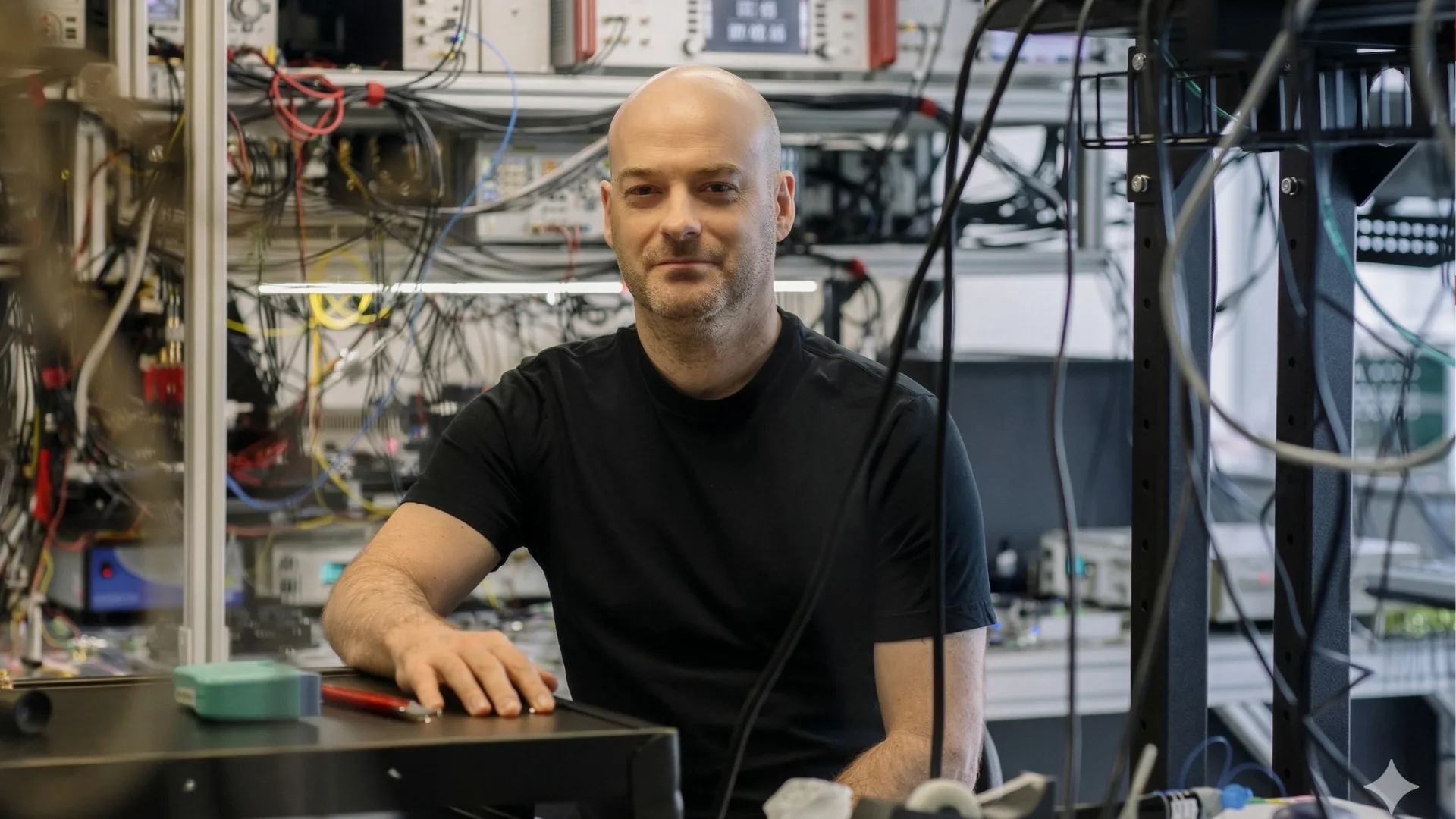
Get caught up on the latest tech news in this 93-second video: MaRS and Mantle Climate’s new data centre report, Providence Therapeutics’ mRNA vaccine trial in Australia, Xanadu goes public and much more.
Upcoming events
- The third annual National Healthtech Innovation Conference brings together innovators, funders and clinicians for a two-day summit in Kitchener-Waterloo. April 21 and 22.
- The Health Innovation Hub at the Temerty Faculty of Medicine and the Schwartz Reisman Innovation Campus Ecosystem host “Women Driving Health Innovation: Celebrating Excellence in Entrepreneurship.” April 22.
- The International Society for Heart & Lung Transplantation’s 46th annual meeting and scientific sessions takes place in Toronto April 22–25.
- Impact Health, MaRS’s annual health tech summit, features dozens of speakers, including Handol Kim, Rachel Harding, Muhammad Mamdani and John Valliant. April 23.
- The NACO Summit in Ottawa brings together 500 founders, investors, senior industry leaders and policy-makers for three days of keynotes, panels and pitches. May 5–7.
For more, visit our events page
In the queue: What we’re reading, watching and listening to at MaRS
This week, Misghana Kassa, a senior associate in health sciences at MaRS (who will also be hosting a pitch session at Impact Health), shares his picks.
 A round-up of healthtech must-reads: “News moves so fast these days that staying out of the loop is the quickest way to get left in the dust. Some weekly reads for me include The Healthtech Nerds (deep dives and insights that are helpful for understanding the business and build of modern healthtech); Second Opinion (a sharp, engaging, journalistic lens on the intersection of health and tech); Liminal MD (the clinician’s perspective on how tech impacts the front lines of medicine. For nuance and community notes, I pair Bryan Vartabedian’s writing with calls to physician friends).”
- A podcast for anyone who wears clothes: “Avery Trufelman’s Articles of Interest is a masterclass in storytelling. Whether you care about fashion or not, she takes niche topics (like, say, the history of zippers) and makes them engaging and universal. Her research is thorough, her delivery effortless. I recommend it to absolutely everyone I know or meet.”
- A rep cinema worth leaving the house for: “I’m an avid film lover and reasonably so, the Revue Cinema is my sanctuary. Unlike the big chain theatres (also great, serve a purpose), the Revue is a communal space that champions the oddball, the class and the experimental. The last movie I saw there and loved was The Drama.”
Careers: The hottest jobs in tech this week
- CoLab Software, which makes web-based engineering collaboration tools, is hiring a senior backend software developer and a senior frontend developer. (Remote)
- New School Foods, purveyor of sustainable meat and seafood alternatives, is hiring a digital content producer and a production manager. (Toronto)
- PheedLoop, which makes event management software, is looking for a product designer. (Toronto)
- Workforce management company Rippling is hiring a payments product lead, a manager of payment operations, an HR solutions consultant and many other positions. (Multiple cities)
For more, visit our jobs page
Photo illustration: Stephen Gregory; photos: Unsplash
Sign up for our newsletter
-
 MaRS Staff