This virtual health platform is filling gaps in pediatric care
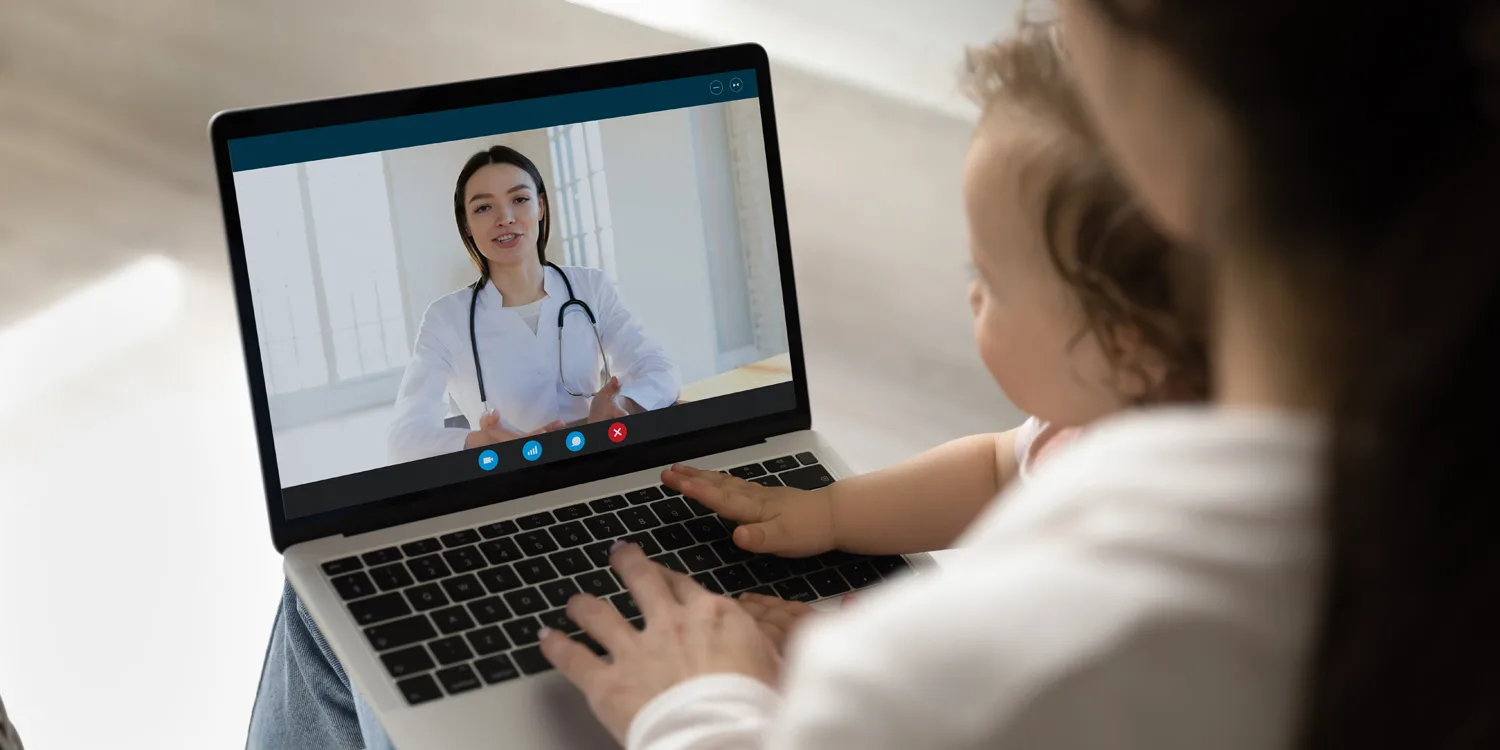
Emergency rooms across the country are packed with sick kids whose parents don’t have access to primary care providers. Staffed 24/7 by real doctors, nurses and social workers, KixCare’s virtual platform offers another option.
It’s been a doozy of a flu season. Cases in Canada reached a three-year high in December, with emergency rooms across the country packed, and many more kids with stubborn flu symptoms admitted to hospital than in previous seasons. Fewer people got their flu shot in 2025, and the available vaccine was mismatched to this year’s dominant strain — factors that contributed to more severe outcomes.
But outside of that seasonal chaos, there was a more insidious reason for ER overcrowding. Physicians, overburdened by administrative tasks and suffering from burnout, are in notoriously short supply; as many as 6.5 million people across the country don’t have a family doctor, according to the Canadian Medical Association. When consulting a primary care provider isn’t an option, families often head to the ER even when they don’t have to, and can spend hours in triage waiting to be seen for relatively minor complaints, like a rash or persistent ear infection.
KixCare, a virtual pediatric health platform, is trying to remedy this situation. The company was founded in Toronto at the height of the pandemic, when virtual care was the only option. It remains the only such platform in Canada to exclusively focus on patients under 18, and with a team of 80 practitioners that includes doctors, social workers and nurses, it’s evolved into a 24/7, one-stop shop to access physical and mental healthcare for children and teens. While initially covered by OHIP, after the province reduced payments to doctors for virtual care, KixCare pivoted to a paid subscription model (fees start at $29/month). According to the company’s CEO, Adam Saperia, KixCare is able to resolve 92 percent of cases it receives — all without ever seeing a patient in person.
Here, Saperia, and Ashton Thornton, the company’s director of clinical services and a registered nurse, talk about returning to holistic healthcare, reducing wait times and AI’s role in virtual medicine.
When KixCare started, what were you hoping to address?
Adam Saperia: There are 1.5-million kids in Canada without a family doctor. So, inevitably, when they have a health issue, they’re going to the emergency room because there’s no other option. When you have a family doctor or pediatrician, that person is not on-demand. You can’t call your family doctor and say, our daughter is sick, we’re going to be there at nine o’clock. And when it comes to mental health services, the wait to see professionals can be months or years, depending on where you are and who you need to see. There are all these barriers, which obviously impacts the child who’s delayed in getting care, but it impacts the family as well. If parents are taking a day off work to sit in an urgent care clinic for an issue that could have been resolved virtually in a matter of minutes, it has a huge impact on the workforce. Especially working moms, who disproportionately bear the brunt of those responsibilities.
As a nurse, Ashton, what have you seen on the frontlines?
Ashton Thornton: Most of my experience has been at SickKids. We see people showing up at the emergency department for non-urgent concerns solely because they didn’t know where else to turn. Our program allows families to turn to pediatric experts and ultimately prevents them from attending in-person care when it’s not necessary. It also lets them ask questions that an emergency department or a primary care office doesn’t have time for. So many parents wonder, “Is this normal? Am I doing this right?” The healthcare system is so stressed and fragmented that we’re not able to get the care we want. This virtual space is a way to go back to proactive care.
Where’s the greatest need right now? In cities, where there’s greater competition for doctors? Rural areas? Marginalized, underserved communities?
Saperia: We’re seeing a lot in all those different categories. We’re doing work with Indigenous communities and we’re rolling out a program, starting in Quebec. Right now, kids from those communities can be waiting weeks to see a pediatric expert.
How do you find your practitioners?
Saperia: These are all practitioners who work in a clinic or hospital. The perfect example is a nurse like Ashton — there’s only so much they can do physically in a given week, working 12-hour shifts. But on a day off, it’s easy to provide some time working virtually from home. It’s taking excess capacity that’s there, and it means our practitioners have the best hands-on experience in clinical settings. That’s how we’re able to resolve so many cases online — the nurse you see after waiting eight hours in person is the nurse you’re going to talk to on our platform after eight minutes.
Anytime a Canadian has to pay a fee for a medical service, it raises the spectre of two-tier health care. Is that a concern for you?
Saperia: We still have the public model in Quebec. And anytime somebody is seeing a pediatrician, if it’s a service that is insured by a provincial health plan, that’s being billed to the health plan. A big area of our focus is getting this included in employee benefits plans, where virtual care is becoming increasingly prominent on top of the typical health and dental.
Pandemic aside, I think many of us would prefer to see a doctor in person if possible. Is it challenging to convince people of the value of virtual care?
Saperia: We’re big believers in the value of in-person care as well. There are obviously cases where a child needs to be seen in-person and we encourage families to see their primary care provider if they have one. This is meant to be a complement to an existing relationship, rather than replacing a family doctor or pediatrician.
Thornton: Ultimately, families are busy. I’ll speak for myself, as a busy mom who’s working with two kids who are in rep hockey. We’re constantly on the road; kids get sick while you’re away at a hockey tournament and what do you do? A lot of us are used to modern technology and want things that are convenient. Virtual allows us to connect to the services we need.
Healthcare isn’t supposed to be reactive. We really are supposed to intervene and teach and support families and children prior to anything going on. Knowledge is power.
Mental health issues are something we’re all dealing with, especially those of us who have kids. But proper support and treatment takes a long time. Do your practitioners have the time to deal with something that complex?
Saperia: More companies are providing dollars for mental health services in their benefits. It’s great to have those dollars, but if you can’t get an appointment for six months, it goes unused. So we help unlock those benefits. If somebody needs six or eight sessions with a social worker or a psychotherapist, and we can get that going in a matter of days instead of being on a waiting list for six months, that’s game changing.
Thornton: We’re able to do a whole mental health assessment virtually. We’re able to support parents with all their questions, work with therapists to build skills with the parent and with the child.
SickKids has a virtual urgent care unit, and we all have access to Health811 (formerly Telehealth). What makes KixCare different?
Thornton: SickKids’ urgent care is an extension of their emergency department. It typically supports children who have non-urgent concerns: a runny nose, nasal congestion. Our platform takes care of all that, but it’s not solely our focus. We focus on all six pillars of care as a child grows from zero to 18: their growth and development, their feeding and nutrition, their social and emotional skills, their mental health. We support parents with coaching and teaching.
We’re hearing a lot about AI in healthcare these days. Is that something you’d consider using?
Saperia: We look at AI as a tool that allows our providers to do more, not as something to provide care. If we can use AI to speed up the process for a nurse or doctor taking a consult note so they can spend more time with a patient, fantastic.
Thornton: The first point of contact at KixCare is a live human nurse, not a bot, not an AI asking questions. A worried parent wants to know there’s somebody there to answer their questions right away and understand what they need. That human approach can never be eliminated in healthcare — including in the virtual space.
Discover other ground-breaking solutions on MaRS Connect, a curated digital platform designed to accelerate real connections between Canada’s top startups and serious adopters, investors, and ecosystems leaders.
Image source: iStock
-
 Jason McBride