What it takes to build a first-of-a-kind climate solution
The leap from prototype to breaking ground on a commercial production facility is a massive one. Here’s a look at the obstacles facing cleantech companies at this stage — and what can help them scale their solutions.
So far this year, the waters of Tufts Cove near Halifax have absorbed an additional 4,200 tonnes of carbon dioxide from the atmosphere. We know about this small but notable reduction in greenhouse gases because it’s the site of a world-first project by Planetary Technologies. The company is turbocharging the oceans’ natural ability to absorb carbon dioxide through a technology that adds precise amounts of alkaline minerals to the water.
Since starting the project in 2023, Planetary has proven its technology and perfected the measurement of carbon dioxide uptake in a roiling sea. It has also sold the world’s first carbon credits from ocean alkalinity enhancement. Now, the startup arguably faces its biggest challenge yet: scaling from pilot program to early commercial stage and ramping up the amount of carbon credits it can deliver.
Climate tech ventures face numerous hurdles when they attempt to advance from a ground-breaking prototype to breaking ground on commercial production facilities. Building a first-of-a-kind (FOAK) manufacturing plant costs tens or even hundreds of millions of dollars, but investors willing to write those kinds of cheques are scarce. As far back as 2016, scholars at MIT identified this “missing middle” as a phase where many climate tech companies fail. Today, climate tech ventures face a $150-billion funding shortfall globally, according to catalytic investor Elemental Impact.
Following the boom in climate tech funding in the early 2020s, dozens of Canadian ventures have now reached this crucial juncture. An emerging network of support services, including MaRS First-of-a-Kind Lab, and new approaches to funding are helping tip the odds in their favour as they try to bridge the FOAK gap.
“There is a high failure factor at this stage,” says Amit Modi, founder of FGS, a fractional project development firm for sustainable technologies, and an advisor to the FOAK Lab. “Only 10 to 20 percent of companies in climate tech reach a large enough scale that industries accept and use their technology in decarbonizing their daily activities.”
Here’s what you need to know about FOAK projects, why they’re so hard to fund and why there are reasons for optimism.
What is a FOAK project?
Most climate tech companies follow a predictable growth path. They progress from a promising idea to a lab-built prototype and then a small-scale pilot project to prove their technology in the real world. After that process, which takes several years, they aim to scale up into commercial production, typically by constructing a significant manufacturing facility costing between $50 million and $200 million — their FOAK project.
In the past, these emerging project developers attempted to leap from pilot to full commercial production in one bound. A new generation of companies is slicing the journey into more manageable steps, with smaller demonstration and pre-commercial plants that let them work out the kinks and prove their technology to customers and investors. For instance, Carbonova, which has developed an energy-efficient process for making carbon nanofibres, is planning a commercial demonstration unit in Calgary. It will have an annual production capacity of 25 tonnes of nanofibres and has a modular design that enables it to grow with demand.
Why are FOAK projects so hard to fund?
The venture capital model that has worked well for many tech sectors is ill-suited to the longer timelines and engineering complexities of climate tech. “The venture math doesn’t work,” says Trish Nixon, a venture partner at Amplify Capital and FOAK Lab advisor, adding that VCs typically seek software-style businesses that are less capital intensive and can generate returns within a few years.
It is also difficult for startups to secure funding from infrastructure investors such as pension funds, which prioritize steady returns. FOAK projects can seem overly risky.
To complicate matters further, investors often require ventures to have multi-year customer contracts in place before committing. But customers are reluctant to purchase from a facility that has yet to be built. As a report last year from the University of Toronto’s Global Climate Finance Accelerator noted, each market participant waits for the others to move first. The result is “project deadlock.”
Are there signs of positive change in the market?
There are several. Recognition that VC funding is an awkward fit for FOAK projects has prompted a concerted effort from academia and industry groups to design a capital structure that works. According to a MaRS analysis, more than 50 organizations in Canada provide climate venture funding and support. These include VCS, such as Evok Innovations and ArcTern, debt financing providers, such as BDC, TD Innovation Partners and RBC X, as well as government funders, family offices, foundations and growth equity investors, such as Goldman Sachs and JP Morgan. However, Alexandra Zakreski, senior manager of cleantech ecosystems at MaRS, cautions that funding specifically for FOAK projects is still lacking. “That has prompted catalytic philanthropic vehicles like Schmidt Family Foundation and others to lean in further to support companies at this stage, but there is a serious lack of capital for these projects in the ecosystem.”
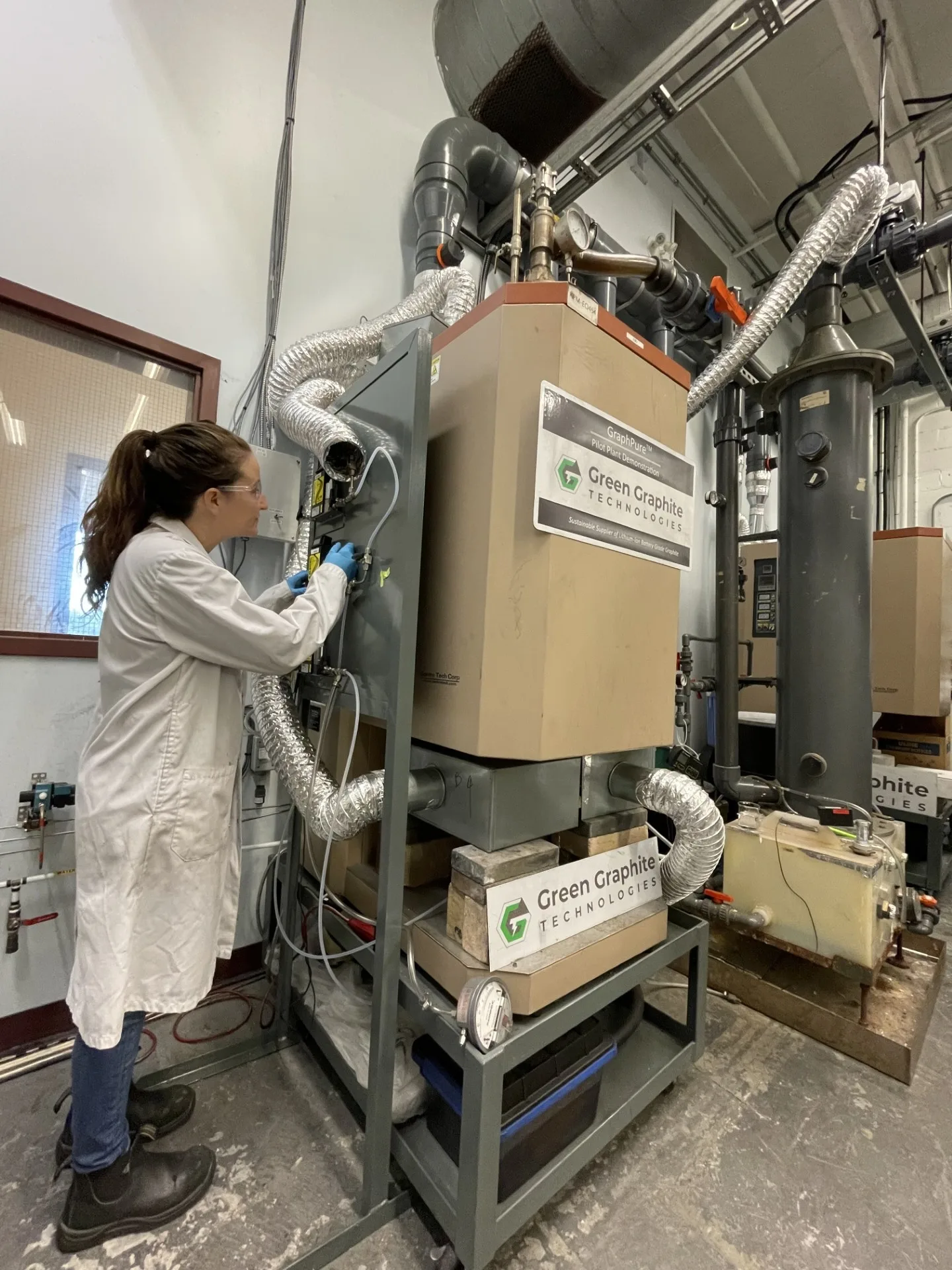
For their part, entrepreneurs are making their projects more fundable by focusing on winning customers through cost competitiveness and early proof of reliability. For instance, Green Graphite, which is pioneering a new technique for making ultra-pure graphite, is developing a small demonstration plant in Mississauga. It will validate the company’s ability to hit purity targets demanded by the battery industry and confirm its unit economics. Green Graphite plans to use its facility to secure customers, which will help unlock investment for a commercial-scale facility planned for 2029.
What other hurdles do startups face?
When ventures reach the FOAK stage, they suddenly encounter a vast range of issues that were irrelevant when they were focused on developing their technology. Modi puts it succinctly: “They’re no longer building a thing, they’re building a business.” Businesses need customers, suppliers, municipal permits, insurance, legal advisors and more. Ventures must navigate these while also managing development of the new facility and any engineering challenges that emerge.
What support do ventures need?
Ventures need help on two fronts. The first is plugging knowledge gaps in such areas as finance, project development and business model validation. Finance can be particularly challenging as FOAK funding can be exceptionally complicated. It is not unusual for startups to need philanthropic first-loss capital to catalyze other investors alongside patient equity capital and specific project financing. “You can’t use VC money to fund all the way through commercialization, so startups need expertise to structure their projects in ways that attract multiple different types of capital,” Nixon says.
The second is connections to the broader ecosystem of potential funders, partners and customers to help them raise their profile and land the deals they need to grow. Support programs such as MaRS FOAK Lab play a vital role in convening these networks.
What role can government play?
Canada is seeing a surge of interest from climate tech companies and investors looking to build FOAK projects here. “Alberta is becoming a mecca for new clean technology projects,” says Modi, who is working with two companies from the Netherlands and the U.S. that are building pilot projects in the province because of its funding environment. Other provinces are also establishing FOAK-friendly policies, such as Ontario’s Hydrogen Innovation Fund, which can provide grants of nearly $5 million.
However, there is still work to be done on improving Canada’s regulatory environment. “Our permitting timelines are still very long,” says Modi, who points out that some FOAK projects can take 18 months to receive the necessary permits. “These projects only have limited capital and they have cash burn, so you can put two and two together and see how they can be in a lot of trouble.”
What does success look like?
It has been a decade since the MIT researchers identified the FOAK funding gap. In a recent survey, 51 percent of investors still identified FOAK as the hardest stage to finance. Programs like the MaRS FOAK Lab will be successful when that number starts to come down. Today, there is a growing list of Canadian companies that are finding paths through the missing middle. Hydrostor, Carbon Upcycling and Svante are all commercializing and scaling up their impact. Companies like these and, hopefully, the five ventures in the MaRS FOAK Lab cohort, provide templates for both the ventures coming after them and the investors who may previously have shied away from these projects.
A supportive ecosystem and a playbook for FOAK are beginning to emerge. They’re based around sophisticated capital stacks, coalitions of investors operating in sync with government and philanthropy, and ventures with the expertise to design fundable projects. This is our best chance yet of closing the funding gap and enabling impactful Canadian technologies to flourish.
Read more about the startups in the first cohort of the MaRS FOAK Lab here.
-
 MaRS Staff