How Cheelcare ramped up production of its mobility device
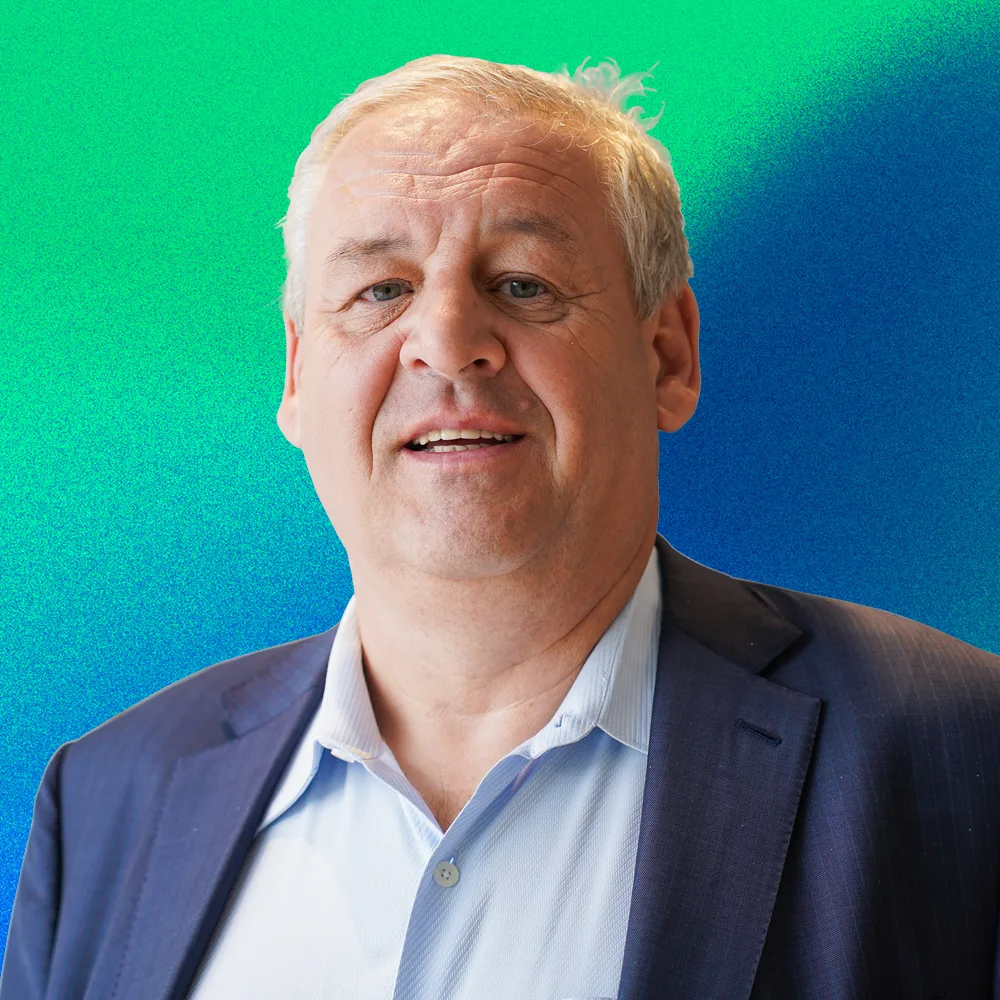
Through the Mobility Unlimited Hub, co-founder Eugene Cherny was able to tap into the Toyota Production System Support Center and optimize his company’s manufacturing process.
The challenge
Cheelcare has been developing medical mobility devices since 2015. But manufacturing challenges were impeding the company’s ability to scale up operations to meet demand.
The impact
As part of the inaugural cohort of the Mobility Unlimited Hub — a collaboration between MaRS and the Toyota Mobility Foundation that aims to speed up the commercialization of accessibility devices — Cheelcare received invaluable support on streamlining production. The result: optimized processes using the same number of resources.
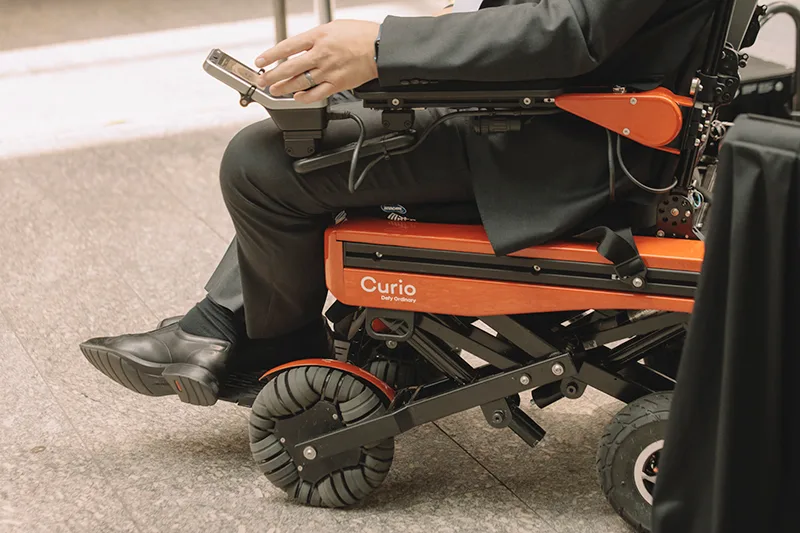
Eugene Cherny and Dima Paltsev had enjoyed great careers — Cherny in a multibillion-dollar software company and Paltsev in finance and strategic development across various industries. But they were eager, as Cherny explains, “to do something good for humanity.” In 2015, they joined forces to develop technology they felt was lacking in the accessibility market, and came up with the idea for what would become the Curio robotic wheelchair.
“The technology really hadn’t changed since 1952, when George Klein invented the first power wheelchair,” says Cherny. Unlike typical power chairs, Curio’s “legs” are independently articulated so the chair can move in any direction. While engineers were fine-tuning the design, Cherny and Paltsev developed other products: a backup camera for people who are unable to turn around to see what’s behind them as well as an add-on device that essentially transforms a hand-propelled wheelchair into a scooter.
“Not everyone is built the same, but most of the solutions — even now — are all the same,” Cherny adds. “We offer about 200 different combinations.” That means a wheelchair that is accessible to everyone, including those who can’t move their fingers, children lacking hand strength and people post-stroke who need controls on a different side.
Once designs were in place, the company faced a new obstacle. In order to produce enough Curios to demo with suppliers, buyers and customers, it needed to expedite its development cycle.
“Working with the Mobility Unlimited Hub has completely transformed how we operate. It helped us rethink and streamline the production of both our Companion power add-on and the new Curio Robotic Wheelchair in ways we didn’t even realize we needed.”
Eugene Cherny, CEO, Cheelcare
Gaining valuable insights
Cheelcare already had some history with Toyota — the multinational’s mobility program purchased two Curios during the 2020 Olympics in Tokyo — and was eager to be part of MaRS’s inaugural Mobility Unlimited Hub (MUH), which launched in March 2024.
“The hub bands resources together to help ventures in the active mobility space get to the next level,” explains Morgan Lorimer, a senior manager at MaRS. Participants in the program have access to entrepreneurial, financial, legal and media expertise. Plus, MUH places a strong emphasis on peer-to-peer support, which meant Cheelcare was able to tap into the hub’s supportive community. “There’s no dedicated program like this anywhere,” says Lorimer. “It’s a super unique opportunity.”
Optimizing workflows
Over the course of the program, the Toyota Production System Support Center — a nonprofit arm of Toyota that works with outside organizations — helped Cherny refine production. Representatives of the centre regularly visited Cheelcare’s facility and shared the “Toyota Way,” the principles and behaviours that have guided the multinational.
“It’s a method of manufacturing that allows for high quality while also being sensitive to changes,” Cherny explains. “We studied our production line and identified inefficiencies.” The biggest adjustments took six to eight months to implement and targeted product quality, assembly and the ability to service post-sales.
Scaling for global impact
The experience transformed Cheelcare from a boutique manufacturer into a streamlined, highly efficient operation. For instance, it was able to ramp up production of its power add-on device from 2.5 to 14 units per day, with no increase in resources. Over the course of the program, Cheelcare doubled its team, successfully transitioned to a public listing, raised $3.5 million and moved to a 16,000-square-foot facility.
The company is gearing up for the mass-market rollout of the Curio and is preparing to expand into Australia and New Zealand. The company is also exploring batch manufacturing with Innovation Factory and community partner Linamar. By contributing to the program, Mobility Unlimited Hub is helping unlock new opportunities. Cheelcare and Linamar are currently aligning workflows and finalizing the Statement of Work to produce Curio units under ISO 13485 standards.
As Cherny learned, optimizing production isn’t about refitting a bunch of machinery. It’s a “head exercise” — ie., thinking through what makes assembly lines more efficient and how to best train staff. How many more wheelchairs could Cheelcare produce with this new attitude? “It’s a good question,” he says. “Our goal is to optimize the process. Sometimes that means a change of design for the chair, so it will become easier to assemble. We’re still in this process.”
Now part of the Mobility Unlimited Hub Network, it’s Cherny’s turn to give back. “I am sharing all the positive advice I got from the Mobility Unlimited Hub with the next cohort,” he says. “As founders we don’t necessarily know everything from day one, and it’s often more relevant to learn from others who have gone through the same experience.” He adds: “This is one of the best programs you can find.”
Founded: 2015
Program: Mobility Unlimited Hub
Services: MaRS advisory
MaRS programming is funded in part by the Government of Canada through the Federal Economic Development Agency for Southern Ontario and by the Province of Ontario’s Ministry of Economic Development, Job Creation and Trade.
Are you looking to grow your business? Learn more about MaRS venture services here.
-
 Nora Underwood