Tapping the source: How relics of the industrial age could help power the future
Aslan Renewables’ modular turbine systems tap into dormant infrastructure as a new source of hydropower. In the latest episode of the MaRS podcast, founder Andrew Murray talks about how small-scale power generation could help build a more resilient grid.
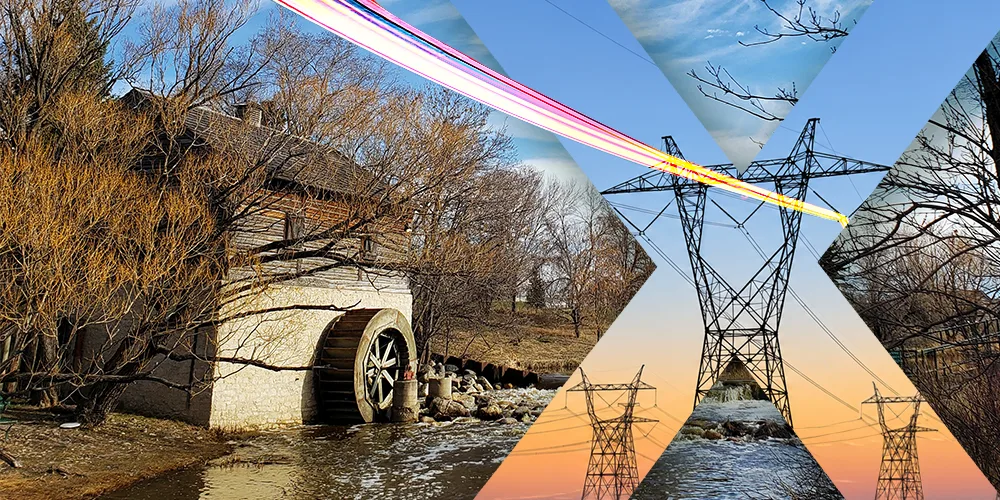
Canada has always run on water. In the 19th-century, thousands of communities developed around the textile, grist and saw mills that harnessed water power from rivers. Today, hydro generates about 60 percent of the country’s electricity. But as demand strains the grid more with each passing year, could the dams that once served those now-dormant mills provide a new source of power? That’s the vision of Andrew Murray and his startup, Aslan Renewables. During COVID lockdowns, Murray went on long walks with his father throughout rural P.E.I., where his father pointed out the untapped potential of the dams they passed. Murray seized on the idea and developed a compact, modular turbine system that used the elevation of these dams to generate reliable, clean energy. In this episode, Murray discusses our current energy crisis, why small-scale local power generation is so vital and how he’s transforming timeworn infrastructure into a technology of the future.
Featured in this episode:
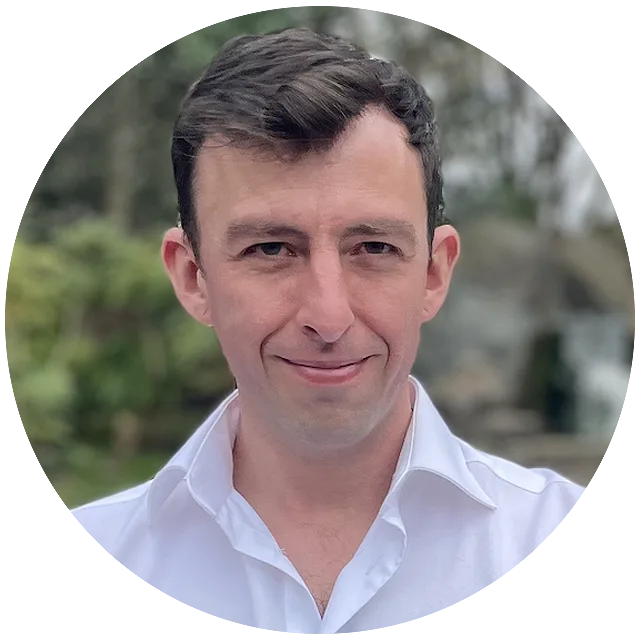
Andrew Murray is the founder and CEO of Aslan Renewables. He was previously co-owner of the Shelby Water Group, a ship chandlery and logistics company, and CEO of Broadside9, a global customer acquisition agency. In 2025, Aslan was recognized as a leader in energy-transition innovation at the Climate Impact Innovation Challenge in Singapore..
Further reading:
- P.E.I. power customers could see rotating outages to prevent total blackouts this winter
- Blackout: Canada’s impending electricity crisis and how to fix it
- Milling through history
- What if thousands of unused dams in Canada could generate power again?
- Could Trump risk century-old Canada-U.S. electricity system?
Subscribe to Solve for X: Innovations to Change the World here. And below, find a transcript to “Tapping the source.”
Narration: On Solve for X, we usually have our eyes fixed on the future. But sometimes it pays to look to history for solutions to our present challenges. In today’s episode, we’re looking at how we might reuse the relics of Canada’s industrial past to power the clean energy of tomorrow. I’m Manjula Selvarajah, and this is Solve for X.
If, like me, you go hiking along the banks of your local river, at some point you might pass a small dam, maybe a couple of metres high with water rushing through. There are thousands of these barely noticeable structures across Canada, remnants from an era before electricity, when water wheels were the main way of powering mills and other industries. My guest, Andrew Murray, believes they’re an overlooked resource just waiting to be revived.
Andrew Murray: You know, these are decommissioned mill sites. These are the mills — the grist mills, the sawmills, in some cases, textile mills — that really defined our communities.
Narration: Andrew is a scientist and founder of Aslan Renewables. His company has designed a modular system that harnesses water flowing through dormant dams to generate electricity at a community scale. In our conversation, we discuss the origins of Andrew’s idea, the growing threat of rolling blackouts in Atlantic Canada, and why he thinks the time for local power is now.
Andrew Murray: I moved from Montreal, where I’d built my first startup, back to P.E.I to be closer to my parents, really. And in an effort to stay mobile, my father and I were taking walks and going through national parks and walking the Confederation Trail, for example. And along this trail, we would see just one small dam after another. And to be honest, this was my father’s idea. He drew my attention to the fact that there was so much water moving over these structures, and he kind of said, look, you could build up an energy company around this type of water flow. And someone should be capturing that power. Especially on P.E.I. That grid is hyper-constrained. We know that more now than we ever have before.
Manjula Selvarajah: You know, you’re talking about how they’re thousands of these that are across the country. Why are they forgotten infrastructure?
Andrew Murray: I think society really just evolved past the use, the value, of these systems. If we think back to the origin of this country, these are the sites that really defined our towns and our cities. Think about the Industrial Revolution or any settlement across what we now know as Canada, this started with a successful mill that could support a community. They faded into the background as we further industrialized and grew and scaled as a people. But they’re still there. The elevation in those rivers is still maintained. And it’s an incredible blessing in a way to be able to bring them back to life to support us during a time of energy need.
Narration: For Andrew, this idea matters now more than ever. In his home province of P.E.I., he’s watching closely as the grid is under increasing strain.
Andrew Murray: Last year in 2025, in the winter, communities were told that there would be controlled, structured rolling blackouts that would be announced one to two hours before the community, or the zone, was shut off. Specific reason was demand on the grid.
CBC news clip: For the first time, the utility is preparing for what it calls rotational outages to protect the grid. That means for some communities the power could be shut off to prevent a total blackout.
Andrew Murray: So this was not attached to a weather event as you would expect, as what we’ve seen in Canadian culture in the past. This was in order to prevent grid collapse. This is very serious.
Manjula Selvarajah: What’s going on? What explains this? Is it population, is it —
Andrew Murray: It’s housing and it’s industry. So that is a grid that is hyper-constrained and that has a major demand for base load. There’s a base load sinkhole there that is not being fulfilled. P.E.I. has now invested significantly in waste-to-energy and other types of baseload they can source.
Historically, they got their baseload from New Brunswick Hydro. New Brunswick is also constrained. I think you can imagine how much worse that situation will become in 2026, this winter and next winter, and I think that this really showed Canadians for the first time that it’s not just future energy demands that are a challenge, but that our system is dangerously constrained today. This is a massive problem.
Narration: In the end, rolling blackouts or load shedding weren’t needed last winter, but the problem of a possible energy shortage remains. Now, the four Atlantic provinces are looking at ways to better coordinate their grids to avoid such problems in the future.
Andrew Murray: Every province is managing this differently, but the crisis that we’re in, the constraint on this infrastructure, is shared nationally. And, in fact, should be probably addressed at a national level. However, we know for example, that British Columbia has been in a call for power for two years, three years almost, right?
Manjula Selvarajah: Is a call to power when they put out a call out saying, “Hey, find ways to feed into our grid” is that what that means?
Andrew Murray: So when they put out a call for power, that effectively means, “Look, we are a buyer of electrons, whatever you can bring. We are increasing pricing. We are buying at a higher rate.” That was a massive, massive event in our kind of energy history or our energy culture. Now, they’ve managed that forward ever since. But New Brunswick, Quebec, and definitely Prince Edward Island are in the same position. Nova Scotia is not, because they have coal, but the hydro-rich provinces of our country have pre-committed that power to the U.S. for the past 30 years. That is not available to consumers. So, for example, Quebec in 2025 issued new rules to say they would not commit power for new industrial builds. So if you were to set up a data centre or a factory or a new industrial project within the country, you had to stand up your own power supply, be it solar, gas, anything. That is a signal of constraint.
Manjula Selvarajah: And all of these things that you’re mentioning are substantial signals. One thing that I want to reflect on — we’re also an energy exporter.
Andrew Murray: We are primarily an exporter. We don’t turn it over domestically very well.
Manjula Selvarajah: So let’s talk about this technology, because I think there’s some light at the end of the tunnel when we talk to innovators. And let’s tap into that for a little bit. So you’ve created a way to convert these dormant dams into — how can I describe it? — mini power plants. Can you describe what it looks like when it’s activated?
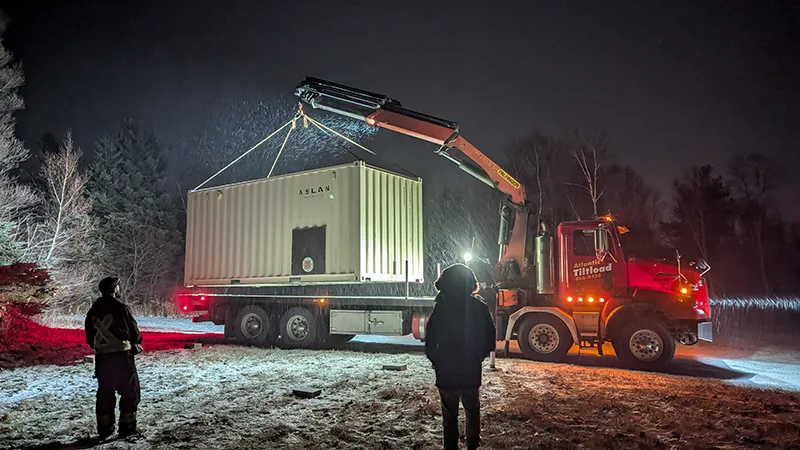
Andrew Murray: Yeah, so it comes, it shows up in a sea container. Like all Canadian clean tech, I think. We’re very into sea container solutions these days.
Manjula Selvarajah: So that’s what people get when they — when a municipality actually gets this container that shows up.
Andrew Murray: Yeah, so this gets delivered, dropped, by a boom truck on the riverbank. It’s on the side of the river. It doesn’t get built into the spillway. This is really, really important. So we don’t have to build things into the river flow. No foreign materials, no concrete, no river excavation, no drain down. This thing sits on the riverbank completely passive, and it uses a siphon technology. It, like, uses siphon physics.
Narration: For those of us who need a refresher on high school physics, Aslan’s solution essentially sucks water up like a straw, relying on the power of gravity to feed a small turbine. Andrew explained he’s also piggybacking off of tech developed for residential solar. That means the power he produces can be fed directly into the grid.
Manjula Selvarajah: How would the technology compare to other river turbines, you know, or ones that are used around tides?
Andrew Murray: So tides and small river developments in the past, like run-of-the-river, for example, have all been site-specific projects. And this is why hydropower has historically, over the past 20, 25 years, has not grown too much in our country. A solar panel you can buy off the shelf. A wind turbine, there are producers that just crank them out, right? Hydro has always been a project-based business. You look at a single site, a single, you know, tidal flow or a single river or a single dam, and you build something to extract the most power you can out of it.
Aslan has approached the hydro category in the same way that wind and solar have been productized, and that is extremely powerful. Because if we have 67,000 dormant small dams, you need a product company to activate that layer. You cannot go one at a time, right? You need a company like ours who can say, “Look, I can fire off 100 of these every month,” and that’s what we’ve built here.
Manjula Selvarajah: Now help me understand the numbers. What can one of these sites power? Is it a town? Is it a few houses?
Andrew Murray: So Aslan’s systems range from about 40 kilowatts up to a half a megawatt per location. That’s one container. So a single power plant at a location can power probably 500 kilowatts in installed capacity. So we’re talking about maybe 400, 500 homes.
Manjula Selvarajah: So 500 kilowatts. If I understand — if I remember this correctly — I think the average Canadian home, and it really changes as you go across the country, needs about one megawatt hour per month. Is that —
Andrew Murray: That’s right,
Manjula Selvarajah: So when I look at one of your units, how many homes could that power?
Andrew Murray: So every one of our units will hold up to, like, 10 modules. So every module can power about 100 homes. If we wanted to activate a hospital, a school, a mine, you can stack these products, one on top of each other, to activate up to two-and-a-half, three megawatts of installed capacity. So we’re talking about thousands of homes or, you know, a major institution. For us, there’s no difference in activating an underserved community of 40 homes up north and a two-and-a-half megawatt mine. The product doesn’t change. You’re just shipping more of it.
Manjula Selvarajah: And that’s the modular aspect, right?
Andrew Murray: That’s exactly correct.
Manjula Selvarajah: But I would imagine that, with most of these dams, you can only put in a few units, right? So even that modularity has an upper limit. Why didn’t we figure this out earlier? Like, these things have been sitting around. Like, what do you think has held this idea or even thinking about this infrastructure this way?
Andrew Murray: Our competitors historically have been our major utilities in Canada. These are phenomenal energy developers, but they are not product people. They will look at one site at a time, evaluate its potential, and maybe go into it.
Manjula Selvarajah: I wonder if it’s also because utilities, they’re really thinking, “What are the things that we can do that can generate power for, I don’t know, 100,000 people or 200,000 people all in one go?” Meanwhile, many projects or more locally distributed systems are thinking in small chunks. Is that part of it, too?
Andrew Murray: I would say that the major factor that pushed utilities or energy developers off of small hydro in the past was the regulatory cycle. Like, there are 8,000 locations that are perfect for Aslan systems throughout Quebec. Do you think Hydro-Quebec wants to, like, develop and file all of those permits? They would never go down that road. However, because we’re a product company and we don’t mess with rivers, our permitting cycles take five weeks. So we can actually go in and activate the whole slate. The utilities would never kind of distribute that risk. They would never go into that. They would never staff or man those stations. The economics just break down. But a product company, a Canadian product startup coming into this space, changes the economics completely. All of a sudden, you know, I can finance, insure, operate and regulate every single one of those stations, and I can negotiate 1,000 at a time.
Manjula Selvarajah: Which brings me to my next question of you know, you’ve moved beyond the concept stage. My understanding is it’s put into practice. Where is this currently up and running?
Andrew Murray: We have one running in Kingston at the moment. We have new stations going in in Prince Edward Island, in New Brunswick, announcements coming in Quebec soon.
Manjula Selvarajah: The first pilot you had was in P.E.I., is that right?
Andrew Murray: That’s right, yeah. So it was a scaled-down sort of test model that we put into practice in 2025, and it will be upgraded in 2026. Which is a huge thing. It is situated in a community that experiences these rolling blackouts, so that is a local base load solution to provide real insurance to those families.
Manjula Selvarajah: So that smaller version that you put in in 2025 into that community in P.E.I., what kind of results did you see from that?
Andrew Murray: It was mostly the physics, the physics and the reporting. We want to make sure that we weren’t messing with fish, the ecology, that regulators would be on board. So we deployed two of these, one into Kingston, one into Prince Edward Island, and in both cases, we held the town halls, we sat with the families, we sat with the communities. We got to understand what the wildlife advocacy groups, what the First Nations groups, what the local neighbours thought about this, and it really informed our strategy going forward.
Manjula Selvarajah: I think about hydro and hydro’s history in Canada. Dams have really caused — you know, there’s been real damage to ecosystems, damage to communities, and yet hydropower is one of the reasons that Canada is so far ahead on clean energy. I mean, one of the things that people may not realize is that, I think, about 60 percent of Canada’s energy comes from hydropower. But then you look at this complicated history, how do you think about that legacy in the work that you do?
Andrew Murray: I really recognize the history that hydropower has had. The damage that it’s done to communities across the nation. This is a way for communities to really take back control of their own energy sovereignty. That’s how I think about it. I think energy culturally, historically, has treated the human, the municipality, the First Nation, as an afterthought. But without that backbone of hydro baseload, the rest of the renewable energy economy falls apart. We have to understand that storage is not ready. OK? Storage is not at a point right now where it can backstop the intermittency and the spikes of solar and wind. Hydropower has given us that grace for 150 years. Now, making that complementary and sort of accountable to communities is a massive unlock for our country.
Manjula Selvarajah: But there is a tension there, right? I think about this, there’s this demand for power but there’s also an ecological case for getting rid of some of these smaller dams.
Andrew Murray: Mm-hmm.
Manjula Selvarajah: How are you thinking about those competing needs?
Andrew Murray: If you decide to remove that dam, to renaturalize the river flow, we are on the riverbank benefiting from the elevation of that drop. That is all. And so we can activate a dam that gets destroyed two years from now, and the energy creation for that community will stay the same.
Manjula Selvarajah: So it’s basically the kinetic energy that you’re tapping into. The physics, the kinetic energy, not really the dam. The dam just so right now happens to be the site where this is.
Andrew Murray: Exactly correct. So we track dams because it’s easy. We can find all the dams. They’re all public infrastructure. They’re on the tax bill. I can find them in the public record. So we know that there’s 137,000 of these locations across North America, but there are more than those.
Narration: There’s something compelling about Andrew’s plans to put these old dams back into use. For generations, they were critical pieces of infrastructure that entire villages relied on and cared for. Andrew believes that they can be central to communities again.
Manjula Selvarajah: I’ve heard that you’re doing work in Indonesia and Japan. What is it about those countries? Is it that they have this kind of infrastructure, plenty of dams?
Andrew Murray: The demand for localized base load power is much more mature in these locations. So Canada and the U.S., in North America, we don’t talk that openly about the diesel-reliant communities or the underserved communities in our ecosystem. In Southeast Asia, they do. These are major pain points. So they have the rivers, they have the infrastructure, and the community’s been underserved for 100 years, diesel-reliant for 100 years. And so when we go in there, they know how to buy the power, they know how to secure our infrastructure. It’s easier in the jungles of Indonesia than it is in the GTA.
Manjula Selvarajah: Interesting. Is it because we are a little bit spoiled here because we have this kind of reliable grid, so far, which is also why it’s invisible to the average person? I’ve told you that I don’t walk around thinking about the grid. I might think about the price of milk, but I don’t think about the grid. With these countries that you’re talking about, is it that there’s a greater need, or is it because they don’t have that sort of baseline stability that we’ve depended on for a couple of decades?
Andrew Murray: It’s about time. They have been in need for longer. They know that need. They have identified with this issue —
Manjula Selvarajah: Hmm.
Andrew Murray: — and rallied around change. The issues that we’ve seen in Newfoundland and P.E.I. that haven’t been highly publicized across the rest of the country, they will show up in Quebec, in Ontario, definitely in the Prairies. And so we will all get to know the grid very, very well over the next little while, and we will catch up to them, and we’ll understand what localized base load supply and real local community energy security means in the way that they do. But they’ve got 20 years on us on that issue.
Manjula Selvarajah: Do you think local power makes the grid more visible? Like I would imagine that if I saw your site, I might think about it a bit more than when I go plug something into an outlet and stuff magically turns on. Do you think that local power actually makes the idea of the grid more visible?
Andrew Murray: I think it does. There’s an educational element that comes along with this very naturally, and so people are becoming more aware of the energy economy, the clean energy economy across the country. Hydropower can be a part of that, which is super cool.
Manjula Selvarajah: What’s your vision for the future?
Andrew Murray: Like the future of energy is local. It’s really important to me. I don’t think that we will have so much discrepancy between local energy needs and global supply, and I think that’s important to our utilities as well. You know, distributed power, distributed energy resources, DERs, are an incredibly important movement in Canada’s energy culture.
Manjula Selvarajah: I think that’s interesting because to some degree what you’re talking about is placing that control, you know, at a time when people may — some people may in the country be seeing the instability, and some people may see it in the future — but placing that control back in their hands, or at least in more local hands.
Andrew Murray: It’s the same as the rivers. It’s about being a custodian, a responsible, accountable custodian of your power, your resources. The way that they treat the rivers with respect is the same way that they will treat their own energy, I think. So yeah, it’s not necessarily about control. It’s about stewardship.
Manjula Selvarajah: That was my conversation with Andrew Murray, founder and CEO of Aslan Renewables, which we recorded in the summer. This episode includes a clip from CBC News about the threat of rotational outages in December 2025. If you want to learn more about that or read the CBC reporting we referenced today, we’ve included links in the show notes.
Solve for X is brought to you by MaRS. This episode was produced by Ellen Payne Smith and written by David Paterson. Lara Torvi, Sana Maqbool and Sarah Liss are the associate producers. Mack Swain composed the theme song and all the music in this episode. Gab Harpelle is our mix engineer. Jason McBride is our senior editor. Kathryn Hayward is our executive producer. I’m your host, Manjula Selvarajah.
llustration by Kelvin Li; Image source: iStock
-
 MaRS Staff