This uncanny moment: Taking stock of the real risks and opportunities of AI
In this bonus episode of Solve for X, Leah Morris, executive director at Pillar VC, shares insights on this rapidly shifting market.
The head-spinning ascent of AI is a story of scientific innovation, but it’s also, fundamentally, a story about money. Between 2013 and 2024, AI netted about U.S.$1.6 trillion of global corporate and private investment; it’s estimated that by the end of this year that number will reach U.S.$2.5 trillion. How this massive investment is transforming — and will transform — the way we live and work is a matter of fierce debate and great uncertainty. One person at the centre of this technological and economic maelstrom is Pillar VC’s Leah Morris. She’s the executive director of Pillar’s Encode: AI for Science fellowship, which provides AI researchers the time, freedom and resources to build meaningful, game-changing solutions. In this bonus episode, she discusses how new technologies are exacerbating economic inequality, the enduring value of human judgment and how the AI investment landscape is too often, in her words, “bullshit in a bull ring.”
Featured in this episode:
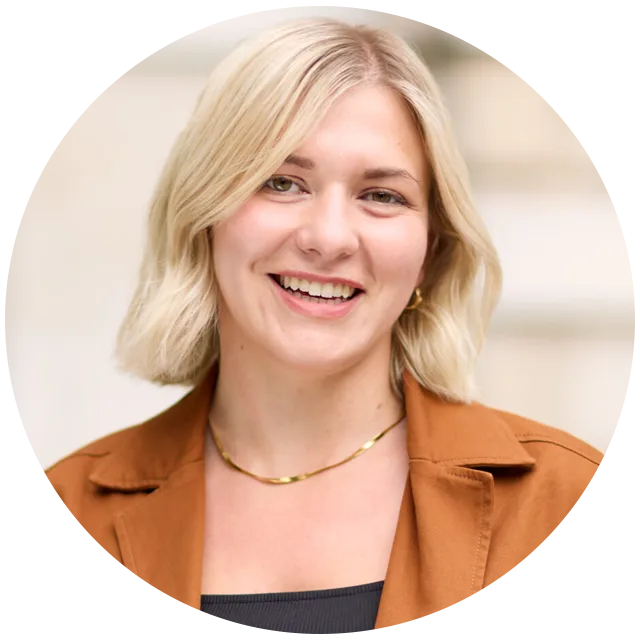
Leah Morris is executive director of the Encode: AI for Science fellowship at Pillar VC. She was previously a senior director at Radical Ventures, where she oversaw the firm’s responsible AI strategy and managed research partnerships. Her background includes economic AI research at the University of Toronto and experience in global health and security with the United Nations and through nonprofit work in Jamaica and South Africa.
Further reading:
- The next great divergence: Why AI may widen inequality between countries
- The man behind AlphaGo thinks AI is taking the wrong path
- How London became the rest of the world’s startup capital
- Universal basic income, the utopia idea resurging in Silicon Valley
- How AI is transforming scientific discovery while keeping humans at the centre
Subscribe to Solve for X: Innovations to Change the World here. And below, find a transcript to “This uncanny moment.”
Narration: Hello and welcome to a bonus episode of Solve for X. I’m Sarah Liss, one of the editors here, and I’m filling in for host Manjula Selvarajah. So, today, we are going to explore… OK, I’m going to think of the best way to describe it… The dramatic and quickly shifting landscape… Um, no. The morass of quicksand that is quickly consuming our will to live. No. OK, how about the uncanny valley of artificial intelligence. You will probably not be surprised to learn that the story of AI’s breathtaking ascent is in many ways a story about money. Between 2013 and 2024, AI netted about U.S.$1.6 trillion of global corporate and private investment. It’s estimated that by the end of this year, that number will reach U.S.$2.5 trillion.
So if you’re anything like me, you’ll probably be asking yourself: how will this massive investment transform the way we live and work? How do you separate hype from value? Should you be lying awake at night worrying about how to stave off the apocalypse? Or should we be looking for ways to cash in?
Leah Morris: I think a bigger thing to be worried about on a societal, political level is understanding how we do know that this technology is allowing wealth to be accumulated into the hands of very few. And understanding what that bifurcation of wealth is going to do to society.
Narration: That’s Leah Morris. A few years back, I interviewed when I was working on a story about responsible AI. And I know this sounds completely bonkers, but her take was so great that I’ve been thinking about it ever since.
She currently heads up Encode AI for Science. That’s a program run by venture capital firm Pillar with the U.K. government. They give funding to AI researchers who are, in their words, “building what matters.” Before that, she helped develop a responsible AI framework for investors at Toronto VC firm Radical Ventures. And before that, she worked with NGOs on policies to assess the effects of climate change on migrant communities.
All of which is to say, she has a background that gives her a unique perspective on the challenges, risks and potential benefits of this uncanny moment.
Leah Morris: Thinking about what interventions matter, and technology was just so obvious. Like, it’s a very strange world that we live in when you don’t have access to clean drinking water, but you have a smart TV or a smartphone. And what does that mean in our world and how can you access people that way? It was just a massive realization that the type of interventions you could do really drastically changed when you had public-private partnerships. And so some of the interventions that happened there were really meaningful, and I felt like just a singular model of all government or all private was probably not the right direction.
Narration: With Encode, Leah and her team are looking to forge a path between public and private with the goal of expediting the creation of game-changing solutions. Basically, they’re trying to make sure that people who want to use technology for good have access to that technology. The aim of the program is to catalyze everything from climate solutions to life-saving medications by deploying AI where it’s needed most.
Leah Morris: Community development happens a lot better when you’re able to have people really buy into that. And that is also what I love to see when teams are building and be able to share a vision and attract talent and these incredible people from around the world who want to suddenly come build with somebody because they’re so moved by that vision.
Sarah Liss: I remember when we were corresponding a few weeks ago, you mentioned that you had been sifting through, like, 1,200 applications for this —
Leah Morris: 1,400 actually.
Sarah Liss: Oh my gosh. Are there any projects or proposals or any kinds of things that you’ve been working on through Encode or with Pillar that stand out that you’re super excited about?
Leah Morris: Yeah, so many things. I think one is just what is happening when you bring in AI talent into these deep domain expertise areas. So the motivation, like the 1,400 applications, comes from a group of people who often are working in frontier labs or in other hyperscalers and have a skill set that they know, this is a moment when they can build anything. And if they’re gonna build anything, they really want to build something that matters.
And we’re not solving all the challenges in one year, of course. But something that is happening is having somebody who’s super motivated and has nothing but this problem to solve for a year, like start to really make some meaningful impact, and then this is a catalyst for them to go on.
Sarah Liss: When you’re talking about investment it can be hard to articulate like the metrics for, you know, a project like this where it might be sort of maybe sort of getting closer to solving a problem but not quite there yet, how do you make the value case? How do you convince sort of —
Leah Morris: Mm-hmm. It’s a good question. And it’s, fundamentally, it has to come down to believing that advancement of research and then getting that research into the hands of people is valuable. So I would narrow it down to say that there’s three main outcomes. And one is companies formed and things that are going out into the world that look like revenue. It’s great. Two is open source releases and things that are more in the academic space of your typical collaborations, talks and papers. And three, is like new institutions formed, which wouldn’t have existed before. So it’s a really catalytic journey for a lot of these folks who, prior to this experience, wouldn’t have formed a company or wouldn’t have spoken to somebody in a climate lab across the world, so a collaboration that would have never occurred if they had just stayed in the frontier lab that they were in.
Sarah Liss: It’s so funny because I feel like you speak in the language of business, but I feel like I can hear the way this, like, background in philosophy and framing different models factors in. And I feel like it’s such an interesting way to both approach business and venture capital and investment but also to be able to tell the stories of these kinds of inventions and innovations we’re trying to catalyze.
Leah Morris: And something that’s hard to measure that we don’t measure enough, and I don’t think it’s really a metric that’s out there, is how the infrastructure of these science miracles or these breakthroughs are valuable in themselves, and they compound over time. So things like data and open source models and benchmarks and things like this are not necessarily measured or valued in and of their own right because they don’t fall into papers and they don’t fall into revenue.
But fundamentally, they’re super necessary for us as a society to advance scientific progress, especially as we get more digital tools. And it falls in between both categories of funders as to who’s actually gonna fund these kind of data sets that need to get created for chemistry modelling and groups that need to be able to do materials discovery, and then also the data that needs to get labelled for climate interventions and understanding all of the satellite data that we have.
So both on the spectrum of too much data and too little data, there is a ton of infrastructure that must get built that isn’t getting built. And it doesn’t have this clear ROI question other than it will compound and eventually it will come back to meaningful progress. But if you built the benchmark that’s important — a great example actually is Fei-Fei Li having built ImageNet. She made the competition that — eventually the convolutional neural net became very well known through Geoffrey Hinton’s work, AlexNet, which is great. But that competition was super necessary to motivate that group to have that breakthrough. And although we all know Fei-Fei Li, and she’s wonderful, I don’t know if she gets the same kind of credit as some of the folks who were participating in that competition, for instance.
Sarah Liss: Yeah, yeah. You obviously have a very interesting vantage because you worked in Canada for many years, and right now are you — you’re based in the U.K. primarily. So I mean I’m curious about what your take on the U.K. ecosystem is right now, but also, whether you have kind of a new perspective on what’s going on in Canada.
Leah Morris: The U.K. is very small, especially compared to Canada. When I hear people have a long-distance relationship because they’re two hours apart I need to laugh. If you’re in the U.K., I’m so sorry, but you are in the same country, it’s gonna be OK. It’s smaller than Ontario.
Sarah Liss: You’re basically going from, you know, Toronto to, like, Whitby, you know?
Leah Morris: Oh my goodness, yeah, it’s so fun. But the benefit of the closeness of these institutions is massive. The fact that you have these networks where people really know each other, and it’s just because you can come into London for a day from Oxford, and people do. And although it doesn’t avoid the siloing of academia, you still have this incredible network of dense talent and domain expertise.
But in Canada, we have a very different situation where we have some incredible universities, but they’re very spread out. I think what is interesting to see in the U.K. is this forming around this domain expertise, really having King’s Cross become a central place, and in the run of the day, being able to run into all of these different domain expertise.
And then when somebody has an interesting idea as to how to apply AI horizontally, these conversations, like one of the people that I’ll talk to has already interviewed for three or four of these new companies starting. So it’s a really exciting flywheel in that way, and the ability to have like water cooler conversations and overhear somebody working on something very similar to you is high.
Now, in Canada, I think that happens in pockets, but I think we could do more to integrate with each other. And that’s just very hard in a physical way. And I think the more I am in different ecosystems, like trying to mimic other ecosystems is just not the way to do it. There’s been a lot of great community writing on how to create what they call VC platform or this community space, and you really have to leverage the things that you do best. And so I think what I see being done really well in Canada is this emphasis on the talent and being able to get them access to things like compute, get them access to data infrastructure, making sure that that does not fall behind. And where government comes in really well is properly being able to subsidize that kind of interaction.
Sarah Liss: I’m sort of curious to hear how you feel about the overall global regulatory landscape. What are things like in different territories? But also from a government perspective, what is most critical right now?
Leah Morris: Yeah, it’s a big question that we could have a whole think tank explore. A couple different angles. I think one thing is we’re all worried about this kind of terrorism threat, this biosecurity, Mythos, what’s gonna happen here. All of that is important, and I think there’s more security-oriented people who can speak to that. I think a bigger thing to be worried about on a societal, political level is understanding how — we do know that this technology is likely, and increasingly so, allowing wealth to be accumulated into the hands of very few. And so I think when we start to look at that trend, which is not AI alone, but it certainly is exacerbated by this and other technologies, understanding what that bifurcation of wealth is going to do to society.
And so when we look at humans and being able to understand societies over time, like when people get violent or are willing to act violently — like we have the most acceptance of political violence that we’ve had in a very long time in terms of both sides, left and right — being willing to accept violence as an appropriate action against somebody who you disagree with. And I think this comes from a have-not society, a feeling that there is somebody out there with greed, that you are not able to access, again, clean drinking water or able to access affordable goods as basic groceries while there’s an accumulation of wealth. This kind of frustration is something that is way more dangerous than some of these kind of far-out, long-tail biosecurity threats, — which are important and we should be thinking about — but I think there’s other pieces that is more likely at a societal level that we need to answer today.
It is deeply concerning that one of the only reasons that we found out about this contract, with OpenAI and/or Anthropic to use technology as a surveillance mechanism or as a weapon of war was because an individual, Dario, the CEO, decided that he did not want it used this way, got very public about saying no and not signing this contract. And the fact that one individual got in the way with his usage policy rather than a democratic process coming in here and having democracy in action where there was a question of whether society wanted this, like, we seem to have forgotten Ed Snowden and forgotten this time period. It’s a bigger question of democracy right now and how society is running and, and being able to organize ourselves on a more basic level of access to simple rights that I think will cause a bigger issue.
Narration: In 2013, Edward Snowden, a contractor for the National Security Agency in the United States, leaked classified documents that revealed that the U.S. had been engaging in a massive global surveillance program. The case highlighted the importance of privacy, transparency and the power of government. Those issues are still relevant today, probably even more relevant today, as AI transforms what was previously passive data collection into automated intelligence.
Leah Morris: There’s this question of sovereign AI that a lot of people are discussing, which means a lot of things to different places. But the idea is to make sure that there is accessibility and that we are able to have access to the technology in one way or another. I think we are in a new era of geopolitical conversations about access to technology. We talk about models, for instance, what guardrails are important and how we develop social contracts. A lot of these conversations are happening within a Western world values contract that sees certain United Nations provisions as international law, or observes international law, and not everybody does.
So it’s very difficult to discuss what a model should or shouldn’t do when countries themselves can’t decide, for instance, if LGBT people should be allowed to marry. When you have such basic conflicts as people, as nations, adding technology into this is not going to help, and there’s some basic questions we need to answer before we even get into it from a technological standpoint.
Narration: OK, so, Leah raises a good point — this is a whole new diplomatic ballgame. And I saw this in action firsthand. Earlier this summer, the King of Spain visited the MaRS Centre in Toronto to sign a diplomatic agreement with the Canadian government and a few leading AI companies. Essentially, this MOU represented a commitment to collaborate on shared infrastructure in the service of digital sovereignty. As one of the CEOs who signed the agreement pointed out, with AI, it’s a winner-takes-all game. If you’re not a superpower, sovereignty may actually involve pooling resources with friends who share your values.
Leah Morris: I think focusing on freedom from coercion as what AI sovereignty means is the right way to think about it. It can’t be digital isolationism. It can’t be entire self-sufficiency on a technology, and I think that would be the wrong way to think about it. I don’t think it is a good economic model for everybody to produce all their goods all the time for just themselves. That is not the world in which we have built on. I think we are in unprecedented ground, and I do think more than ever, we need to all be coming to the table. We’re in a time where it’s super exciting to be investing because one individual, or maybe a few individuals, can really transform an industry, can really do a lot.
And so I think very exciting, but also making sure that we are updating democracy in the same kind of way. Everyone knows that democracy cannot keep up with, and policy in general, whatever framework it takes, cannot keep up with the pace of technology. And for good reason. Some things should be slow. It takes a conversation. We have to get people together. We have to talk about it.
But there is some room to figure out, and I’m very interested in new models of democracy and the way we think about decision-making as a collective, without having to have, like, seven meetings and get together in person and hit gavels on wood. Like, I think there’s a new way to do this that is fast enough, that doesn’t just throw everything out, because you can do things quickly, but you often end up steamrolling a lot of people on the way. Sometimes that’s good. There’s demonstrations of governments that have just made choices, and there’s more environmental technology for it. It happened in Brazil. But I think, all together, we need to be not just thinking about innovation in consumerism and thinking about innovation in the sciences, but also innovation in policy, and I don’t think enough people are innovating in policy.
Sarah Liss: OK, well this brings me to a big question, which is that you —
Leah Morris: These weren’t big questions? (laughs)
Sarah Liss: No, this is just like the appetizers. At Radical, you were fundamental in developing a responsible AI framework for investors, which, you know, things have changed dramatically since that was created. So what are the kind of pillars of a responsible AI framework now as compared to when you were working on that framework previously?
Leah Morris: Some things I don’t think have changed. Like, I still think there is a technology understanding lens, and then there is the stakeholders at the end of the day that we need to think about: people who are using the technology, people who might have access to the technology. Like we’ve seen a lot of this happen nowadays, like the technology is so omnipresent that when we look at it, it has to be from a global perspective and also from an individual’s perspective at the same time. You really have to flow this back to a bigger conversation around the big frontier labs and what are we doing there.
And that goes right back into AI sovereignty because you have to navigate trade-offs like sovereignty and that, again, I mean the ability for people to not be coerced into action from a lack of access to that technology. That doesn’t come free; like being able to have sovereign infrastructure carries a cost premium. There is the idea that you need to be able to figure out how to advance technology while also be able to check it. But if you go too slow to check it, then you might actually miss out. So nowadays, there’s many more factors, especially there’s so many more people that have access to it. It’s not just this niche thing we get to evaluate in a small room between us and a couple founders asking questions about what guardrails they’ve put in place, who might use this at the end of the day. It’s much bigger than that, and a lot of people are using AI without even realizing it in terms of their note-takers, a lot of these additive tools.
And there’s big questions around this thing like Mythos that is behind closed doors that we have to understand from a global level. Where are those companies based and where is their data stored, and all of those big questions. And then versus the downstream effects, where now you have people who can build on top of this, and everyone is kind of building on top of this, but what does that mean?
And then the questions for that group of people, very different again, and does it sit on these usage policies? In terms of the investor, there’s a lot less control over something like dual use because the fundamental technology is already in such a massive company. So it’s very difficult for you to say like, “Don’t use Claude Code,” because we disagree with Anthropic’s particular usage policy, and I don’t think that’s ever going to happen. It’s murky waters. It’s challenging.
Sarah Liss: There’s one point that I’ve thought about actually several times since we spoke several years ago, which was making a business case for responsibility. So I think the example that you had used was if you look at an AI transcription service that has been exclusively trained on native English speakers and then is not usable by someone who has a thick accent. And so if you reframe it so that you’re approaching a developer and you’re saying, “If you train this model on a far more diverse set of data, then you’re actually, you know, exponentially expanding your customer base.” Is there like, is there kind of a comparable exponentially scaled version of that business case? I understand this is kind of like throwing cotton balls at a giant because as you said, these tools are already integrated into kind of everything. The idea that we need to understand this chasm of power that is happening and how AI and access to technology in general is kind of fuelling it. But how do we turn the ship around? Is there a way that we can kind of use the same tools to reverse that chasm if we frame it right?
Leah Morris: Things have not changed. Like indeed, the business case has happened where I don’t think Claude Code discriminates necessarily against who’s using it. We have actually done a lot to solve the usage ability from that standpoint. I talk to a lot of folks who have either the skills or not the skills, but are now able to code tools for their demographics. So I know people who have made — they’re like celiac, and they have decided to make maps of a town that have all the like best celiac places. Or in more of a serious example, somebody who was working in a dermatology clinic and found that there wasn’t a great database of darker skin. And so have been working on that together to be able to create more of a database for this because they started doing some coding, and they realized the tools were not great in terms of looking at any kind of skin colour that wasn’t white.
So there is this like democratization of the ability to build that is really interesting. The big questions, the big problems are, are not actually anymore really in the tech or in whether it’s more a democratic model or like a left-leaning model or a right-leaning model. It’s like figuring out who values and captures the value of all these tools. And when we talk about compute use, we talk about compute hardware, and how that’s getting built and who owns that, and then being able to think about who has access to tokens for all of these models.
Narration: The question about who has access to compute power and who doesn’t is huge. And it’s not at all clear what the fallout could be. At the same time, AI is disrupting the job market at an unprecedented rate. Universal Basic Income has been floated as a possible solution, but as Leah says, there’s a lot that needs to be figured out before that can happen.
Leah Morris: I’ve not heard a really satisfying answer about — if we are hoo-rah-rah, like this is going to get rid of jobs — like real strategies for Universal Basic Income, UBI. I’ve heard a lot of people, specifically in Silicon Valley, throw around the terminology, but I have yet to see a comprehensive plan that actually makes sense. And I think that is our biggest threat, going back to what I said earlier, that fundamentally these bigger societal questions that have less to do with the technology and more to do with how we organize ourselves.
But ultimately, like some of the tech stack that matters is the compute hardware, the foundation model access, data and data governance, like all of these pieces matter for society, but they matter in a sense of not kind of like tit-for-tat, like this we need to value everybody off of all the data that they create and more of a bigger question of how do we ensure that people are still able to make money and have a decent living given this technology? I just haven’t heard many satisfying answers about it.
Sarah Liss: Yeah. I mean, there’s a more amorphous question when we look at all of these tools are changing the way we do work, the way we function in the world and we still don’t know kind of the long-term effects of what, for instance, kind of delegating basic communication to gen AI is going to do. Like, every day, I feel like there’s a new study about how AI is affecting our cognitive processes and/or how AI’s own cognitive processes are growing in strength and sophistication. And I’m curious about how you use AI in your life, but also like whether you do have any ethical concerns around that?
Leah Morris: It’s really interesting because I was previously talking to someone who worked with Nat Friedman AI Grant. Similar to our program, they would receive thousands of applications and needed to pick the right people. And at that time — this would have been three years ago — they would say, and I would ask them “Do you use AI in your review?” And they were like, “Absolutely not. The human judgment’s so important. The risk of missing somebody’s too high to automate.” This year, going through my 1,400 applicants, it’s reversed. The risk is too high of missing somebody to not automate.
And I think, with human judgment, this is something that hasn’t changed from our previous conversation. We’re so afraid of the word bias, and, and so we should be. But bias is also how you make decisions. If everything is equal all the time, you actually cannot make a decision. You have to have a bias, which means a preference for something. And if that preference is not based on something like gender or race, it’s actually based on the skill sets and qualifications you need for a job, then bias is excellent, and it’s something that will help you. And so we don’t just use automation, so certainly that is one layer. We also have hand-reviewed all 1,400 applicants. This technology is very new, we cannot just trust. It’s true. So all that to say is that it was very helpful because people that we missed, the AI flagged and was like, “Hey, how about this person?” And it helped us increase the number of women that were looked at. It helped us increase the diversity of the pool because I think humans, although we say we’re not going to be biased, we can’t help it, and I don’t have a computer in me to tell me how biased I’m being at any given time. AI — you can build that in, which is great. So that’s a way that I’m using it.
Narration: Given how much we’ve become reliant on computers to feed us answers faster than the speed of light, I was sort of curious what Leah’s take would be on how these algorithms are affecting our decision-making abilities.
Leah Morris: Human judgment matters so much because that is what we believe in. And this is definitely like in two examples, one that is silly and one that is more serious. In a silly example, people tried to automate in baseball the strike zone, and that was intentional because it moves all over the place. Umps, different umps, call it differently. And this was attempted, and my understanding is people don’t want it standardized because the joy of the baseball game is getting your hot dog and your beer and going down and yelling at the ump. And you can’t yell at them if there’s a tool that’s gonna tell you whether who was right and who was wrong. It’s actually not something we want arbitrated. Like, humans really, like, adore that. When it is less good is when we think about trials and we think about any time AI has tried to be incorporated into decisions around different courtrooms, realizing that the automation was predicated on data that was biased. It was human data, and humans are biased. If you make a decision right before lunch, you are more likely to make a poor decision. This is also true with immigration trials. And so when you model it after the humans who are supposed to be experts, you don’t necessarily actually get a better outcome either.
So the point here being is that the human judgment really matters. And, ultimately, in terms of human judgment, if we don’t have people building on that and developing those skills, I think that we are in a dangerous place. And I don’t think we should just hand everything over to machines. I think machines are good at showing us how much uncertainty there is, and then having us be able to, as a collective society, make a decision.
Because there might not be a good decision. This is kind of a one person versus five person on the track situation where yeah, we can either let humans make that or have a philosophical debate and come together as a society, coming back to democracy, to decide what we think and our values of this group, what we would like to do when there isn’t really a good answer and there isn’t an omnipresent truth that people try to chase down with artificial intelligence. Because they think that there is just this unbiased capital T truth that the AI can uncover, and that is the most dangerous position to be in, in my opinion.
Sarah Liss: Yesterday, during the MaRS panel discussion that you were here for, you were put on the spot and asked to sum up the AI investment landscape in a few words. And I believe your phrase was “bullshit in a bull ring.”
Leah Morris: (laughs)
Sarah Liss: Do you want to unpack that a bit?
Leah Morris: No, just leave it at that. Just let everyone wonder. If you go to San Francisco, I think you’ll get it. It’s a funny era because, going back to what I was saying, there’s two different kinds of companies. There is the people who are advancing the artificial intelligence itself, the technologies, coming up with new models, architectures, etc. And then there’s everyone else applying it, and there’s probably something in between in terms of the infrastructure (but I think right now I’m going to put that into category A). I think there are so many people who are new to this technology and realize what it can do that they are starting to create empty products that look very good, especially because you can create a deck and something that looks very real in a very short amount of time.
And so there’s just more and more of that that you have to wade through. Adding to that is starting a startup has become just like a legitimate job option. Like talking to people in high school. I think it’s a good thing, but it changes the industry dramatically when everyone thinks being a startup founder is just an obvious job choice, and it doesn’t come with a lot of the risks and weights that it should. It’s a serious choice. You can go without income. It’s very insecure. But increasingly, there’s that. And then also there’s kind of the TikTokification of things like Y Combinator and accelerators, and so I’ve met a lot of young people who have learned the lingo and know how to talk to investors, at least in the type of language that you would expect. But everything they’re actually saying is very empty. So they’ll tell you that they have a term sheet, and they’ll list people. And the thing I’m more concerned about is the, like, willingness to lie. Like, I’ve seen full fake projections, and it’s so easy to get a graph that is going to be believable, without the actual underlying diligence.
Now, most investors within a couple calls, and maybe not even, within just the one call, will be able to call this out. But it’s hard from the surface, and you have to go through a lot more, and the bull ring side is just how competitive it is. So whether you’re on the bullshit side or you are actually coming out of one of the massive labs and you are able to command these massive valuations, there is just a bull ring on both sides. It’s can you raise based on a story? And what’s fascinating is the signalling — you can have people who could’ve been the worst employee at DeepMind — nothing against DeepMind, it could be OpenAI, whatever, one of these organizations — it could be the worst person, and you can command massive valuations.
And we can have somebody else who already has an open source version of whatever they say they’re going to build, who’s built credibility and has something to actually show an investor, and that might not command the same kind of valuation that people that are namesake talent will be able to do. And it’s not that the namesake talent won’t be able to do it. It’s a whole game of, like, network. It is the Medicis of AI these days of who you know and the type of talent you can command. But it makes it a bull ring in terms of people being able to wave a red flag and get investors to charge at them, and then sometimes I think they realize they probably shouldn’t have made that charge, that it’s — there’s actually six bulls out there. I miss the days when this was a niche technology, when people treated it like quantum or crypto and just, like, left us alone. But it’s good. It’s an exciting time also.
Sarah Liss: We’re increasingly living through unprecedented times. Do you feel like there’s an analogy, an example from another era that is comparable to where we’re at right now? Like both from a market standpoint, but also from like a technological inflection point perspective. Like, is this pets.com? Like what, where are we?
Leah Morris: Well, that’s fascinating with the, you bring up like a dot-com bubble, and it is interesting because some businesses were just too early. Like people were, yeah, trying to sell pet food early, and everyone was like, “What a stupid business idea,” and it went bankrupt. And then you see Amazon today, and it was just too early, wrong time. Certainly those things will exist. I’ve already seen in my short cycle as an investor — I’ve been here less than 10 years — and I’ve already seen things that were invested in in year two or three of my career that seemed to be really exciting ways that we can leverage artificial intelligence, but it was probably just too early. And now I’m seeing a new wave of those companies. So like AI weather modelling is one of them, that seemed to be something that insurers wanted a few years ago, but it was just not as high fidelity as it can be now. That is also still to be decided and determined, but you’re seeing multiple cycles happen faster.
I think there’s a danger in necessarily just saying this is like that and this is… Like, we learn from our past, but the pace of technological change is faster. Which is why I really earlier leaned on the policy conversation because what hasn’t been changed is the way that we make decisions. And then beyond that, I think it’s more of a thinking and recency about how we adopt and how we do adopt quickly and, and cases where we are capable of adopting quickly.
And I think about in the education space, like within a couple generations, like it used to be such that a grad school student, their best skill was to be able to go and figure out how to get sources. And so you had to know the Dewey Decimal System. You might even have to like travel, like get travel budget to go to a library somewhere else and be able to bring that book back. And your whole grad piece was like just chasing down these sources and then being able to write something with them together. And then, we solved that with digitization, and in my generation, search was somewhat solved, and most grad students were putting together summaries and meta-analyses. And so what you would do is spend a ton of time reading all the papers. You didn’t have to go anywhere. You could just sit at a desk and be able to get everything brought to you digitally. And you just did summaries and summaries and summaries, and at the end of your career, you’d have a stack of summaries with a little bit on top that you added. What’s interesting in this world now is that students are starting with the summaries, and so they can have meta-analyses from many different perspectives. And then if you’re able to start with that, can you actually develop something further, and get farther and be able to do something?
Now we go back to the question of judgment and, does education have to change in order to support that? And I think probably, and it takes us some time, and this is again happening faster than the change happened from search over to summaries. But I do think we’re capable of it. I think the most dangerous analogy is when people point to previous Civil War concepts, and it’s not not happening — accumulation of wealth in one group and all of that is happening — and so we do, again, need to think about society and think about the way we capture value of these corporations and the way that that’s redistributed in a society that not everybody is able to contribute equally.
So, yeah, I think it’s not a dotcom. I don’t think we’re going to have another housing crisis in the same way. But I do think there’s some parallels in terms of what we could have done better in a divided society.
Sarah Liss: My final question for you then is what gives you hope? Do you have hope?
Leah Morris: Yeah. Very much so. The ability to transform these industries as one person, so you could really start a small company tomorrow, and with the right idea, tools and talent, really be able to make something that is useful and meaningful in a very short amount of time, and the calibre of that is just so much higher and faster. Like, you don’t need months of software development, and sometimes actually, if you put together a small version of something in a week, the version you would do in six months is not actually that much better.
So the rate of iteration is way higher. So I do think we’re gonna start to get some massive breakthroughs quite quickly. Now, the data problem still stands, and so that is something that I think I’m not pessimistic about, but I’m seeing increasingly these, these really interesting groups working together where you see philanthropic groups funding big dataset creation within academia that — also getting different groups to open up certain amounts of data to be able to do benchmarking.
There’s more and more vision and an ability for people to see that if we work together on something, we can actually advance it. And so I do think that that is happening, even in a small way, across different countries. And then we are changing the ways that we do things. Like Australia banned children on cell phones, and I think that has been unprecedented, too. And we’re going to have to have more of these big, bold moves that people are able to do.
And then I’m also excited about the philanthropic era. I do think we have a new generation of people who are going to have access to wealth, who have an interest in funding science, who have an interest in funding progress, and an interest in — I know a young person looking at real estate in early developing markets. So I think that is with a social good intent, and I think there’s going to be more and more of that, an interest from people globally. It won’t all just be greed.
Sarah Liss: Amazing.
Leah Morris: Greed gets boring.
Sarah Liss: It’s like the new David Mamet philosophy. Like Glengarry Glen Ross. Greed is good; now, it’s greed is boring.
Leah Morris: That’s the hopeful take. I could give you the pessimistic take, but that’s the hopeful take.
Sarah Liss: It’s OK, we can do another podcast episode that’s —
Leah Morris: Pessimism. Debbie Downer with Leah.
Sarah Liss: Amazing. Leah, thank you so much for having this incredibly light and, you know, fluffy, conversation with me. It’s been such a joy to talk to you.
Leah Morris: Thanks so much. It’s always such a pleasure. I really enjoyed the conversation and I look forward to the next one.
Narration: Solve for X is brought to you by MaRS, North America’s largest urban innovation hub. Gab Harpelle is our audio editor and mix engineer. Jason McBride is the senior editor. Mack Swain composed our theme song and all the music in this episode. Kathryn Hayward is the executive producer. Our associate producers are Lara Torvi, Sana Maqbool and me. I’m Sarah Liss, filling in this week for our host Manjula Selvarajah. Thanks for listening.
Illustration by Kelvin Li; Image source: Leah Morris
-
 MaRS Staff