Pick of the crop: These homegrown solutions are changing how we feed ourselves and our communities
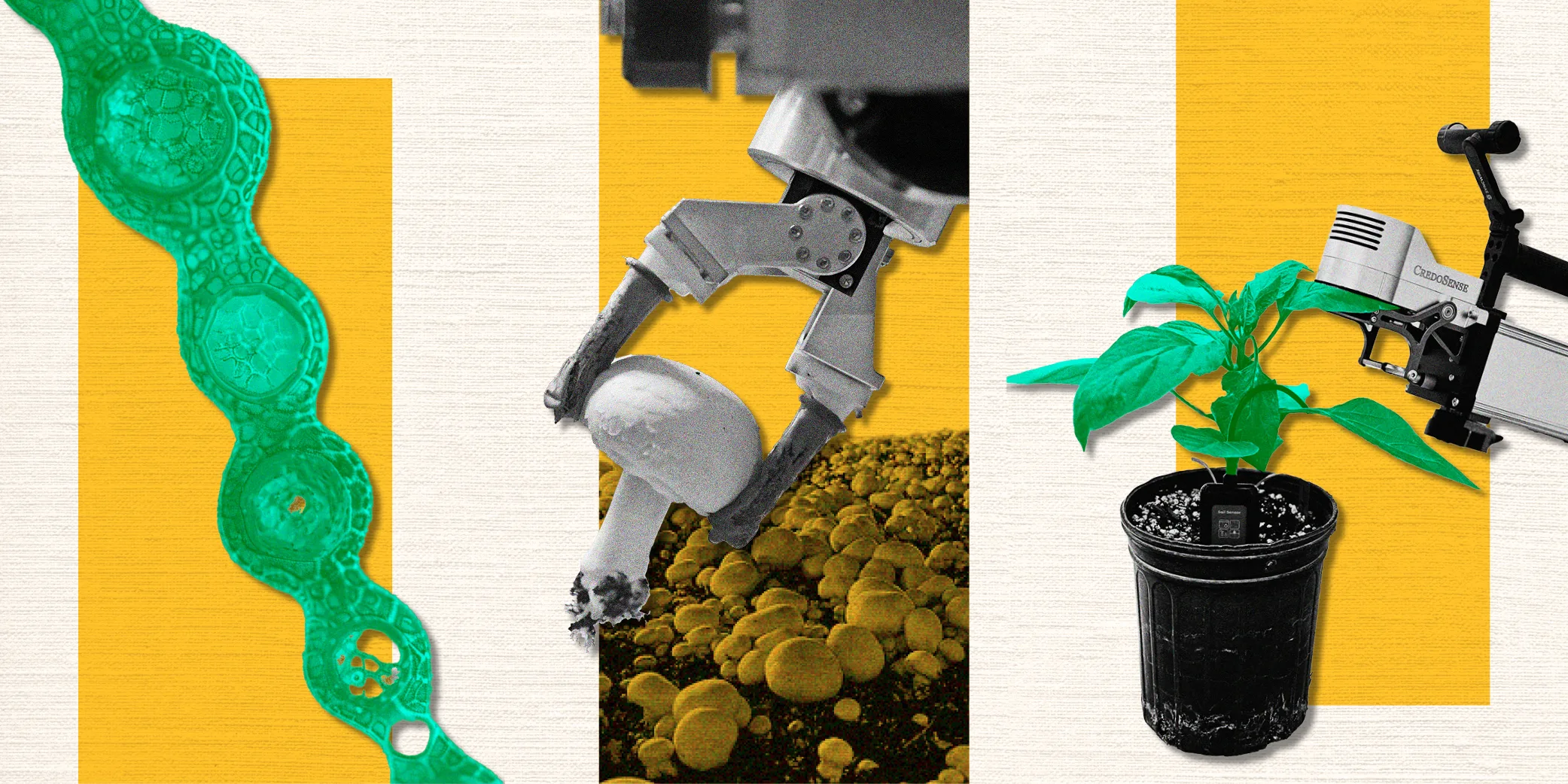
Meet the nine startups in the second cohort of the Mission from MaRS: Food and Agtech program that are helping to bolster Canada’s food security and sovereignty.
With global trade in flux, and farms and fisheries grappling with the increasingly pernicious and disruptive effects of climate change, Canada needs to look to new ways to boost the sustainability and security of our food supply. Other problems, including persistent labour shortages in the agriculture sector (which led to $3.5 billion in lost sales in 2022 alone) and carbon-intensive processes (a third of global greenhouse gas emissions are linked to food production and transportation) are making matters even more urgent.
The Mission from MaRS: Food and Agtech program was designed to tackle these challenges by providing startup leaders the support they need to scale solutions that bolster agricultural productivity and resilience, mitigate emissions and increase Canada’s competitiveness in the global food market. “I’ve spent the last 10 years as an engineer in agriculture,” says John Van De Vegte, general manager of Reel-in Robotics, one of the nine companies in the year-long cohort. “I’ve been in the orchards, I’ve been in the carrot fields, I’ve been on the big farms. I get the opportunity. I get that there’s lots to do and lots of things we can provide within Canada.”
Here are the nine startups working on ways to improve, diversify and strengthen our food supply.

CredoSense is getting to the root of crop health
What it does: It’s a startling statistic: Up to 40 percent of crops around the world are lost to pests. CredoSense aims to stem those losses by providing sensing and diagnostic equipment that helps farmers detect ailing crops easier and earlier. The Markham, Ontario-based company grew out of founder Abdul Halim’s research at the University of Toronto, where he studied plant ecophysiology — that is, organisms’ physiological responses to environmental conditions. Today, Halim’s company provides both outdoor and indoor farms with a suite of technology that can pinpoint such stressors as fungus, insects, viruses and bacteria up to 10 days earlier than conventional methods allow.
How it helps: CredoSense’s utility lies in the precision of its diagnosis. Farmers typically struggle to determine the cause of a crop health symptom, like a yellowing leaf. This is why Halim believes “having a window for every stress is important.” The company’s tech provides such windows in the form of temperature, humidity, airflow and fungal spore monitoring, among other diagnostic tools. This allows farmers to pursue treatment plans rather than wasting time and money in guess work.
What’s next? While CredoSense offers its tech to both outdoor and indoor farms, the company is poised to expand its client base in the latter. Halim says indoor farmers lack the crop insurance benefits their outdoor counterparts enjoy, which means CredoSense’s early detection system can offer the greatest impact there.

Clean Valley turns aquaculture wastewater into a resource
What it does: Clean Valley’s algae-based filtration system helps land-based fish farmers remove polluting nitrogen and phosphorus from their wastewater so that treated, clean water can be put back into production. The company, which is headquartered in Dartmouth, Nova Scotia, applies a similar circular approach for the algae that absorbs this waste; it can be sold for use in nurseries or to grow microalgae, providing another revenue source for the farmer.
How it helps: Clean Valley claims that, over a 10-year period, its filtration system costs half as much as a typical aquaculture biofilter. Its other, complementary, product, a containerized oyster hatchery delivered as hardware-as-service, is designed to also help farmers reduce costs (algae happen to be the feed of choice for baby oysters). Clean Valley co-founder and CEO, Nicholas LaValle, says the company’s enclosed approach to generating feed and nursing oysters protects them from being eradicated by increasingly prevalent disease. “Out here in the East Coast, we got hit with two parasites at the same time,” he says, “and it’s wiped out about 95 percent of the natural seed availability.”
What’s next? With Clean Valley’s tech built to withstand the rigours of the Canadian Arctic, LaValle is looking to expand to communities in the north, where food security is most challenging.

Smallfood is transforming microalgae into tasty alt-protein
What it does: CEO Marc St. Onge founded Halifax-based Smallfood after more than a decade running Ascenta, a purveyor of omega-3 health products. With his new company, he’s still in that space, but now producing omega-3 protein derived from a unique strain of microalgae. Thanks to Smallfood’s fermentation process, it grows 10 times faster than conventional microalgae. This means the protein can be produced at scale and provided as feed for aquaculture farms, as pet food, even as an alternative to animal-proteins for human consumption.
How it helps: Fishmeal and fish oil, currently selling for record high prices, comes to Canada mainly from Peru. Thanks to overfishing and ocean warming, it’s also in increasingly short supply. Smallfood’s protein offers an alternative that helps make Canada more food sovereign and less susceptible to trade shifts and fishmeal availability. There is also human consumption to consider: meat production has enormous environmental impact, and the alternative protein market continues to offer great potential. St. Onge sees a unique opportunity in his company’s microalgae. “Microbes are nature’s most energy efficient production systems,” he says.
Key milestone: Smallfood was a partner in Team ProFillet, a finalist in XPRIZE’s Feed the Next Billion challenge, which tasked the team with providing a similar-tasting alternative to fish fillets. Smallfood’s microalgae delivered, bringing all the things you’d expect in a fillet: protein density, omega-3 fatty acids and natural fish flavour. “It tastes very much like sardine, or kind of like mackerel,” says St. Onge.

New Protein International is bringing soy protein manufacturing to Canada
What it does: Vaughan, Ontario–based New Protein International has developed a new way to turn soybeans into soy protein isolates and concentrates — ingredients found in everything from baby formula to veggie burgers. Unlike traditional methods, which rely on hexane, a neurotoxic, carcinogenic chemical derived from crude oil and natural gas, it uses mechanical pressure. The company currently has a facility in southern Ontario and a partnership with a nearby farm that provides non-GMO soybeans. “We’re making a cleaner, chemical-free product that doesn’t exist in the market today,” says chief development officer Graham Markham.
How it helps: Canada produces 6.92 million tonnes of soybeans a year, but we don’t process any of it into soy protein ingredients ourselves. This is something New Protein International is poised to change. There’s also the hexane factor. The petrochemical compound is currently under review by the European Food Safety Authority, after concerns about the environmental harms and health risks prompted the scientific community to test the chemical again. New Protein International has gotten ahead of the problem by eliminating hexane from their processing altogether.
What’s next? The company is laying the groundwork for what it calls the country’s first soy protein isolate manufacturing plant. “At a commercial-scale that can bring an entire new industry to Canada for the first time,” Markham says.

Aera is growing food right in your kitchen
What it does: Amy and Shawn Fisher, partners and co-founders of St. John’s-based Aera, have created a fridge-size indoor farming appliance that can produce up to 64 kilos of leafy greens and root vegetables per month. It uses vertical and horizontal growing planes, auto-germinating pods and an aeroponic growing system — technology invented by NASA in the 1980s that involves hanging plant roots in a chamber and misting them with a nutrient-rich spray, allowing for greater growth than typical soil or water-based agriculture. Software in the device, which the Fishers named Victory, manages the growing environment, providing instructions to users on seeding and harvesting, through a touchscreen.
How it helps: The company is poised to make food more sustainable and local by providing an alternative to industrial farming, which usually involves shipping food from thousands of kilometres away. The Fishers believe Aera can decentralize food production, effectively allowing any food service operation or family to become a farmer. The name of the device, Victory, is a nod to the victory gardens that sprouted up in England and Canada during World War II, where civilians grew their own produce to supplement food rations. Amy Fisher argues that our current food sustainability crisis requires a similar strategy: “Grow your own food, have more autonomy,” she says.
What’s next: The company is aiming to scale manufacturing and to secure commercial partners like restaurants, schools, hospitals and Northern communities, providing them with an alternative to major food distributors like Sysco, which don’t prioritize local food.

FloraTrack AI is improving greenhouse logistics
What it does: New Brunswick–based FloraTrack AI wants to give greenhouse farmers superhero vision. Every farmer and greenhouse operator has to do regular crop scouting — basically, checking plants for pathogens, viruses, insects or anything that can lead to crop loss. The company’s AR smart glasses system allows them to do this hands-free, logging problems by voice or photo, with that information automatically fed into a proprietary database.
How it helps: “We want farmers to spend more time in the greenhouse rather than on a computer,” says Daniel Lirette, founder and CEO. He believes that by automating spreadsheet recording and freeing farmers’ hands of clipboards, his company can make a difference in greenhouse productivity. Apart from logging and recommending treatment, FloraTrack also maps each row of the greenhouse and predicts which areas might need the most care.
Key milestone: The company was named AI Startup of the Year at the AI Catalyst Awards. The award recognizes FloraTrack AI’s ability to “build businesses, transform organizations and create meaningful impact.”


Mycionics’ robot pickers are making mushroom farming a snap
What it does: Mycionics has developed robot “pluckers” that, paired with AI and computer vision, are gentle and quick enough to pick delicate, fast-growing mushrooms. The key lies in the sensitivity of the robot’s fingers, which resemble an index finger and thumb. The vision system provides a bird’s-eye overview of a crop, and the AI guides perception, grasping and harvest strategy — picking the right mushroom at the right time to ensure the best quality.
How it helps: Mushroom harvesting is notoriously difficult work: it involves working indoors in cramped quarters with no windows, high humidity and pungent aromas. On top of this, mushrooms grow year-round, and at much faster rates than other crops. Add labour shortages to the mix, and Mycionics’ automated solution answers several of the industry’s challenges.
What’s next: The company recently moved to a new facility in Kitchener-Waterloo, Ontario, where they plan to build out their manufacturing and engineering team. Their robots have been deployed at several commercial farms across North America and Europe. But Mycionics isn’t just stopping at fungi; it also plans to develop robot harvesters for other delicate crops, like strawberries and peppers.

Reel-in Robotics can reach the highest rack in your warehouse
What it does: Reel-in Robotics uses cable bots — computer-controlled robots that are suspended in air on cables — to help warehouse staff manage inventory. In conjunction with the company’s autonomous mobile robots, it’s a complete management solution for warehouses, food distribution facilities and cold storage. Amir Khajepour, a mechanical and mechatronics engineering professor at the University of Waterloo, who spent more than a decade researching cable robotics, founded the company three years ago. The startup has since moved to a larger facility in Kitchener, Ontario with one system currently installed in a client’s warehouse in Mississauga.
How it helps: Storing produce, be it apples or carrots, is an operation of surprising complexity. Depending on the crop, you have different varieties and sizes, picked at different times, needing to be shipped to different places and packaged in different ways. Reel-in Robotics aims to make all of that easier and faster, and, in the process, keep produce fresher longer, reducing waste and ensuring better quality at the grocery store. The company’s solution is a straightforward system that can be modified to match the size of any warehouse and existing racking, removing the need for heavy cranes and rail systems.
What’s next? After proving the versatility of their cable bots in warehouses, the company plans to apply their tech across the agriculture industry, including vertical farms. They’re also looking into providing an e-commerce solution for businesses in different industries who can use the system for warehouse management. “Our technology is applicable to any warehouse where you have stuff stored on shelves,” says Reel-in’s general manager, John Van De Vegte.

smartGRO has a solution for UV-hungry indoor farms
What it does: Calgary-based smartGRO has created a light system for indoor farms that aims to lower electricity costs and boost yields by using extremely high-frequency light pulses. The tech has its origins in an obscure Japanese research paper discovered by Jared Wolfe, the company’s founder and CEO, which showed lettuce growing faster after being exposed to light flashing at rates between 1,000 and 20,000 times per second. Imperceptible to human eyes, this flashing is not only ideal for plant biochemistry, but it also requires 50 percent less electricity. SmartGRO’s breakthrough was figuring out how to synchronize the pulses of all the lights in their system, which can number in the thousands, and allowing plants to get, in Wolfe’s words, “the full blast of light from all the lights at the same time.”
How it helps: Achieving food sovereignty in a country like Canada, with its dark winters and brief growing season, means increasing the country’s indoor farm production. Providing a more effective lighting system at a lower cost — one that uses up to 50 percent less electricity, according to Wolfe — would be a game-changer.
What’s next: The company is looking to expand its client base and bring improvements to the AI system that complements its light system. Equipping the AI’s machine vision with rate-of-photosynthesis and other data points will help farmers, the company argues, with light-use efficiency and harvest predictions.
Want to learn more about how we can make Canada’s food system more resilient, competitive and reliable? Visit Mission from MaRS: Food and Agtech.
Photo illustration: Stephen Gregory; images: Unsplash, Mycionics
-
 Junaid Ahmed