Why the global adaptech market is on track to reach $1 trillion by 2030
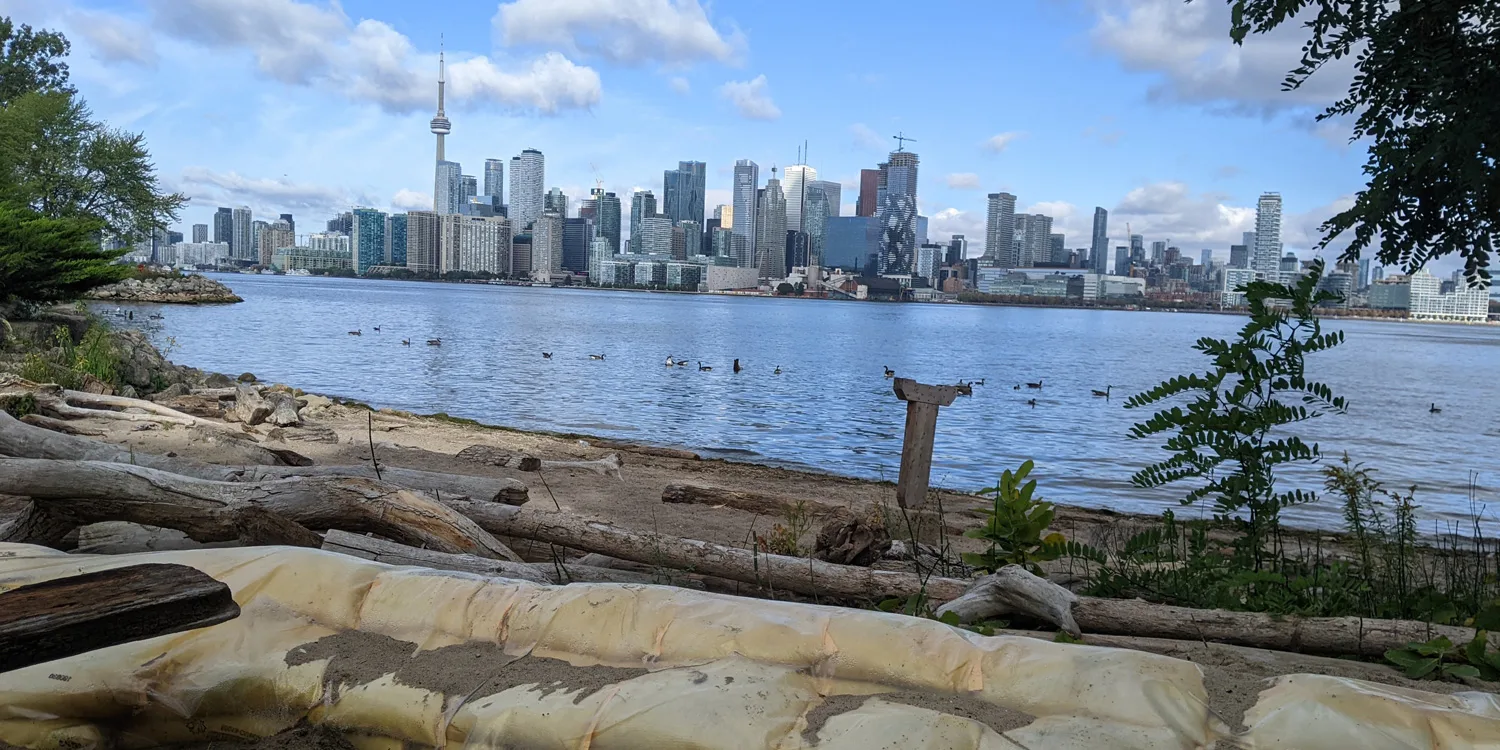
As the race to adjust to a changing environment intensifies, here’s what you need to know about the technologies that could help get us there.
Earlier this month, a group of Australian climate scientists issued an unusually bleak warning. Their modelling showed that whatever action we take to cut emissions, more deadly and extreme heatwaves are now locked in for the next 1,000 years. The longer we delay net zero, the worse the heatwaves become. The only silver lining: we can adapt our lifestyles and cities to reduce their effects.
Since climate change became a global issue 40 years ago, governments have tried to slow catastrophic heating by curbing emissions. But with countries blowing past their climate targets, there’s a growing realization that while pumping the brakes on emissions continues to be an imperative, it is no longer enough. We also need to deploy the airbags by learning to adapt to a harsher climate.
Last year, an unprecedented string of extreme weather events, including a freak hailstorm in Calgary, floods in Toronto, a hurricane in Quebec and the second-worst wildfire season on record, inflicted a record $8.5 billion in damages on Canada. The impacts of these events also exposed our lack of preparedness. According to the Insurance Bureau of Canada, 10 percent of homes across the country are already effectively uninsurable due to overland flooding. “Because they are exposed to such a high level of risk, the cost of providing coverage is unfeasible,” says Brendan Seale, assistant vice president and head of sustainability at insurance firm Definity.
Ryan Ness, a research director at the Canadian Climate Institute, estimates that Canada should be spending tens of billions a year on infrastructure, new agricultural practices and flood protection. “We’re currently spending in the single-digit billions, and the amount is dwarfed by what we’re spending on emissions reduction. We should be putting the same level of investment into both.”
But that could soon change. Over the past year, a flurry of research has emerged from think tanks and organizations on the need for adaptation. Alongside the threat posed by increasingly frequent climate shocks, these reports highlight the huge economic opportunity for technologies that can help communities become more resilient. An entirely new sector is forming around adaptation technologies, or adaptech — tools that can help us deal with extreme weather through better planning, risk mitigation and response. According to McKinsey, the global market could reach $1 trillion by 2030.
“Every sector of the economy is exposed to this risk in some way,” says Natalia Moudrak, an expert in climate risk at insurance company Aon. “It’s not just property, it’s people, it’s operations and supply chains.”
At the recent COP30 climate conference, world leaders agreed to triple funding for vulnerable countries to adapt to climate change by 2035. While the commitment does have some gaps, it’s nonetheless a sign of the scale and urgency of the challenge. As the race to adjust to a changing environment intensifies, here’s what you need to know about the technologies that could help get us there.
What kinds of technologies does adaptech encompass?
“Adaptech is any technology that helps with the preparation, prevention, recovery or response to the impacts of climate change,” says Ana González Guerrero, senior manager of climate and cities at MaRS. That includes monitoring systems to give us early warning of extreme weather and technologies that can help communities mitigate and respond to such disasters as floods and wildfires. It also encompasses products that make buildings and electricity grids more resilient, prepare cities for heatwaves and help people deal with unhealthy air.
Because climate change takes many forms, so do the solutions. Adaptech companies are making 3D printed seawalls that encourage biodiversity, more effective air purification systems to filter wildfire smoke, cooling vests for outdoor workers, and permeable concrete and asphalt to enable cities to absorb heavy rainfall. Adaptech also includes software that models the threats we face and helps governments and businesses make informed decisions about climate risk.
What impact could these technologies have?
A substantial one. The Canadian Climate Institute estimates that every $1 invested in adaptation could return $15 in benefits, such as avoided repair costs and economic disruption, when paired with emissions reductions.
Seale points out that adaptation could also have a role in lessening inequalities that may be exacerbated by extreme weather. “Climate change disproportionately impacts typically underserved communities,” he says. “We think these solutions and innovations could be used in service of driving more equitable outcomes in society.”
How much Canadian representation is there in this new field?
Canada has come out of the blocks quickly in this market. According to research by MaRS and Tailwind Futures, there are around 170 Canadian ventures focused on adaptation, with 440 more working on dual purpose technologies that also reduce emissions. That’s nearly three times more per capita than the U.S.
Canadian companies are working on solutions across the spectrum of adaptech. In British Columbia, a startup called FireSwarm is developing water-dropping drones to combat the province’s increasingly frequent wildfires. Its heavy-duty quadcopter douses flames with up to 400 kilograms of water and can fly at night or in low visibility conditions that ground piloted planes.
Calgary’s Ayrton Energy is helping make the supply chain for hydrogen fuel more resilient. Today, hydrogen is typically moved either under extremely high pressure or at temperatures as low as minus 250 degrees Celsius, conditions that are difficult and costly to maintain. Ayrton has developed an oil that can absorb and release hydrogen gas on demand, enabling it to be transported by road tanker like diesel.
Other companies are helping building owners understand their risks. Guelph’s ClimateFirst assesses the climate threats a building faces, estimates their potential financial impact and provides plans to help owners adapt. Meanwhile, Toronto-based NOAH Intelligence uses high-precision modelling and simulations to evaluate flood risks down to the level of individual buildings on a street.
How well placed is Canada to deploy these technologies?
Very — though in a lemonade-from-lemons way. Our country’s vast size and varied geography make us vulnerable to many types of climate catastrophe, including wildfires, flash floods, extreme heatwaves, droughts and intense storms. Melting permafrost is also destabilizing buildings and roads throughout northern communities. That makes Canada, in effect, a giant testbed for adaptech.
In addition, Canada has a well-developed ecosystem of cleantech investors and entrepreneurs and expertise in precision engineering. That’s a recipe for rapid progress. Given the federal government’s recent push to expand global trade, these technologies could eventually become an export boon, says González Guerrero. “Whatever we develop in Canada can serve other communities across the world.”
To help some of the most promising startups scale their technologies, MaRS recently partnered with Definity to launch the Adaptech Accelerator, which will be recruiting ventures early next year.
Are investors scrambling to get into this $1-trillion market?
Yes and no. According to McKinsey, resilience startups have raised only $8 billion globally, eclipsed by the $650 billion invested in decarbonization. However, its report notes that several adaptation-focused funds have started in the past three years.
“Investors are interested, but because this is such a nascent area there’s a knowledge gap,” says González Guerrero. A significant hurdle is the unusual business case for adaptech. Unlike, say, a new type of solar panel that could cut a customer’s electricity bill today, adaptech companies promise to reduce their client’s costs in the event of a future calamity. “There’s a lack of familiarity among investors for that type of model. It doesn’t mean these businesses are not profitable or investable, but it may look different from what investors have done in the past.”
Currently, demand for adaptation solutions is concentrated in areas where governments and businesses have long factored unpredictable weather into their calculations. Investment firm Tailwind calculates that the demand for global government spending is concentrated in three main areas: agriculture, food and forestry; water and sanitation; and infrastructure account for 60 percent. But González Guerrero expects that as the effects of climate change become more pronounced across the economy, demand for adaptech will increase. “If you look at informed climate predictions and once-in-100-year storms actually start to look like once-in-10-year storms, then it makes more sense to invest in these types of solutions that will protect communities.”
What is needed to accelerate the adoption of adaptech solutions?
As a new sector of the economy, many of the rules of the road are still being established. Ness suggests that the government needs to be clear in telling businesses and homeowners that adaptation should be a priority. That will stimulate demand and also encourage development of the robust models, frameworks and processes that investors and buyers need to assess these technologies’ impacts. With only a handful of specialized incubators and accelerators around the world, the support systems for adaptech ventures also need to be built. In addition, new financial incentives and government support programs are needed to encourage more private capital into the market.
But a broader shift in mindset is needed to create a truly resilient economy, says Moudrak. Investors and lenders need to screen for physical climate risk across portfolios of assets they manage and during deal due diligence. And when new infrastructure and communities get built, it’s important to engage insurance specialists early on to help optimize the cost of risk management programs, unlock financing and avoid surprises down the road. All three levels of government can foster resilient design through regulations, public sector procurement and zoning bylaws. Developers could insist architects include resiliency measures in their design proposals. Homeowners can take steps such as installing backup power sources and valves to prevent water backing up into basements. “It will probably require the whole of society to come together, with different stakeholders that can pull different levers to help boost resilience,” she says.
What else can help?
Adapting to climate change can be as simple as pouring building foundations a little higher in flood-prone areas or adding shades to keep spaces cool. Toulouse, like other cities in southern Europe, is preparing for heatwaves by planting trees and erecting canopies, measures it expects will lower temperatures by up to 5 degrees Celsius.
The key to successful adaptation is robust scientific modelling of the future climate risk and wide dissemination of those insights. Seale points to the potential of community or household resilience rating programs that could help home purchasers understand the risk associated with the property they are buying.
Above all, adaptation requires us to accept that our climate is rapidly shifting and we need to move much faster. “We need a step change in the level of effort and activity if we’re going to stave off the worst impacts of a changing climate,” says Ness, “Successfully adapting would mean that new homes we’re building today are resilient to the climate that they’re going to experience over the next 100 years, rather than the climate that we have experienced over the past 100.”
MaRS Discovery District and Definity will be starting to recruit ventures for the new Adaptech Accelerator in January. Find out more about the initiative here.
Photo credit: iStock
-
 MaRS Staff