Canada is a clinical trials powerhouse

A sneak peek at our new life sciences report
This morning, we released our annual Vital Signs report, a snapshot of the life sciences ecosystem. The bad news in it is familiar: Despite global excitement around ambitious health tech ventures, Canada still struggles to translate breakthrough ideas into scalable companies. But there is also good news, and one of those bright spots is clinical trials. As Dominique Ritter argues below, we’re pretty good at them, and with the right changes, we can get even better.
Also, in this week’s newsletter:
Stories from the ecosystem, upcoming events and the hottest jobs this week
Trials, without tribulations
Canada’s got some stories to tell about biotech.
The dramatic narratives contain soaring highs (we invented insulin!), crushing lows (we did the early work on GLP-1s, without benefiting from its commercialization) and tantalizing promises of vital breakthroughs (a new treatment for a digestive cancer?).
This month’s pharma thrill ride was brought to you by Vancouver-based AbCellera, whose recent clinical trials demonstrated the effectiveness of ABCL635, a new, non-hormonal treatment for hot flashes. (Cool news for millions of mid-life women suffering from faulty internal thermostats 🔥 as well as any investors who rode the ensuing stock hike 🚀.)
A new study from MaRS digs into the state of Canada’s health tech sector and breaks down why it finds itself at an inflection point that could yield advances for globally competitive local ventures. The status report reveals a few chronic conditions that need to be addressed (problem scaling, funding gaps) as well as some strong vital signs.
One notable source of the sector’s vigour: our clinical trials.
It will surprise no one working in life sciences that Canada is home to preeminent research clinicians with global reputations and lists of innovations and discoveries to their names. Adding potency to that brainpower is the fact that it’s concentrated in a few hubs, creating centres of abundant expertise.
Our multinational makeup is another huge advantage. With one-quarter of Canadians born abroad, our population provides clinicians with robust diversity to test a treatment’s efficacy across people with different backgrounds and genetics. And, compared to the U.S., we offer competitive trial-management costs, thanks to lower operational costs, tax credits and government support.
All of which contributes to Canada having the fourth most trial sites in the world and being the G7 leader in number of trials per population. Which isn’t to say that this area of proficiency can’t use some improvements; there’s a bureaucratic burden that means it can take 35 weeks to initiate a trial in Canada. But the good news is that changes are already in the works. For instance: the Canadian Cancer Society announced that it will reduce regulatory and administrative drag in order to double participation in cancer trials by 2035. Last year there were 3,100 clinical trials in Canada and, in 2024, the market was valued at $3 billion. That figure is expected to grow to $4.7 billion by 2033.
Why does it matter?
Good clinical trials are essential to providing effective medicine, especially as the costs of healthcare continue to rise and access becomes more challenging for Canadians. They also contribute to significant medical advances — in the U.S., the death rate from cancer has declined 34 percent over the last 30 years, which resulted, in part, from improvements to screening and treatments developed during clinical trials. Last year, a Canadian clinical trial demonstrated that patients with colon cancer had a 28 percent lower risk of the cancer returning and a 37 percent lower risk of death from colon cancer if their treatment included a structured physical activity program.
Local clinical trials also serve to support the pharmaceutical sector by providing a faster path to commercialization and opportunities to attract global investment and international research partners. And the fact that they happen here means that Canadians can get early access to new, effective treatments through programs such as Health Canada’s expanded access to clinical trials.
As reported by Sean Silcoff in The Globe and Mail, potential local breakthroughs and a global biotech revival could point to a more prosperous future for the Canadian sector: “The country has rarely had as many promising, cutting-edge medical sciences companies poised at the edge of success as it does now.”
Globally, the biotech market was worth U.S.$1.7 trillion last year and clinical trials accounted for U.S.$90 billion of that. The test will be Canada’s ability to compete for our share of that growing market, which could reach $160 billion by 2033. Hopefully, that’s another kind of trial we’re good at. — Dominique Ritter
Stories from the ecosystem
MOBILITY: To climb Everest, a Briton gets an upgrade from Vancouver’s Bionic Power.
CLIMATE: As flooding becomes more frequent, new tech tools can help mitigate the damage caused during and after the deluges.
AI: The data centre battle will be won (or lost) in cities.
ENERGY: With a new oil pipeline, Canadians are being asked to make a bet on the past.
AI: Canadian wildfire misinformation is mutating online, thanks to AI slop.
MaRS Monthly: August
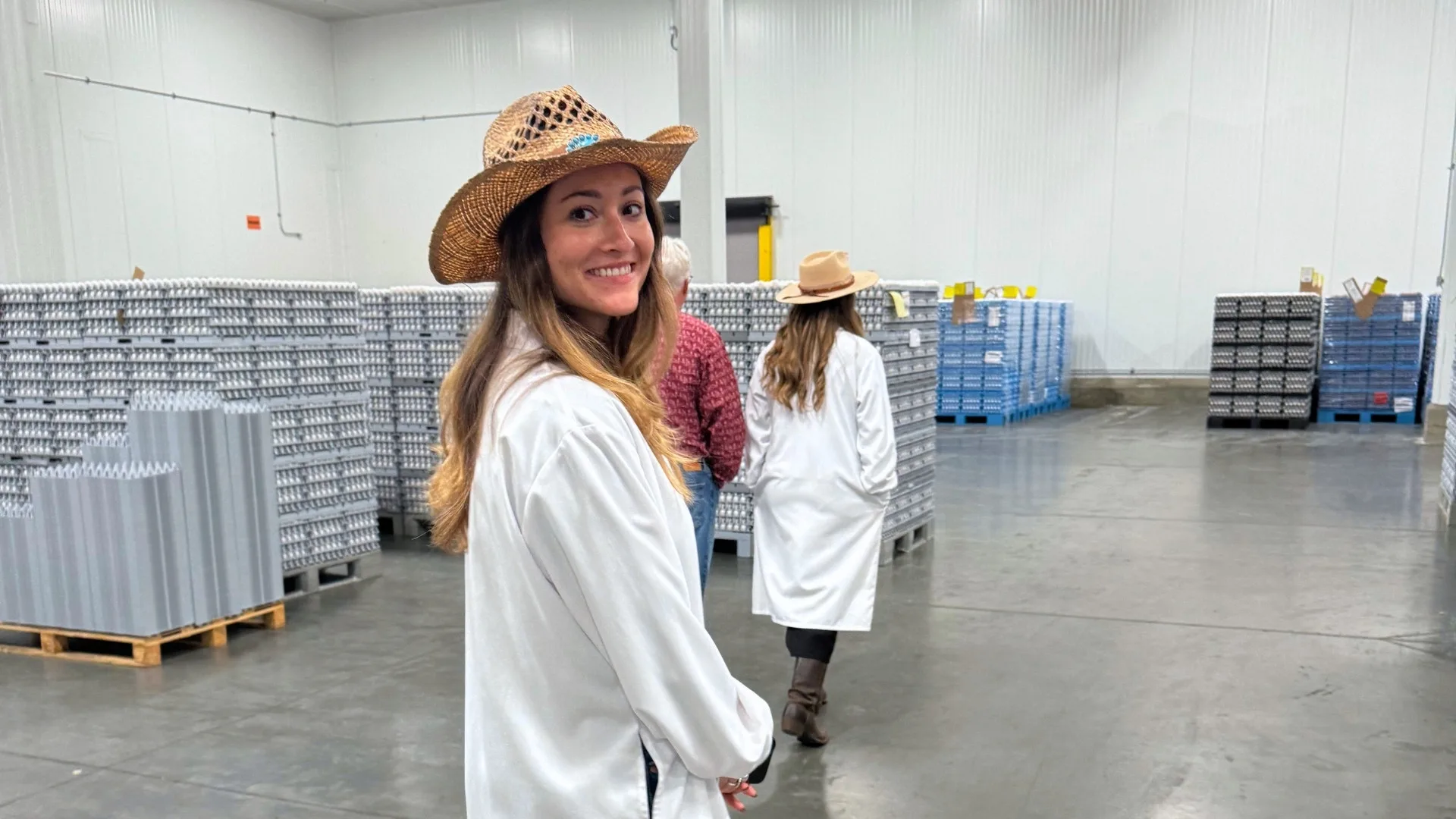
August already? Check out this 90-second video to get the latest on Multiverse Computing, Electrovaya, CERT Systems — and a Food and Agtech field trip to the Calgary Stampede!
Upcoming events
- MaRS’s Mobility Unlimited Hub, a two-year accelerator designed to help founders bring inclusive innovation to market, is recruiting 10 ventures for its third cohort. This year, we are further broadening the definition of active mobility to encompass brain health, paving the way for holistic innovations that support both physical vitality and cognitive health. Learn more at this information webinar on August 19 or apply directly here. Application deadline: August 28.
- Applications are now open for the second cohort of the Mission from MaRS: Food and Agtech Venture Accelerator. MaRS is recruiting six to 10 Canadian ventures developing technologies that strengthen Canada’s ability to produce, manufacture and distribute food domestically while building a more resilient, low-carbon food system. Learn more at this information webinar on September 2 or apply directly here. Application deadline: September 25.
- “Beyond the Diagnosis: The Future of Neurodiversity” is the first of three public talks in the Ontario Brain Institute’s series on the evolution of brain health. September 12.
- At “The AI-first startup playbook,” this month’s edition of Technically Speaking, panellists will explore the practical realities of building tech ventures in the AI era, from retrofitting legacy SaaS platforms to defining the human-machine division of labour. September 15.
- Innovation Exchange: MaRS’s Global Summit is an exclusive, invitation-only summit for global startup partners, trade commissioners and international VCs. September 16.
- At “Building food intelligence: A conversation with RxFood,” our next MaRS Morning, RxFood’s co-founder and chief medical officer, Jeffrey Alfonsi, discusses how AI and computer vision are transforming everyday meals into actionable, clinical-grade data. September 17.
- The RBC Women in Cleantech Accelerator Showcase celebrates the achievements of the 2024–2026 cohort and officially launches the 2026–2028 cohort. Featuring a keynote by climate scientist Katharine Hayhoe. September 18.
- The Elevate Festival brings together tech leaders, startups, investors, policy-makers and media to spotlight Canadian innovation. September 22 – 24.
- The theme of this year’s Innovation Summit, Reaction Hub’s annual conference, is “nation-building projects” and features a keynote from Fort Capital’s Peter McArthur, founding chair of the Ontario Clean Technology Industry Assocation. September 23.
- The Food Forward Summit will gather more than 2,000 leaders from agriculture, aquaculture, agribusiness, policy, investment and more to discuss the future of food. October 8.
- Mark your Calendly. Early bird tickets are now on sale for MaRS Climate Impact. November 17 and 18.
For more, visit our events page
In the queue: What we’re reading, watching and listening to at MaRS
Chris Godsall is the co-founder and CEO of flood risk management solutions company, NOAH Intelligence, part of the MaRS Adaptech Accelerator. Here, he shares his current obsessions.
 A modern classic of economic history: Peter Bernstein’s Against the Gods is a history of how humans learned to measure and price risk. Much of what we do at NOAH is, in a sense, a footnote to this book.
- A clever doc on a catastrophic problem: Water is the New Fire is a short film produced by the The Weather Network about how worsening flooding is pushing whole neighbourhoods toward being uninsurable — all told through one homeowner’s hunt for the cause of his flooded basement.
- Research that cuts to the heart of climate impact: The Climate and Equity Lab is an initiative of Social Innovation Canada, along with partners like Gore Mutual and York University. It’s doing important work on how climate change lands hardest on vulnerable communities in Canadian cities, and why many of the best responses are community-led. Anyone building climate solutions should read both its phase one and two reports.
Careers: The hottest jobs in tech this week
- Fintech company NorthOne is hiring a growth marketing intern, a director of brand strategy and a segment marketing manager. (Toronto)
- MaRS is hiring a manager of corporate innovation and a junior analyst in market intelligence (health). (Toronto)
- Cognichip, an AI-first semiconductor company, is looking for backend software engineers, a senior ASIC design manager and a senior AI technical program manager. (Multiple cities)
- ACTO, which makes AI-powered solutions for the life sciences, is hiring a full stack engineer, an iOS developer and a customer success manager. (Multiple cities)
For more, visit our jobs page
Did you know that MaRS is a charity?
Your support helps us advance Canadian innovation and science, bring our community together and transform the world for the better. For instance, through our carbon removal donation program, you can help support Canada’s most promising CDR companies through tax-deductible donations. Learn more here.
Thanks for reading! See you in two weeks.
Sign up for our newsletter
-
 MaRS Staff